русский
 Español
 عربى
Industry News
HOME / NEWS / Industry News / How Can Apartment Electronic Door Locks Simplify Tenant Turnover for Property Managers?

Every time a tenant moves out, property managers have a few access-related tasks to deal with. Keys need to be collected, missing keys accounted for, and the apartment prepared for its next occupant. In a large residential building, several move-ins and move-outs may happen within the same week. Managing all those keys and lock changes can quickly become a burden.
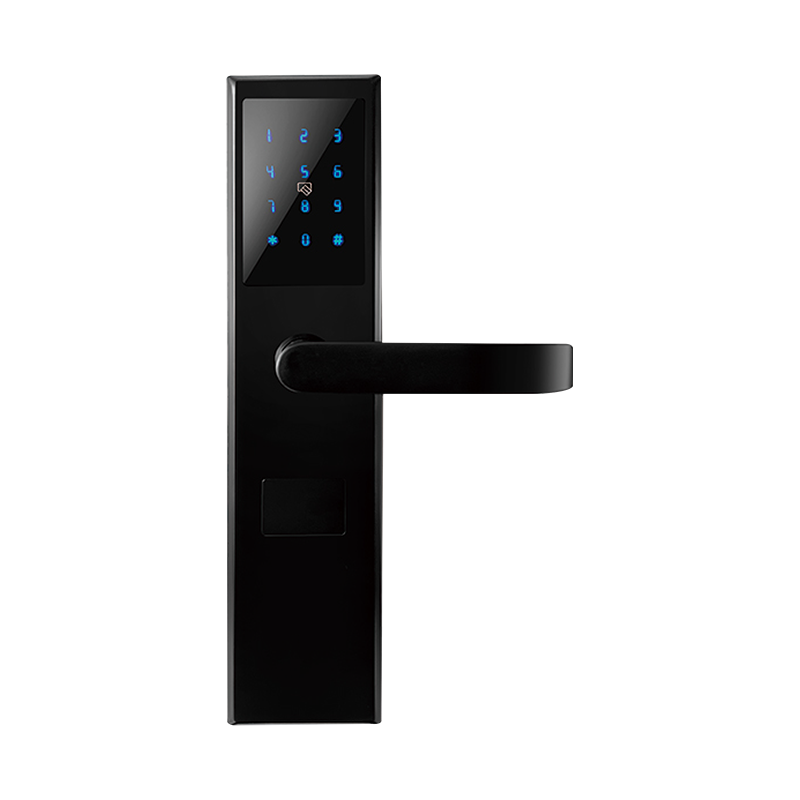
Apartment Electronic Door Locks offer another way to handle the process. Instead of replacing a lock or collecting every physical key, managers can issue and remove digital credentials. The amount of work saved depends on the lock system and how the property manages access, but the change can make tenant transitions easier to organize.
Change Access Without Replacing the Lock
With a traditional lock, a missing key can create a security concern. If the previous tenant has not returned all copies, the property manager may need to rekey the cylinder or replace it entirely.
Electronic locks handle this differently. Each tenant can receive an individual PIN, RFID card, key fob or mobile credential. When the tenancy ends, the manager can disable the old credential and prepare access for the next resident.
Temporary codes can also be issued to approved visitors or contractors. This reduces the need to hand out spare physical keys, although the property should still have a clear procedure for emergency access.
Make Sure Former Tenants Lose Access
Removing an old credential sounds simple, but the timing depends on how the lock communicates with the management system.
Online locks can receive permission changes through a network connection. With offline models, updates may need to be transferred using a management device, card or local programming process. Managers should know when a revoked credential actually stops working, particularly when an apartment changes hands quickly.
A turnover procedure should cover the outgoing tenant's room access as well as permissions for parking, storage rooms and shared facilities. It should also include a check that the new resident's credentials work as intended.
Manage Multiple Apartments From One System
In a building with dozens or hundreds of units, handling every lock separately is time-consuming. Centralized management software can bring many of these tasks into one interface.
Depending on the system, authorized employees may be able to assign apartment access, add or remove credentials, set temporary permissions, manage staff access and review available entry records. Some systems also report low battery levels.
Before choosing a platform, check how many locks it can support and whether it can manage several buildings. Ask about administrator permissions, software licensing and the need for cloud services or network gateways. Remote management is not necessarily included with every electronic lock.
Compare the Available Access Methods
Different credentials suit different residents and management arrangements.
| Access method | Main advantage | What happens during turnover |
|---|---|---|
| PIN code | Easy to issue and change | Disable the previous code or assign a new one |
| RFID card | Simple contactless entry | Deactivate cards that have not been returned |
| Mobile credential | Convenient smartphone access | Remove the former tenant's digital permission |
| Biometric access | Uses individual biometric identification | Handle stored biometric records carefully |
| Mechanical key backup | Provides an alternative entry method | Physical key control is still required |
Some properties use more than one access method. A tenant might use an RFID card for daily entry while a mechanical key is kept for emergencies. The choice depends on residents' needs, the building's facilities and the way the management team works.
Give Maintenance Staff Temporary Access
An apartment may need cleaning, inspection or repairs between tenants. Maintenance workers and contractors need access during this period, but giving them permanent credentials is rarely necessary.
Where the lock supports it, managers can issue temporary codes or permissions with defined expiry times. Individual staff credentials are preferable to shared codes when the system supports them, as they make access records easier to interpret.
Permissions should be removed when a job is finished or a service agreement ends. Access records can help managers review activity, but they do not independently prove who physically entered an apartment. They should be handled under the property's privacy policy.
Check Whether the Locks Connect to Property Management Software
Some electronic lock systems can integrate with property management software. This may allow apartment assignments and lease dates to be coordinated with access permissions.
For example, an administrator could arrange for a new resident's credential to become active on the agreed move-in date. At the end of the tenancy, access could be scheduled to expire or removed manually.
Integration varies between manufacturers. Before purchasing, confirm compatibility with the property's existing software, the available interfaces and how errors or failed data updates are handled. A demonstration using the actual software is a better test than a general claim of compatibility.
Don't Ignore Maintenance and Tenant Privacy
Electronic locks still need regular attention. Batteries run down, software needs updates and network interruptions may affect remote management. Property managers should know whether the locks continue to operate locally when the connection is lost.
| Evaluation factor | What to check |
|---|---|
| Battery life | Expected replacement frequency |
| Low-battery alerts | Whether staff receive warnings in time |
| Offline operation | Whether residents can still enter during network outages |
| Emergency override | Available options if the electronics fail |
| Data protection | Who can view credentials and access records |
| Software support | Update arrangements and ongoing compatibility |
| Hardware durability | Suitability for frequent daily use |
Access records should only be available to authorized staff and retained according to the property's policies and applicable privacy requirements. Locks on exit doors must also meet relevant building and fire-safety rules.
Make Electronic Access Part of the Move-Out Checklist
Installing electronic locks does not automatically improve tenant turnover. The management team still needs a consistent routine.
When a tenant leaves, staff should confirm the departure, remove the tenant's credentials, review access to shared areas and check that the lock works properly. Before the next resident arrives, they can create the new credentials and test them.
Property operators buying locks for an entire development should also look at installation guidance, staff training, warranty terms and replacement-part availability. A system that is difficult to maintain can create just as much work as the key management process it was meant to replace.
Electronic locks take much of the physical key handling out of tenant turnover, but the real difference comes from how well the access system fits the property's daily procedures.

 Email: [email protected]
 Phone: +86-13575699186
 Address: No.135, Wanyu Road, Zhiying Industrial Zone, Yongkang City, Zhejiang Province, China.
QR Code
Copyright © Yongkang Ruian Lock Industry Co., Ltd. All rights reserved.