
 русский
  Español
  عربى
عربى Industry News

GET A QUOTE
Bluetooth Door Lock System for Outdoor Gates and Entries
Access control becomes complicated. Fast. Manage a residential community or office park—suddenly you're juggling dozens of scenarios simultaneously. Residents. Contractors showing up unpredictably. Guests. Keys get lost constantly. Temporary access requests multiply. Who has authority right now? Did someone duplicate that key without permission? Traditional locks answer none of these questions. They simply can't.
A Bluetooth Door Lock System changes everything. Smartphones become the access method. Physical key chaos disappears. Management becomes auditable—you see everything happening in real time.
Yet outdoor installations create problems that residential smart locks never encounter. Weather doesn't pause for convenience. Rain infiltrates relentlessly. Temperatures swing wildly—sometimes in the same day. Salt spray corrodes aggressively. Metal degrades. Components engineered for climate-controlled interiors fail spectacularly when facing genuine outdoor conditions. Gatehouse entries. Wooden doors needing specialized handling. Office perimeters with constant foot traffic. These scenarios demand completely different approaches. Understanding these distinctions determines whether you make a wise investment or waste substantial resources.
Why Outdoor Entry Points Demand Different Lock Solutions
The logic seems obvious: indoor smart locks simply scaled to outdoor size. Install them on gates, doors, fence posts. Reality hits differently. Moisture creeps inside. Temperature swings stress every connection point. Plastic degrades under UV assault. Metal corrodes silently. Components designed for sixty-degree indoor comfort fail spectacularly when facing fifty-below winters or hundred-plus-degree summers. Systems built for humidity-controlled offices surrender within months of genuine outdoor exposure.
Environmental Pressures Build Continuously
Think about what outdoor hardware actually experiences. Morning dew. Afternoon sunlight. Evening temperature drops. Each cycle—expansion, contraction, moisture cycling—stresses electronic seals and connections differently than static indoor conditions. Materials that work fine indoors simply cannot handle this punishment.
Geography matters enormously. Coastal installations face salt spray corrosion unlike inland facilities. Humid tropical climates encourage moisture infiltration through every tiny gap. Freezing regions demand components that function at temperatures that paralyze standard electronics. Generic "outdoor-rated" systems might work adequately in temperate climates yet fail miserably in environmental extremes. Specification honesty matters—does this system handle YOUR climate or the manufacturer's definition of "outdoors"?
Operational Demands Exceed Simple Residential Needs
Residential installations typically manage a few family members. Commercial gatehouses handle dozens of daily access scenarios. Contractors arrive needing temporary authorization. Delivery personnel require one-time codes. Maintenance staff need periodic recurring access. Property managers juggle multiple entry points simultaneously from central locations. These operational complexities demand capabilities beyond simple residential convenience.
Understanding Bluetooth Door Lock System Architecture
Bluetooth sits at the heart of modern smart access control. Smartphones become the interface. Wireless communication happens automatically. But calling it "just Bluetooth" undersells what's actually happening. The complete system encompasses wireless technology, authentication layers, permission structures, and integration capabilities that transform simple lock hardware into access control infrastructure.
How Bluetooth Connectivity Navigates Outdoor Realities
Bluetooth travels best through open air. But outdoors provides complications city planners never imagined when designing wireless systems. Trees block signals. Heavy rain attenuates transmission. Buildings create reflections and dead zones. Outdoor installations need realistic understanding of Bluetooth effective range in actual site conditions, not theoretical lab environments.
Distance matters. Some systems manage extended communication ranges through mesh networking or repeaters. Others rely on simpler direct communication between phone and lock—effective within thirty or forty feet under good conditions but problematic through structures or at greater distances. Environmental interference—neighboring wireless systems, power lines, atmospheric conditions—complicates reliability further. Quality systems design around these realities through redundancy and graceful degradation rather than assuming interference never happens.
Managing Permissions and Tracking Access
A lock is just a mechanism. A smart lock system manages who gets through that mechanism, when, and whether they're authorized. Contractor access might expire automatically. Family members stay permanently authorized. Guests get temporary single-use credentials. Each access event gets recorded—timestamp, user identity, success or failure. The system remembers everything.
This intelligence layer transforms security. Investigations can review access history when incidents occur. Property managers see occupancy patterns revealing facility usage. Unexpected access attempts trigger alerts before anything questionable actually happens. Without this capability—without audit trails and access intelligence—you've simply replaced a mechanical lock with a wireless one. That's not transformation. Systems offering true access control capability provide security visibility mechanical locks cannot achieve.
Comparing Installation Scenarios and Their Unique Demands
Different outdoor entries demand different approaches. Installing a residential gate lock differs fundamentally from securing office building entrances. Gated community perimeters present challenges that neither residential nor commercial single-location setups face. One-size-fits-all smart locks sound appealing until you realize they fit nothing particularly well.
Residential Gate and Perimeter Applications
Residential gatehouses manage vehicle or pedestrian access relatively simply. Traffic remains light. Weather exposure happens continuously but follows predictable patterns. Residents need straightforward operation—nobody wants software training just to enter their own property. Guests appreciate simplicity. Service people appreciate clear access procedures.
Wooden construction complicates things. Wood expands when wet, contracts when dry. Temperature shifts cause movement. Lock mechanisms designed for steel frames sometimes bind on wooden doors. Installation requires different approaches—careful hole placement respecting wood grain, clearances accommodating movement without creating gaps. Standard residential-grade systems forced onto wooden structures create binding, misalignment, and eventual failure.
Office Building Entry Points
Commercial buildings operate completely differently. Foot traffic multiplies. Access control sophistication increases dramatically. Different departments need differentiated permissions. Contractors arrive regularly with temporary access requirements expiring automatically. Visitor management might integrate with reception systems. Security cameras coordinate with access logs.
These environments demand capabilities residential systems simply don't include. Failed access attempts should trigger alerts immediately. Compliance requirements mandate detailed access logging. Integration with building management systems enables centralized oversight. Residential smart locks—designed for simplicity—lack sophistication that commercial environments require.
Community and Facility Gate Management
Gated communities juggle competing access requirements. Residents need convenient entry. Contractors need temporary authorization without administrative burden. Facility gates protecting pools, courts, parking areas require time-based access restrictions. Management committees want summaries revealing access patterns and potential issues.
Operating dozens of gates serving hundreds of residents exceeds what residential smart locks were designed to manage. Simple systems become burdensome. Reporting features matter. Automation matters. Centralized oversight matters. A lock designed for a single family home becomes inadequate infrastructure for facility-wide security.
Architectural Differences Between Lever Handle Smart Locks and Other Designs
Smart locks integrate with doors differently. Lever handle models replace traditional handles entirely. Deadbolt designs retrofit into existing mechanisms. Mortise configurations integrate into door frames themselves. Each creates different installation challenges and limitations. Choosing wrongly means installation headaches that proper selection would have avoided.
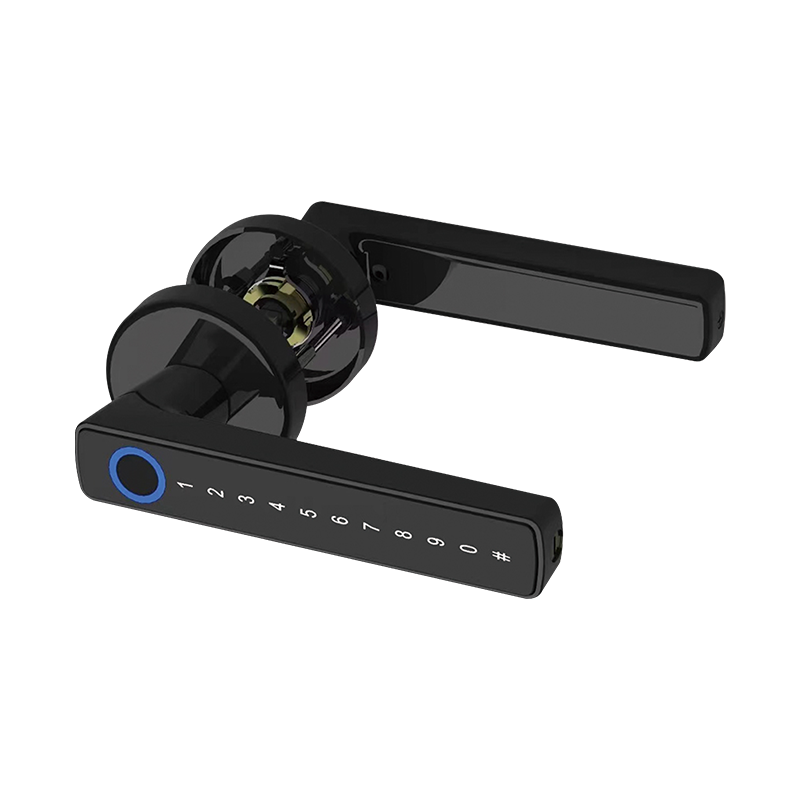
How Lever Handle Smart Locks Function
Lever handles control access through handle movement management. When authorized, internal electronics enable handle depression and latch retraction. Unauthorized attempts find the handle locked in place. Operation feels natural—users simply operate the lock like they always have. No learning curve. No confusion.
But installation requires completely removing existing hardware and drilling into door structures. For wooden doors especially, this demands care. Drill through high-stress wood grain and you're creating structural weakness. Professional installation becomes pretty much necessary rather than optional. The handle replacement approach works smoothly on quality doors but struggles with non-standard configurations or materials.
When Deadbolt Retrofits Provide Better Solutions
Deadbolt smart locks take a different approach—replace the interior locking mechanism while external handles stay untouched. Operation remains familiar. Existing aesthetic arrangements persist. Door modification minimizes considerably compared to handle replacement strategies.
This retrofit approach shines on doors already equipped with quality handles worth preserving. No reason to remove good hardware. Installation complexity drops significantly. Wooden doors benefit particularly from reduced structural impact. If existing handles function well and you want to minimize door modification, deadbolt retrofits solve problems lever handle replacement cannot.
Environmental Durability Specifications That Actually Matter
Marketing materials discuss weather resistance vaguely. "Outdoor rated." "Weatherproof." Meaningless. Real specifications reveal the actual story—material selection, protective coatings, component engineering. Numbers matter less than choices.
| Performance Factor | Standard Indoor Lock | Outdoor-Rated System | Why This Distinction Matters |
|---|---|---|---|
| Corrosion Resistance | Limited protective coating | Marine-grade materials and treatments | Saltwater and humidity exposure requires superior protection |
| Temperature Range | Typically 60-80F operating window | Expanded range handling freezing and heat | Outdoor temperature swings exceed controlled environments |
| Moisture Sealing | Standard gasket arrangement | Enhanced sealing with redundant drainage | Water ingress causes electronic failure outdoors |
| UV Stability | Minimal UV protection | UV-stabilized housing materials | Continuous sun exposure degrades unprotected plastics |
| Battery Performance | Standard alkaline environment | Cold-weather capable power management | Batteries drain faster in freezing conditions |
| Component Grade | Consumer-grade electronics | Industrial-grade circuit boards and connectors | Outdoor reliability demands higher component standards |
Notice the pattern? Component selection differences seem minor until environmental stress accumulates over months. Residential smart locks fail. Outdoor systems endure. The distinction matters profoundly.
Power Management in Outdoor Smart Lock Installations
Battery Behavior in Outdoor Temperature Extremes
Outdoor locks rely on batteries. Cold drains them faster than moderate climates. Extreme heat accelerates chemical degradation differently. Constant cycling from morning cold to afternoon heat stresses battery chemistry repeatedly. High-traffic installations consume battery energy rapidly through thousands of unlock cycles.
Reality hits harder than manufacturer specifications. A system promising twelve-month battery life indoors might actually deliver eight months outdoors when environmental stress accelerates degradation. Realistic outdoor battery performance accounting for temperature extremes and usage patterns prevents frustrating surprises. Assume manufacturer estimates describe ideal conditions, not outdoor reality.
Emergency Access When Primary Power Fails
Dead batteries present real problems. Outdoor installations can't wait for residents to arrive home and fetch a ladder for access panel replacement. Systems need backup access provisions—emergency override keypads, temporary power connections, or physical mechanical bypasses enabling access without electronics.
Long-term planning requires maintenance protocols and emergency procedures. When will you check batteries? Who replaces them? Critical access points might warrant hardwired power connections despite increased installation complexity. Planning battery management prevents failures during critical access moments.
Installation Considerations Specific to Outdoor Environments
Assessing Site Conditions Before Equipment Selection
Before purchasing anything, understand your actual site thoroughly. What are the temperature extremes across seasons? Humidity levels vary how much? Moisture exposure patterns? Electrical interference sources lurking nearby? Wind exposure? Snow loading potential? Coastal salt spray? These environmental realities determine whether standard outdoor equipment suffices or whether specialized solutions addressing local extremes become necessary.
Wooden door conditions deserve particular attention. Is the wood sealed properly? Already showing water damage? Temperature and humidity shifts cause expansion and contraction constantly—will that create binding? Poor substrate conditions undermine quality hardware installations irreversibly. Address preparation issues before lock installation. Prevent months of frustration and eventual replacement headaches.
Substrate Materials Shape Installation Differently
Wooden doors and metal frames present completely different installation challenges. Wood expands and contracts. Metal doesn't. Wood requires drainage accommodating moisture. Metal requires corrosion protection at drill holes. Installation approaches optimized for steel fail catastrophically on wood. Generic procedures overlook these distinctions regularly.
Professional installers accommodate these differences automatically. They modify procedures based on substrate materials. DIY approaches or inexperienced contractors? They frequently ignore these subtleties. Problems emerge weeks later—binding, misalignment, seal failure. Investing in proper installation saves money substantially compared to repeated problem-solving and eventual replacement expenses.
Access Management Features for Different User Groups
Resident and Family Member Authorization
Primary residents—homeowners or facility managers—maintain permanent access naturally. Secondary family members receive authorization based on residence status. Teenagers might lose access when they move out. Temporary visitors automatically lose access after their visit ends. These basic categories form the foundation.
Systems designed for residential use emphasize simplicity over sophistication. One-tap smartphone entry. PIN codes. Key cards. Nothing requiring extensive training. The goal is convenience for people entering their own homes, not sophisticated security administration.
Guest and Visitor Access Management
Temporary guest access presents different challenges. Time-limited authorization happens automatically without property owner involvement. Single-use PIN codes work effectively. Smartphone apps generating temporary access codes accommodate unexpected guests arriving without prior notice. Systems generating one-time passwords through SMS or app notifications provide straightforward guest management.
Residential and commercial systems diverge here. Residences value simplicity. Commercial spaces often need visitor tracking—checking in with reception, logging purpose of visit, coordinating with departments. Commercial systems integrate these capabilities. Residential systems keep things simple.
Contractor and Service Personnel Access
Service calls happen constantly—plumbers, electricians, HVAC technicians appearing unpredictably. Traditional solutions require property managers being home to grant access. Better systems automate through approval workflows. Calendar integration creates automatic access during scheduled maintenance windows. Notifications alert property managers when approved service personnel actually access the property.
Property managers love systems requiring them to be physically present. Contractors love straightforward access without bureaucratic delay. Matching system capabilities to operational needs determines implementation satisfaction.
Selecting Between Architectural and Functional Compatibility
When Lever Handle Replacements Work Well
Lever handles replace existing hardware entirely. For installations on solid doors with adequate clearances, this works smoothly. Modern houses built to standard specifications typically accommodate standard smart lever installations. Operation feels natural—users operate the lock like they always have.
Older buildings create challenges though. Unusual door thicknesses. Non-standard lockset holes. These situations benefit from deadbolt approaches—avoiding extensive door modifications. Custom configurations cost more. Sometimes that expense beats installation complications.
Why Deadbolt Retrofits Provide Better Solutions
Deadbolt systems preserve existing handles while replacing the locking mechanism. Handles remain suitable and functional? This reduces modification requirements substantially. Existing aesthetics persist. Door integrity remains safer compared to handle replacement approaches.
Retrofitting works particularly well in heritage buildings where preserving hardware carries significance. Commercial spaces often already have quality handles worth keeping. Deadbolt replacements accommodate these situations elegantly—requiring minimal door modification.
Integration with Broader Security Infrastructure
Centralized Access Control Platforms
Managing thirty gates across a facility? Impossible through individual lock interfaces. Centralized platforms provide unified access control instead. Property managers authorize users once. Access permissions propagate across all systems automatically. Single-point reporting reveals facility-wide access patterns clearly.
Integration capabilities vary dramatically between manufacturers. Some systems integrate seamlessly with standard security platforms. Others operate as isolated installations. This distinction dramatically affects operational efficiency. It determines administrative workload substantially. Choosing poorly creates management nightmares.
Audit Trail and Reporting Functionality
Comprehensive access logs track every unlock event—who accessed where and when precisely. Attempted unauthorized access triggers alerts immediately. Extended reports reveal usage patterns useful for security analysis and operational optimization. Some systems generate automatic reports on schedule. Others support custom queries for investigation purposes.
Reporting depth varies substantially between systems. Consumer-focused offerings provide basic access logs—nothing fancy. Commercial-grade systems offer sophisticated analysis capabilities—much more detailed. Facility managers decide whether basic reporting suffices or whether advanced analytics justify system selection.
Material Selection and Corrosion Prevention Strategies
How Metals React to Outdoor Exposure
Stainless steel resists corrosion naturally. It costs significantly more though. Standard steel needs protective coatings—paint, powder coating, electroplating. Aluminum requires anodizing. Brass and bronze develop patinas providing moderate corrosion resistance naturally. Each has tradeoffs.
Deliberate material selection for outdoor exposure separates quality from budget compromises sharply. Cut costs through material downgrade and you invite premature corrosion failure. Understanding coating or alloy selections reveals durability expectations honestly. Pay attention.
Sealing Sophistication Prevents Water Damage
Seals block water from reaching electronic components. Standard rubber gaskets degrade under UV assault aggressively. Advanced materials maintain integrity through extended outdoor exposure. Redundant sealing—multiple gaskets, drainage pathways—provides protection if single seals eventually fail.
Examine gasket materials and sealing designs carefully. Premium systems invest heavily in sealing sophistication. Budget systems compromise through simplified strategies. These differences become apparent years later when environmental exposure takes toll.
Evaluating System Reliability and Long-Term Performance
Learning from Real Field Experience
How have similar systems actually performed in similar environments? Coastal installations? Freezing climates? High-traffic facilities? Published case studies or references from installation professionals provide realistic performance data. Systems with proven track records in your specific environment present lower risk compared to newer technologies lacking field validation.
Manufacturers confident in their equipment provide references from comparable installations readily. Reluctance or vague responses warrant caution. Real references from real installations tell truths marketing materials won't.
Warranty and Support Reality
Warranty depth reflects manufacturer confidence. Two-year warranties suggest components should perform that long. Five-year warranties indicate higher confidence in longevity. Understanding actual warranty coverage—batteries, electronics, mechanical components—reveals protection scope.
Support accessibility matters equally. Can you reach technical support? Do they provide remote diagnostics? Can they authorize repairs rapidly? Warranty value means nothing if accessing warranty requires excessive documentation or creates lengthy delays.
Cost Analysis Across Installation Lifecycle
Smart lock systems cost more than equipment alone. Multiple expense categories extend across years of operation. Initial equipment represents only partial cost. Professional installation adds expense. Batteries need replacement. Maintenance happens regularly. These expenses accumulate.
Professional Installation Proves Worth Its Expense
Saving money on installation through DIY creates future problems inevitably. Water infiltration from poor sealing? Costs vastly more than professional installation. Misaligned mechanisms requiring repeated service calls exceed initial installation cost substantially. Poor substrate preparation necessitates eventual replacement—expensive and frustrating.
Realistic budgeting means including professional installation expense alongside hardware cost. Over ten years of operation, the difference between proper installation and cheap shortcuts often exceeds equipment cost. Skip professional installation and problems emerge later. Count on it.
Ongoing Battery and Maintenance Expenses
Outdoor installations require regular battery replacement—annually or biannually depending on usage volumes. Routine maintenance—seal inspection, corrosion monitoring—prevents catastrophic failures systematically. Budget these ongoing expenses alongside initial procurement. Predictable maintenance costs beat emergency replacement expenses significantly.
Selection Framework for Your Specific Application
Define What You Actually Need
Start simply. Document access scenarios carefully. How many different user types? Permanent residents? Temporary guests? Service contractors? Reporting requirements? Integration with existing infrastructure? Answer these questions first.
Avoid specifying unnecessary capabilities aggressively. Residential applications don't need sophisticated visitor tracking systems. Gated communities absolutely need robust authorization management. Match sophistication to reality—not marketing features, not theoretical scenarios, actual reality.
Characterize Your Actual Environment
Be honest about operating conditions. Temperature extremes throughout the year? Humidity levels fluctuating how much? Coastal salt spray exposure? Snow loading potential? Intense sun exposure? Frequent rain? Environmental realities determine material and design requirements directly and irreversibly.
Systems working fine in temperate climates fail miserably in harsh environments. That's not theory—that's demonstrated repeatedly. Acknowledge environmental challenges. Prevent costly failures from undersized specifications.
Examine Installation Constraints
Look at existing structures carefully. Will standard installations work without modification? Wooden doors need special handling—different approaches. Metal frames present different challenges entirely. Do existing handles warrant preservation? Can the substrate support required modifications? Understanding these constraints identifies compatible designs rather than forcing incompatible equipment onto unsuitable structures.
Professional consultation early prevents discovering incompatibilities after equipment purchase. Invest that time. Avoid frustration.
Industry Applications and Installation Profiles
Residential Communities and Gated Neighborhoods
Access control balances resident convenience with security. Residents expect straightforward operation—nothing complicated. Guests appreciate clear temporary access procedures. Management appreciates minimal administrative workload. Systems should emphasize simplicity over sophistication aggressively.
Wooden gate construction appears commonly in residential settings. Systems must accommodate this material without requiring extensive modifications. Lever handle smart locks often work well for residential applications when gates support standard installation. Straightforward. Clean. Effective.
Commercial and Office Building Access
Office environments operate completely differently. User management becomes sophisticated necessarily. Different departments need differentiated permissions. Contractors arrive regularly. Visitor categories require differentiated authorization. Integration with employee badge systems streamlines operations. Comprehensive reporting supports compliance requirements.
These environments benefit from commercial-grade systems offering advanced administration capabilities and robust reporting. Simple residential systems prove inadequate for this operational complexity. Upgrade or suffer ongoing frustration.
Facility and Recreation Area Management
Facilities controlling access to specialized areas—tennis courts, pools, gym facilities, parking areas—need different access patterns. Off-hours access restrictions prevent unauthorized facility use naturally. Temporary contractor access supports maintenance operations. Systems supporting time-based restrictions and area-specific permissions work effectively in these scenarios.
Facility managers appreciate centralized oversight across multiple access points. Reporting on facility utilization supports operational decisions smartly. Systems offering these capabilities improve facility management efficiency substantially.
Vendor Selection and Long-Term Partnership Considerations
Manufacturer Stability and Support Infrastructure Reality
Established manufacturers maintaining consistent product lines and accessible technical support provide reliability. Companies pushing regular firmware updates? Ongoing development? They're invested in technology—not just shipping products. Poor support structures create frustration inevitably when problems emerge. When technology requires updating. When you need help.
References matter more than marketing aggressively. Talk with installers working with different manufacturers regularly. Existing customers reveal support quality through real experience directly. Glossy websites sometimes mask poor support. Smaller manufacturers sometimes deliver exceptional support. Intelligence from references matters more than promotional materials significantly.
Installation and Commissioning Support Cannot Be Overlooked
Proper installation exceeds simply following instruction manuals. Site assessment. Configuration validation. Testing. Staff training. These elements ensure deployment success. Manufacturers providing installation support through authorized dealers improve implementation results noticeably. DIY installations or inexperienced contractors create problems accumulating over months. Avoid shortcuts.
Budget commissioning costs alongside equipment. Proper commissioning prevents operational surprises after installation completion. Skimping on installation service creates false economy—problems emerge later inevitably.
Future-Proofing Your Smart Lock Investment
Upgrade Paths and Firmware Update Capabilities
Smart locks increasingly rely on software heavily. Manufacturers providing regular firmware updates add capabilities and improve security without hardware replacement. Older systems lacking update capabilities eventually become obsolete as security standards advance relentlessly.
Understanding whether manufacturers actively develop firmware updates guides long-term satisfaction. Systems with established update histories suggest continuing support. Stagnant products approaching discontinuation invite future problems inevitably. Choose carefully.
Scalability to Expanding Requirements
Initial installations often expand as needs evolve. Single gates become facility-wide access control. Early system selection should accommodate reasonable expansion without fundamental restructuring. Understanding scalability limitations prevents future frustration significantly.
Systems integrating with standard platforms scale more readily than proprietary solutions. This architectural consideration influences long-term flexibility substantially.
Making the Transition from Traditional to Smart Access Control
User Adaptation and Change Communication
End users adapt to new access methods. Smartphones replace keys completely. PIN codes and temporary access procedures differ dramatically from simple key distribution. Change management communication helps users understand new systems and adjust to different patterns.
Property managers sometimes encounter resistance. Clear explanations of convenience benefits ease adoption. Security improvements make sense to people. Involving users in transition planning creates acceptance rather than opposition inevitably. Communication matters. Engagement matters. Participation matters.
Maintaining Backup Systems During Transition
Transition periods benefit from maintaining both mechanical and electronic locks simultaneously. This prevents total access failure if electronic systems malfunction unexpectedly. Gradual migration allows identifying and resolving issues before complete transition occurs. Fallback procedures—emergency override mechanisms or backup access methods—ensure functionality if primary systems fail. Plan for problems. They happen.
Assessing Return on Investment for Smart Lock Deployment
Labor Expense Reduction Through Smarter Access Management
Lost keys no longer require emergency locksmith calls for replacement. Access audits reduce security vulnerabilities needing investigation. Contractor access management streamlines through automatic temporary credentials—no property manager presence required for every service visit. Labor savings accumulate substantially across years.
Quantify realistic savings for your specific situation. Large facilities managing frequent access changes? They realize substantial savings. Small installations? Minimal labor impact. Size expectations correctly. Avoid disappointment.
Security Improvements Create Risk Reduction Value
Comprehensive access logs support security investigations immediately when incidents occur. Access restrictions prevent unauthorized entry attempts. Automated alerts identify suspicious activities before problems escalate. These capabilities reduce security incidents and associated liability exposure substantially. This risk reduction carries financial value beyond simple labor savings significantly.
Finalizing Equipment Selection and Procurement Strategy
After evaluating requirements, environmental factors, and vendor capabilities thoroughly, systematic procurement ensures successful deployment. One final consideration remains important—finding a manufacturer truly understanding outdoor access control complexity.
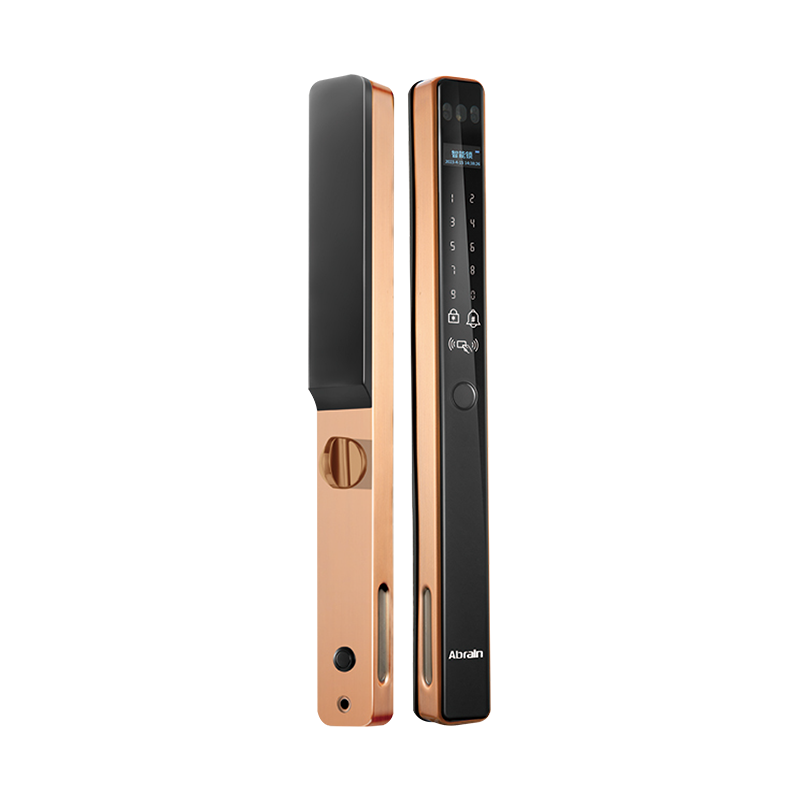
Yongkang Ruian Lock Industry Co., Ltd. brings substantial experience designing and manufacturing smart lock systems specifically for outdoor applications. Their Bluetooth Door Lock System solutions integrate sophisticated access management with genuine environmental durability effectively. Lever handle configurations work well for residential wooden doors. Deadbolt alternatives suit commercial applications. Engineering throughout accommodates harsh weather exposure and temperature extremes. Whether managing residential communities, office parks, facility gates, or specialized access scenarios, their configuration range and customization capabilities address diverse requirements adequately.
Their team understands installation realities across different door materials and structural situations deeply. They provide genuine guidance during selection and commissioning phases—not simply shipping equipment and disappearing. Early connection with their team enables matching appropriate solutions to actual needs. It establishes realistic deployment timelines before equipment purchase. Reach out to discuss your specific access control requirements, environmental constraints, and implementation timeline carefully. That conversation clarifies what's truly possible and necessary rather than defaulting to generic solutions.
Recommended Products

Ready to Begin?
Product Categories
Contact Information
 Email: [email protected]
 Phone: +86-13575699186
 Address: No.135, Wanyu Road, Zhiying Industrial Zone, Yongkang City, Zhejiang Province, China.
QR Code
Copyright © Yongkang Ruian Lock Industry Co, Ltd. All rights reserved.
