Smart Room Door Locks for Bedrooms, Offices, Hotels, Apartments, and Dormitories
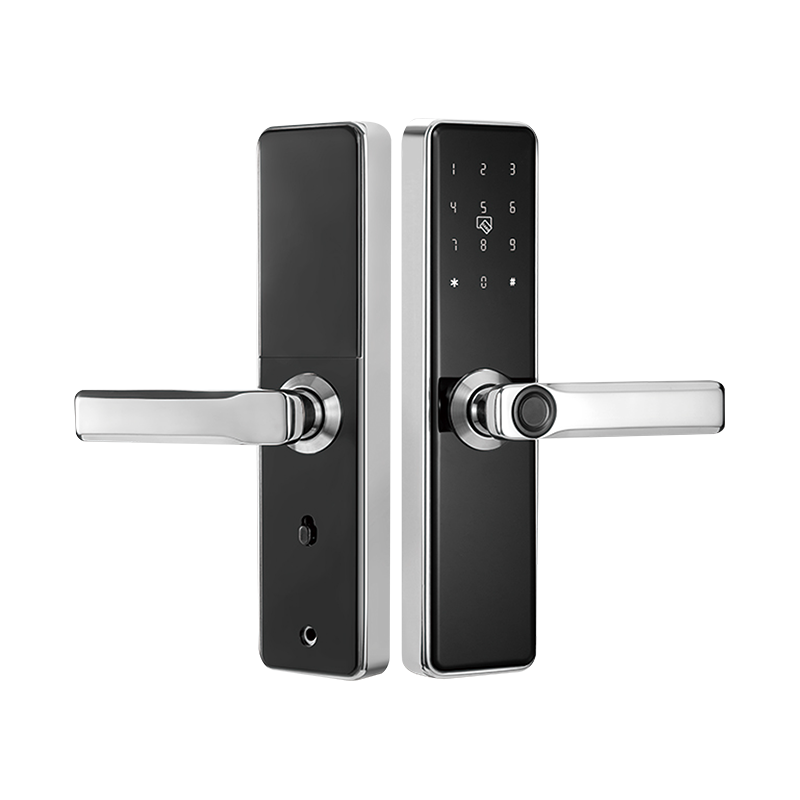
A Smart Lock for Room Doors is a digital lock made for indoor doors that need privacy, simple access, and user-friendly management. It is typically installed on bedroom doors, office rooms, hotel rooms, apartment interior doors, dormitories, staff rooms, rental rooms, and storage rooms.
The main purpose is not only to lock a room. It also helps users enter without carrying a traditional key, manage access permissions more easily, and improve privacy in shared or managed spaces.
Room Door Smart Lock vs. Entry Door Smart Lock
Although both are smart locks, their design priorities are different.
| Main use |
Interior privacy and access convenience |
Main entrance security |
| Common doors |
Bedrooms, offices, hotel rooms, dormitories |
House doors, apartment entrances, villa doors |
| Lock structure |
Usually lighter and easier to install |
Often stronger and more security-focused |
| User management |
Suitable for individuals, staff, guests, tenants, and shared rooms |
Usually focused on home or building access |
| Appearance |
Compact, simple, interior-friendly |
Larger panel and stronger exterior design |
| Environment |
Mostly indoor |
Indoor, outdoor, or semi-outdoor |
A smart room door lock should balance privacy, convenience, and installation adaptability. It does not always need the same heavy-duty structure as an outdoor entrance lock, but it must be stable, easy to use, and compatible with the interior door structure.
Key Features to Consider When Choosing Smart Locks for Room Doors
There's no single configuration that works everywhere—what makes sense for a smart lock really depends on the room itself, how people move through it, and what kind of oversight the space actually calls for. Someone's bedroom is mostly about keeping things private. A hotel floor, a dormitory hallway, an office room, a rental unit—these usually need something a bit more geared toward managing who comes and goes.
Here's what tends to matter most when sorting through the options:
Fingerprint unlocking skips the key entirely and gets someone through the door fast, which works well in bedrooms, offices, staff rooms, and apartment interiors where speed and simplicity count.
Password access covers situations where flexibility or a temporary code makes more sense than a fixed method. Anti-peeping protection on the keypad helps keep the code from being read off someone's shoulder.
RFID card unlocking shows up often in hotels, dormitories, apartments, and office rooms, largely because cards are just simpler to hand out, track, and revoke than most other access methods.
A mechanical key stays in the picture as backup—useful the moment a battery dies or the electronics decide not to cooperate.
App, WiFi, and Bluetooth features vary from one model to another, but generally cover things like adjusting user settings, generating temporary codes, pulling access records, or unlocking remotely or from close range.
Low power consumption stretches out how long a battery lasts and cuts down how often someone has to deal with maintenance, which starts to matter a lot more once you're managing several rooms rather than just one.
An emergency power supply gives a way back in if the battery has already died completely, rather than leaving someone locked out.
Passage mode holds the door unlocked through stretches of frequent traffic—office hours, a meeting block, that kind of thing.
Privacy mode does roughly the opposite, cutting off outside access where it's needed most: bedrooms, hotel rooms, dorm rooms, private offices.
Multi-user management makes it possible to sort out who gets access and when—residents, staff, guests, cleaning crews, or anyone passing through temporarily.
Stainless steel construction holds up under repeated use and keeps its look longer than most alternatives.
And moisture-proof performance keeps things running steadily in humid climates, coastal areas, or rooms sitting close to bathrooms, balconies, or laundry spaces where dampness is just part of daily life.
Common Applications of Smart Room Door Locks
Smart room door locks fit into a wide range of indoor settings, wherever privacy, day-to-day convenience, and flexible access control happen to matter. What changes from one setting to the next is usually the unlocking method, the management features involved, and sometimes even the lock's structure itself.
Bedroom doors: These call for private access above all—fingerprint, password, a mechanical key kept as backup, and privacy mode for the everyday rhythm of home life.
Office room doors: Here the lock helps manage entry into manager rooms, meeting rooms, private offices, and staff areas, cutting down on how much everything depends on traditional keys.
Hotel room doors: Guests need to get in without friction, so card access, low battery reminders, emergency access options, and steady room-level management all come into play.
Apartment interior doors: Privacy matters across bedrooms, study rooms, storage areas, and any shared living space within the unit.
Staff dormitories: Employee rooms benefit from access control built to last, whether that's fingerprint, password, or an RFID card doing the work.
School dormitory rooms: Managing student room access gets simpler this way, while mechanical backup and emergency access stay available for whenever they're actually needed.
Shared workspace doors: Meeting rooms, offices, phone booths, restricted areas—these often need temporary access or a record of who used the space and when.
Storage rooms: Tools, documents, supplies, equipment—controlled access, sometimes paired with access records, helps keep track of what's going in and out.
Rental rooms: Password, app, or card access offers the flexibility to update permissions quickly whenever tenants change.
How to Choose the Right Door Smart Lock
Getting the right door smart lock has less to do with flashy smart features and more to do with something more basic: does it actually fit the door? A model that works well needs to match the door's structure, where it's being installed, how it's powered, and the access habits people fall into day after day.
A few things worth checking before anything else:
Door thickness: Make sure the lock body, spindle, screws, and panel all fit properly within the door's thickness—this trips people up more often than expected.
Door material: Wood, composite, aluminum, steel, framed glass—each of these tends to call for a different lock body and its own fixing method.
Lock body size: Mortise size, backset, latch direction, screw holes, and whatever cutout already exists all need checking before installation gets underway.
Handle direction: The lock needs to match which way the door swings open, otherwise installation runs into unnecessary trouble.
Power supply: Look into the battery type, how it gets replaced, whether there's a low battery reminder, and if there's an emergency power interface available.
Unlocking methods: These should follow the application—fingerprint and password suit bedrooms well, RFID card access makes more sense for hotels or dormitories, and app control tends to fit managed rooms better.
System compatibility: In hotels, apartments, offices, or other shared spaces, it's worth confirming whether the lock handles card management, keeps access records, offers app control, or connects with existing software.
Moisture resistance: Humid areas, or rooms near bathrooms, balconies, or kitchens, call for materials that resist moisture and corrosion rather than standard finishes.
Installation method: Some locks simply replace an existing handle lock; others need a new mortise, panel cutout, or installation template altogether.
Packaging and accessories: Panels, handles, lock bodies, screws, cards, keys, manuals—everything should arrive protected and organized, not loose and scattered.
Local requirements: Styles, languages, battery types, certifications, and typical access habits all shift depending on where the lock ends up being used.
Customization and testing: Logo, color, handle design, lock structure, app functions, manuals—these are worth confirming, along with sample testing, before moving into final use.
Why Work with a Smart Lock for Room Doors Manufacturer
Working with a smart lock for room doors manufacturer tends to make the whole process—model selection, technical matching, project planning—move along more smoothly than trying to sort it all out alone. Interior door applications rarely stay uniform: door thicknesses shift, lock body sizes differ, handle directions vary, and access methods change depending on who's using the room and how. That's part of why having clear technical support before installation actually starts matters.
Here's what a manufacturer typically brings to the table:
Stable product consistency means panel finish, handle design, lock body structure, functions, and accessories all line up across multiple rooms rather than looking mismatched room to room.
Technical guidance covers installation drawings, lock body dimensions, advice on door compatibility, and instructions for how the various functions actually work.
Flexible configuration lets fingerprint, password, RFID card, app, WiFi, Bluetooth, privacy mode, or access log features get selected based on what the application genuinely calls for.
Customization support handles things like logo placement, packaging, which language the manual comes in, panel design, handle direction, and how accessories get arranged.
Structure adjustment means the lock body, latch type, panel size, and installation details can shift to match whatever room door is being fitted.
Quality control shows up as stable electronics, mechanical operation that doesn't stick or jam, surface treatment built to last, and performance that holds up through daily use.
Long-term model support becomes useful once renovation, replacement, or phased room projects enter the picture.
After-sales guidance covers installation help, programming, resets, battery replacement, troubleshooting, and emergency access when something doesn't go as planned.
Customization Options for Smart Room Door Locks
Customization gives smart room door locks a way to fit more naturally with different door structures, interior styles, access habits, and whatever a project actually requires. For room door applications, getting the practical compatibility right should come before worrying about how it looks.
A few common customization options:
Logo and visual details: Depending on the model, a logo can be placed on the lock panel, the packaging, the user manual, or even the RFID card itself.
Color and finish: Black, silver, brushed stainless steel—whatever finish is available can be picked to suit bedrooms, offices, hotels, apartments, and dormitory interiors.
Handle and panel design: Handle direction, grip style, panel size, keypad layout, where the fingerprint sensor sits, the card reading area—these can shift depending on how the product is structured.
Unlocking method configuration: Models can be set up with fingerprint recognition, password access, RFID card unlocking, a mechanical key kept as backup, Bluetooth, WiFi, mobile app access, temporary codes, or access logs, mixed and matched as needed.
App and software options: In managed rooms, app or software features might cover user permission settings, access records, remote management, or grouping devices together.
Packaging and manuals: Box design, labels, inner protection, how accessories get laid out, manual language, installation steps, troubleshooting content—all of it can be adjusted so the whole unboxing experience makes more sense.
Lock body adjustment: Door thickness, mortise size, latch type, panel position, handle direction—confirming these early on tends to make installation go a lot smoother later.
Market-specific configuration: Access habits, battery type, language, appearance, packaging style—these can all shift depending on what a particular market tends to expect.
A smart lock for room doors ends up improving daily convenience, protecting privacy, adding flexibility to access, and supporting long-term interior door management—whether that's bedrooms, offices, hotel rooms, apartments, dormitories, staff rooms, storage rooms, or rental rooms. Picking the right model comes down to door thickness, lock body compatibility, unlocking methods, power design, material quality, moisture resistance, installation requirements, customization needs, and how it holds up during sample testing.
Ruian's smart room door lock solutions lean toward practical access functions, a structure built to last, flexible configuration, and recommendations that actually fit the project at hand—giving users a clearer path through product catalog options, technical specifications, sample testing plans, customization solutions, project recommendations, and quotation details.