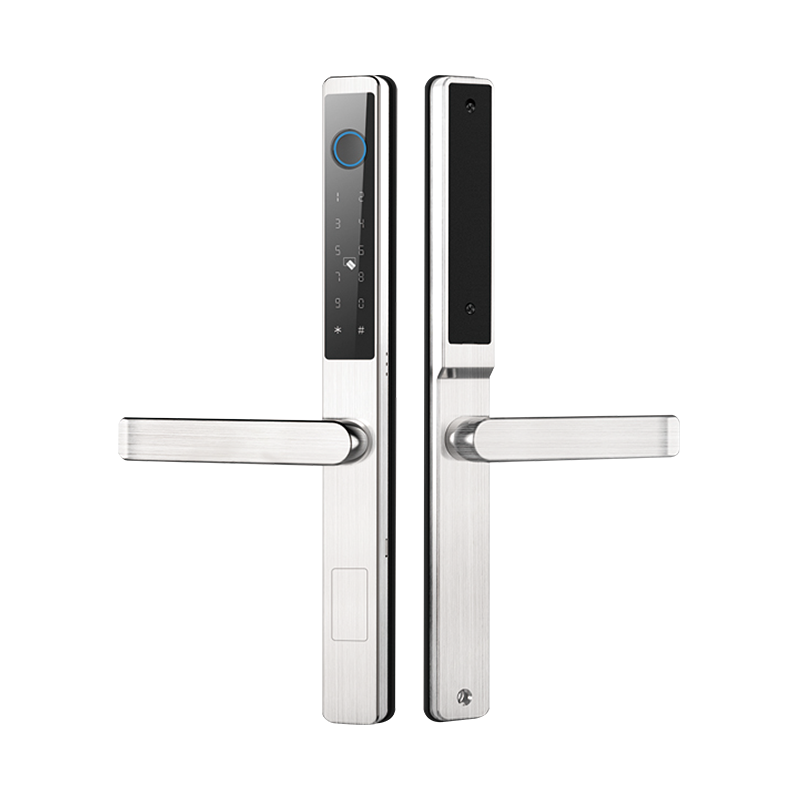
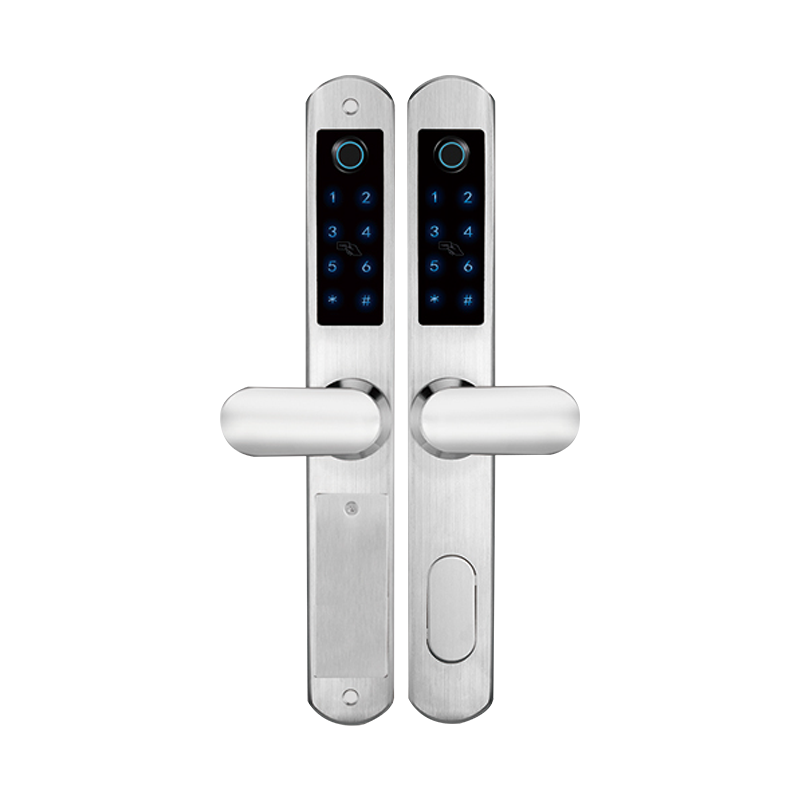
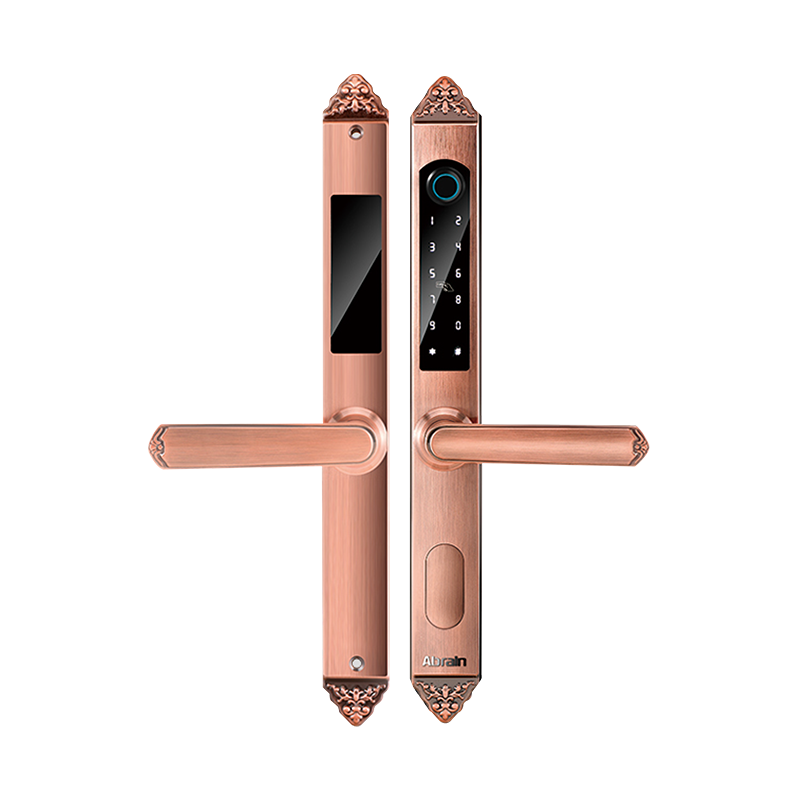
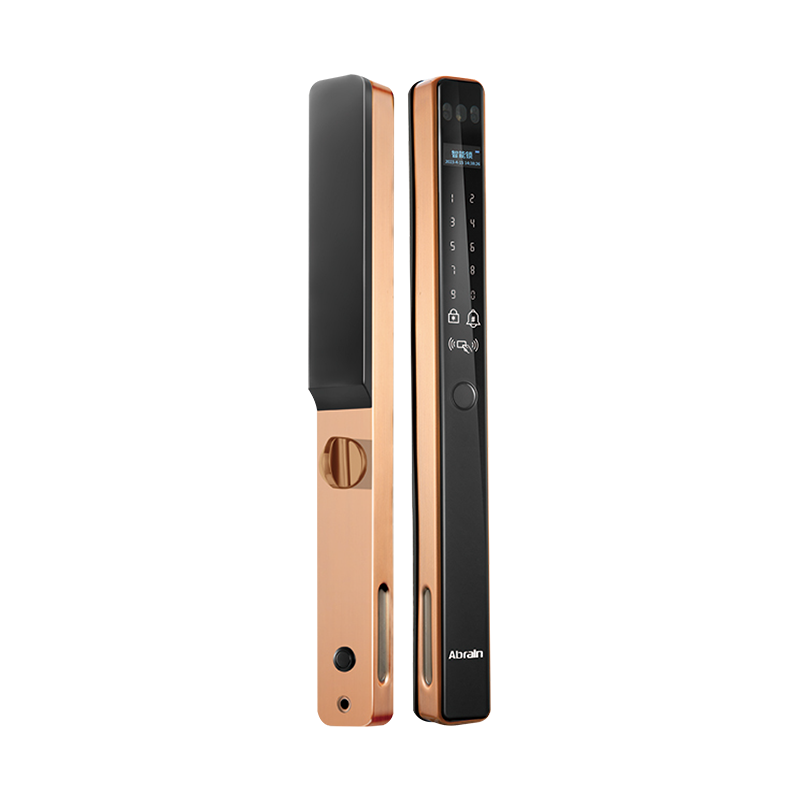
Profile Door Smart Locks with PIN Code, RFID Card, Fingerprint, and App Access
Profile doors have caught on in modern buildings for a reason—they're slim, look clean, and work well with aluminum, metal, and glass frame structures. That narrow frame comes with a catch, though: plenty of smart locks simply don't fit into that kind of space without looking bulky or being installed awkwardly.
That's really the problem a profile door smart lock is built to solve. By using a slimmer panel, a more compact lock body, and a structure that actually cooperates with narrow frames, it manages to bring digital access into the picture without disrupting the door's visual style. In offices, hotels, apartments, commercial spaces, and residential entrances alike, that ends up being a fairly natural upgrade over the mechanical locks these doors used to rely on.
As aluminum profile doors and glass frame doors keep showing up more often in new builds, the demand has shifted right along with them—toward locks that manage to save space, offer real digital access control, and still hold up over years of daily use.
What Is a Smart Lock for Profile Doors?
A smart lock for profile doors is a digital locking device built with narrower door frames in mind—frames that tend to be tighter than what you'd find on standard wooden or security doors. Because of that, there's often less room to work with for the front panel, back panel, mortise, latch, and all the wiring that needs to fit inside.
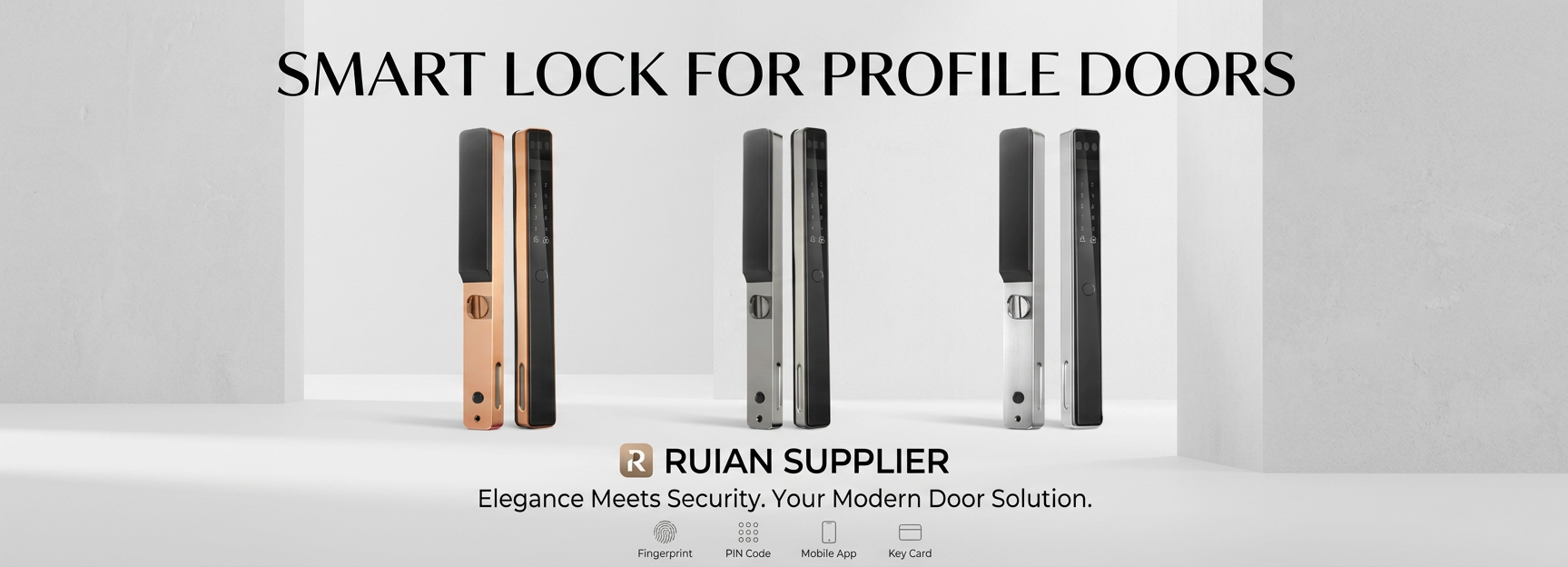
This type of lock tends to get picked for a fairly specific range of doors:
- Aluminum profile doors
- Narrow profile doors
- Metal frame doors
- Glass frame doors
- Office profile doors
- Hotel doors
- Apartment doors
- Commercial entrance doors
- Residential profile doors
What really sets it apart comes down to structure. A regular smart lock can usually get away with a wider panel or a larger mortise, but a profile door lock doesn't have that luxury—it needs a slimmer body and a fit that's accurate down to the millimeter, or it simply won't work on the frame at all.
Key Features of Smart Locks for Profile Doors
Smart locks built for profile doors aim to deliver solid access control without eating up much of the frame's limited space. What each model offers can vary quite a bit, but a few options show up repeatedly across the category:
- PIN code access — a straightforward way to handle daily entry without much fuss
- RFID card access — common in hotels, apartments, offices, and other managed spaces
- Fingerprint access — quick enough for personal identification without slowing anyone down
- Mechanical key backup — there when the electronics fail or a battery dies unexpectedly
- Mobile app access — gives whoever's managing the door more flexibility from a distance
- Fully automatic locking — takes one more step out of the daily routine
- Access logs — useful for going back and checking who came through and when
- Anti-tamper alert — a bit of extra awareness if someone tries messing with the lock
- Remote monitoring — available depending on how the system's set up
- Low battery reminder — keeps power management from becoming a surprise problem
Between these features, profile door locks manage to serve two fairly different needs at once—quiet private entrances on one hand, and doors that see heavy, repeated traffic on the other.
Why Narrow-Profile Compatibility Matters
Narrow profile doors have different installation requirements from standard doors. If the lock panel is too wide or the lock body is not suitable, installation may affect the appearance, frame strength, or locking performance.
Key Compatibility Points
| Door frame width |
Available space for the lock panel |
Prevents oversized panel installation |
| Lock body size |
Mortise depth, width, and latch position |
Ensures smooth locking and unlocking |
| Panel width |
Front and rear panel dimensions |
Keeps the lock aligned with the narrow frame |
| Opening direction |
Left-hand, right-hand, inward, or outward opening |
Avoids handle and latch mismatch |
| Installation space |
Glass edge, frame structure, screw position |
Reduces installation damage and misalignment |
For glass frame doors and aluminum profile doors, careful measurement is especially important. A small difference in frame width can affect the final installation result.
Automation and Access Control Functions
Modern smart locks for profile doors have moved well past just locking and unlocking a door. Quite a few models now handle automated locking alongside broader access management, depending on what a particular property actually needs.
Common Automation Functions
- Locking automatically once the door swings shut
- Auto-lock delay settings that vary depending on the model
- A reminder when the battery starts running low
- An emergency power input for when that battery finally gives out
- Alerts if someone tries tampering with the lock
- Records kept of who's accessed the door and when
- Monitoring the entrance remotely
- Managing users through a connected app
These tend to matter most in offices, apartments, hotels, and commercial buildings, where keeping access records and maintaining stable day-to-day operation carries real weight. On residential profile doors, the same functions end up simplifying daily entry and cutting down on how much people still depend on carrying a physical key around.
Applications
Smart locks made for profile doors end up fitting into quite a few modern door systems, mostly ones where limited space, appearance, and access control all have to come together without one getting shortchanged.
Common Application Areas
Residential entrances — apartment doors, home profile doors, and residential aluminum doors tend to be common spots for these locks.
Office spaces — office profile doors, meeting room entries, and staff access points often call for the same narrow-frame compatibility.
Commercial buildings — storefront entrances, internal access doors, and passages that see a lot of foot traffic throughout the day.
Hotels — guest room doors, service entrances, and setups built around card access systems.
Apartments — unit doors, corridor entrances, and managed residential access points across a building.
Glass frame doors — slimmer glass systems paired with metal or aluminum framing.
Aluminum profile doors — the kind of modern entrances showing up more often in both residential and commercial projects.
Metal frame doors — access points that need something durable, but still compact enough to fit the frame.
On doors that get used constantly throughout the day, durability and steady locking performance end up mattering more than almost anything else when it comes to choosing the right lock.
How to Choose the Right Smart Lock for Profile Doors
Choosing a smart lock for profile doors starts with measurement and functional planning. A slim design is important, but it must also match the door material, access needs, and installation environment.
Selection Guide
| Door frame width |
Confirm whether the panel can fit the narrow frame |
| Lock body size |
Match mortise size, latch structure, and installation depth |
| Door material |
Check compatibility with aluminum, metal, glass frame, or composite doors |
| Opening direction |
Confirm left/right and inward/outward opening |
| Access methods |
Choose PIN code, RFID card, fingerprint, app access, or key backup |
| Automation level |
Decide between manual, semi-automatic, or fully automatic locking |
| Security functions |
Consider anti-tamper alert, access logs, and remote monitoring |
| Material quality |
Prefer stainless steel for anti-rust and corrosion-resistant performance |
| Battery system |
Check battery replacement, low battery reminder, and emergency power |
| Appearance matching |
Match panel color, handle style, and door design |
A suitable lock should fit the door first, then match the access control requirement. Function-rich models are useful only when the installation space and door structure can support them.
FAQ
What should be measured before installation?
Check the door frame width, door thickness, lock body space, panel installation area, opening direction, and distance from the glass or frame edge.
Which access methods are commonly available?
Common options include PIN code, RFID card, fingerprint access, mobile app access, mechanical key backup, and fully automatic locking.
Why is stainless steel useful for profile door smart locks?
Stainless steel helps improve anti-rust, corrosion-resistant, and wear-resistant performance, especially for high-frequency entrances.
Are smart locks suitable for aluminum profile doors?
Yes. Many smart locks for profile doors are designed for aluminum profile doors, provided that the frame width and lock body size are compatible.
Can these locks be used on glass frame doors?
Yes, but the installation space and frame structure must be checked carefully before selection.
Are profile door smart locks suitable for hotels?
Yes. RFID card access, access logs, and compact panel design make them suitable for hotel doors and managed room entrances.
What happens if the battery is low?
A suitable model should provide a low battery reminder. Some models also support emergency power input or mechanical key backup.
Is fully automatic locking necessary?
It depends on the application. It is useful for high-frequency doors and managed entrances, while some residential doors may only need simple digital access.
Picking a smart lock for a profile door really comes down to checking a handful of specifics first—frame width, lock body size, what the door's made of, which way it swings, the access methods on offer, how the battery holds up, and how durable the whole thing actually is. Narrow profile doors don't leave much room to work with, so unlike a standard smart lock, these need to squeeze into tight spaces while still keeping access control stable and the appearance clean.
On aluminum profile doors, glass frame doors, metal frame doors, and entrances at offices, hotels, apartments, or commercial spaces, stainless steel tends to pull ahead—it resists rust, holds up against corrosion, wears well over time, and generally stays stable through years of use.
Ruian's lineup for profile doors leans into that same thinking, built around fitting narrow frames, offering practical access options, using stainless steel for durability, and staying adaptable during installation. For projects that call for a slimmer design, dependable daily access, and something that feels current at the entrance, this category ends up being a fairly straightforward option to work with.


 English
 русский
  Español
  عربى
عربى