Smart Lever Handle Lock Manufacturer Guide for Interior Door Access and Long-Term Supply
Interior door hardware has quietly shifted, and lever handle locks now sit right at the center of that shift. Apartments, offices, co-living rooms, rental spaces, smart home projects—they're all asking for access control that's more flexible than a plain key, and that's exactly why demand for compact, dependable smart lever lock solutions keeps climbing.
Front door smart locks and lever handle smart locks aren't really chasing the same goal. Security matters less here than daily convenience does—indoor privacy, replacement that doesn't turn into a hassle, a handle that feels comfortable under regular use, and a look that actually matches the interior around it. That's what makes this category work so well in spaces people walk through constantly, where handing out keys to everyone just stops making sense after a while.
For overseas markets and project work, what really counts comes down to a handful of things: door compatibility, installation that doesn't eat up half a day, a handle structure that stays solid over time, quality that holds steady, function configuration that can flex to fit different needs, OEM/ODM customization when a market calls for it, and technical support that actually responds. Get the lever handle lock design right, and installation mistakes drop, users warm up to it faster, and the service headaches that usually follow deployment barely show up at all.
What Is a Lever Handle Lock?
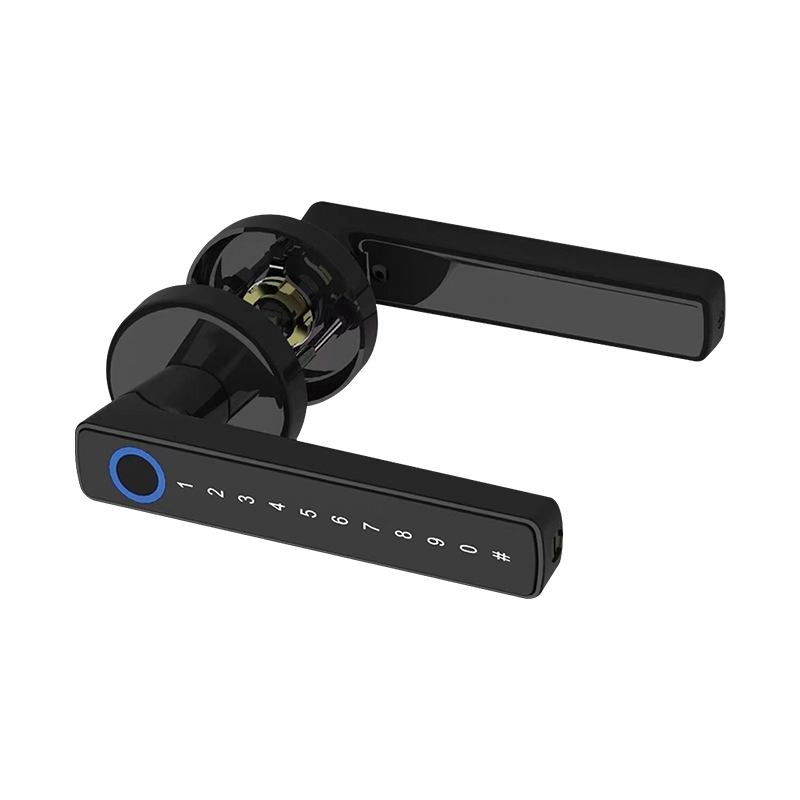
A lever handle lock is exactly what it sounds like—a door lock that opens and closes through a lever-style handle instead of a knob. Add electronics to that structure and you get a smart lever handle lock, which lets people unlock a door through fingerprint recognition, password access, RFID/NFC card, mechanical key backup, and sometimes app-based management on top of all that.
You'll run into this lock type on: 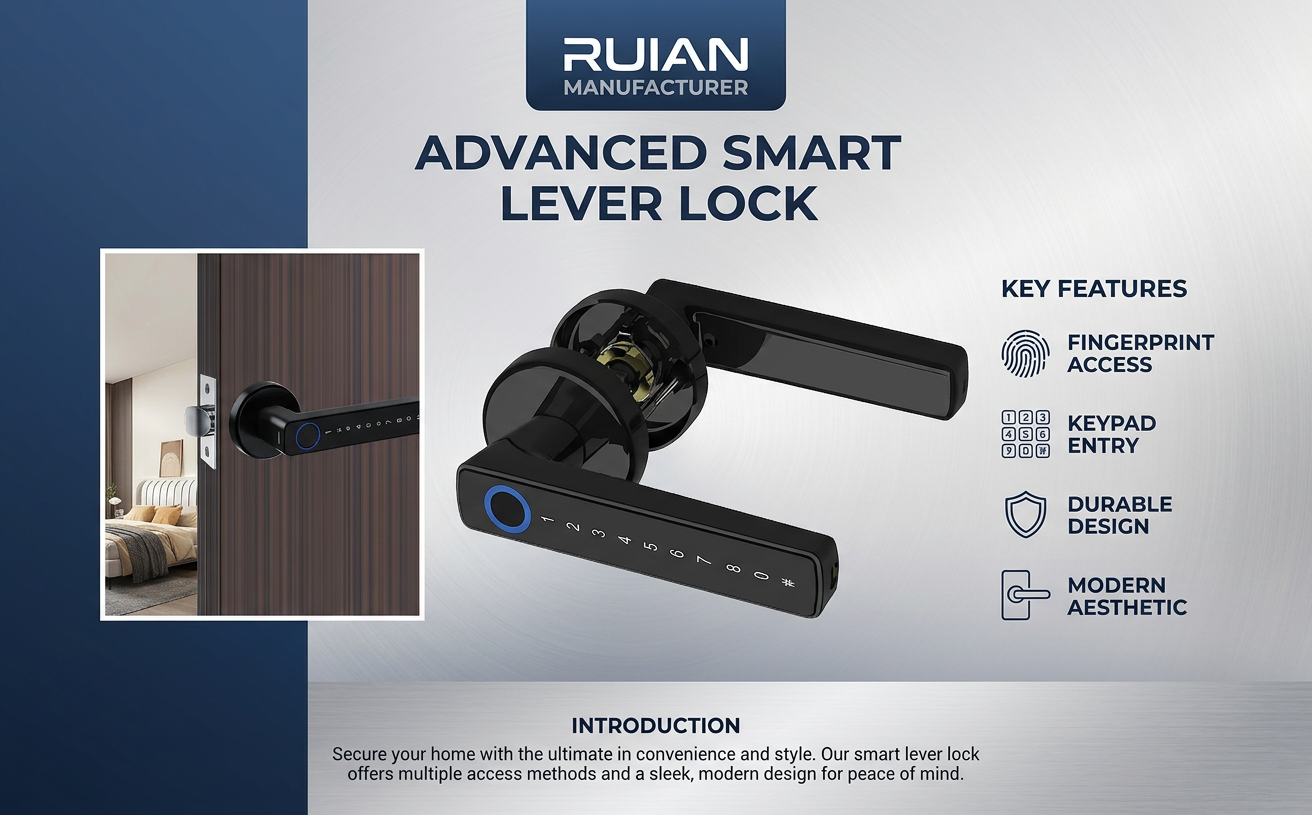
- Indoor doors
- Bedroom doors
- Apartment rooms
- Office doors
- Home offices
- Storage rooms
- Shared spaces
- Co-living rooms
- Staff rooms
- Small commercial spaces
What makes a smart lever lock work so well indoors is how it blends handle operation people already know with access management that's actually flexible. Someone opens the door the normal way, just pressing the lever down, while whoever's managing the space—a property team, an office admin—gets to hand out and revoke access without dealing with physical keys changing hands.
Smart Lever Lock vs. Traditional Mechanical Lever Lock
A traditional mechanical lever lock leans on a physical key, or maybe a basic privacy button if you're lucky. Simple enough to use, sure, but once several people need to get through the same door, managing all those keys stops being efficient pretty fast.
A smart lever lock holds onto that same lever-handle feel while layering digital access on top. Fingerprints, passwords, cards, app functions—all of it cuts down on how much you depend on keys and gives you real control over who's coming and going.
Smart Lever Lock vs. Knob Lock
Knob locks require twisting a round knob, and while that's still common on older interior doors, it's not exactly comfortable when you're using it constantly—think offices, apartments, shared spaces where the door gets touched dozens of times a day.
A lever handle just presses down, which feels more natural and works better ergonomically. That alone makes a smart lever lock a better match for high-frequency indoor use and modern interior projects generally.
Smart Lever Lock vs. Deadbolt Lock
Deadbolt locks show up mostly on entrance doors, where security needs run higher. They typically function as a standalone locking mechanism rather than a complete handle system.
A lever handle lock, on the other hand, handles both the opening motion and privacy control in a single unit, which fits interior doors better. Bedrooms, offices, apartment rooms, shared spaces—these all lean toward the lever lock for exactly that reason.
Smart Lever Lock vs. General Smart Door Lock
General smart door locks often get designed with entrance doors in mind—mortise lock bodies, deadbolt systems, that sort of structure—and they don't always translate well to standard interior door preparation.
A smart lever handle lock, by contrast, is built specifically around indoor door compatibility: a handle that's comfortable to operate, installation that doesn't take all day, a look that fits interior spaces, and replacement that's genuinely simple when the time comes.
A few things worth knowing about how it differs:
- Lever handle operation: A press-down motion makes daily use easier than twisting or turning.
- Indoor door compatibility: Fits bedroom, office, apartment, and interior room doors without much fuss.
- Lock body structure: Built around common lever lock applications rather than heavier entrance hardware.
- Installation hole requirements: Generally simpler than what a full mortise smart lock demands.
- Door thickness requirements: Needs to line up with typical interior door thickness ranges.
- User-friendly access: Holds up well under frequent entry and exit throughout the day.
- Smart access options: Fingerprint, password, RFID/NFC card, key backup, and app control where available.
- Interior design matching: Panel and handle styles that read as modern rather than utilitarian.
- Replacement convenience: Makes upgrading from a mechanical lever lock a lot less complicated.
- Market suitability: Fits comfortably into residential, apartment, office, shared, and small commercial settings.
Why Lever Handle Locks Are Suitable for Indoor Door Applications
Security isn't really the whole story with a smart lever handle lock. It works more as an interior access solution, something that pulls privacy, convenience, user management, and a consistent look all into one piece of hardware.
Convenient Daily Access
Interior doors get used constantly throughout the day—bedrooms, offices, apartment rooms, shared spaces all demand access that's fast and doesn't feel like a chore. A lever handle lets someone open the door the way they always have, just pressing down, while fingerprint or password access takes keys out of the equation entirely.
Reduced Key Management
Keys go missing. They're also a pain to manage once more than a couple people need access to the same door. Smart lever locks ease that burden by swapping physical keys for digital credentials—fingerprints, passwords, cards, app permissions, whatever fits the situation.
Better Privacy Control
Bedroom doors, office rooms, staff rooms, co-living spaces—privacy matters in all of them, just not in the same heavy-handed way a front door demands. A smart lever handle lock gives you controlled access without making an interior room feel like it needs a vault door.
Easier Access Credential Management
Access needs shift often in apartments, shared spaces, and rental properties. Updating a password, reissuing a card, or adjusting app permissions is a lot less painful than swapping out an entire lock every time a tenant or user changes.
Modern Interior Appearance
Hardware has to fit the room it's in, and a clean panel with a well-balanced handle shape and a modern finish does exactly that—working just as well against wood doors, painted doors, office doors, or a contemporary interior overall.
Comfortable Handle Operation
How a handle feels day to day comes down to its structure. A lever that moves smoothly and returns with the right amount of force just feels dependable, while poor construction shows up quickly as looseness, misalignment, or wear that happens way too soon.
Suitable for Frequent Indoor Use
Indoor doors open and close far more often than most people realize. That kind of repetition calls for a handle mechanism built to last, a latch that moves reliably, electronics that don't hiccup, and power consumption low enough that battery changes aren't a constant chore.
Flexible Access for Different Users
Not every room needs the same access setup. A bedroom might only need fingerprint and password. An office often wants card access paired with a record of who came and went. A shared workspace might do better with temporary passwords and app-based management instead.
Simple Replacement for Common Interior Doors
A lot of smart lever locks get designed specifically to make replacement easier on standard interior doors. Once door thickness, latch size, hole position, and handle direction are all confirmed, installation usually goes smoothly without needing much modification to the door itself.
Key Concerns Before Selecting Smart Lever Handle Locks
Picking a smart lever handle lock for market development, channel sales, or a project isn't something to rush through. Both the product structure and how it'll affect service down the line deserve a careful look.
Whether the Lock Fits Common Indoor Doors
Door fit is where things usually go wrong first. If a lock doesn't line up with door thickness, latch size, spindle position, or handle direction, installation turns into a mess pretty quickly. Clear dimension drawings paired with actual sample testing catch these mismatches before they become a wider problem.
Whether the Lever Handle Is Easy to Operate
A handle needs to feel firm and move smoothly, without any wobble creeping in after regular use. What separates a quality lever handle lock from a mediocre one usually comes down to spring return that stays consistent, a handle angle that just feels right, and internal connection parts that don't loosen over time.
Whether Installation Is Simple for Installers
Time on site adds up fast when installation isn't straightforward, and mistakes tend to follow right behind. Clear instructions, drilling templates that are actually accurate, a complete set of accessories, and programming steps that don't require a manual read three times over—that's what makes installation go smoothly.
Whether the Product Can Reduce After-Sales Problems
Unstable electronics, setup steps nobody can follow, latch movement that catches, battery issues, handles that wear out too soon—these are where most after-sales headaches come from. Solid testing, assembly that doesn't vary run to run, and documentation that actually explains things go a long way toward avoiding all of it.
Whether the Appearance Matches Modern Interior Styles
Looks matter more than people sometimes admit, especially on interior doors. A slim panel, a keypad layout that isn't cluttered, colors people actually want, and a handle that feels comfortable to the touch—all of this makes a lock easier to place in homes, apartments, offices, and shared spaces without it looking out of place.
Whether the Function Configuration Matches Market Demand
What a bedroom needs and what an office needs aren't the same thing. Fingerprint and password might cover a bedroom just fine, while an office leans toward card access with logs, and a rental property probably wants temporary passwords with app management thrown in. The function set has to track how the lock actually gets used, not just what sounds impressive.
Whether the Price-Performance Ratio Is Competitive
Cost alone doesn't make a product worth choosing. Function, structure, finish, how easy it is to install, how stable the service side stays, and how much room there is for customization—all of that factors in together. The real payoff shows up when a lock keeps performing the same way across dozens or hundreds of doors, not just the first one.
Whether Product Quality Remains Consistent
Consistency isn't optional for channel programs or project work. Color, handle feel, lock body fit, electronic response, the accessories included, packaging, even the instructions—all of it needs to stay the same from one production run to the next.
Whether Packaging, Logo, and User Manuals Can Be Customized
Brand presentation still counts for something, even on a smart lock. Logo placement, box colors, product labels, manuals, installation guides, app instructions—these should all be flexible enough to adjust for whatever a local market expects.
Whether Technical Support Is Clear and Responsive
Support needs to cover door compatibility, installation drawings, programming, app setup, resets, troubleshooting, and function configuration—and it needs to be clear enough that people aren't left guessing. That clarity is what keeps project delays and service pressure from piling up later.
Lever Handle Lock vs. Other Lock Types
Different lock types are suitable for different doors and usage habits. The table below helps clarify where a Lever Handle Lock provides stronger commercial value and where other products may be more suitable.
| Lever Handle Lock |
Common indoor doors, bedroom doors, office doors, apartment rooms |
Comfortable press-down handle operation |
Usually moderate and replacement-friendly when dimensions match |
Key, fingerprint, password, RFID/NFC card, app options depending on model |
Strong; available in modern panel and handle styles |
Bedrooms, offices, apartments, shared rooms, small commercial spaces |
| Knob Lock |
Common interior doors, older residential doors |
Twist operation; less ergonomic for frequent use |
Usually simple |
Mostly mechanical key or privacy button |
Basic; limited modern smart appearance |
Simple bedrooms, bathrooms, basic interior rooms |
| Deadbolt Lock |
Entry doors and selected exterior doors |
Separate locking action without lever operation |
Depends on door preparation |
Key, keypad, app, or smart options depending on model |
More suitable for entry hardware than interior design |
Front doors, back doors, exterior doors |
| General Smart Door Lock |
Varies by structure; may suit entrance or mortise doors |
Depends on model design |
Can be higher if door preparation differs |
Fingerprint, password, card, app, key backup |
Varies widely |
Entrance doors, apartments, offices, smart home doors |
A Smart Lever Handle Lock is especially valuable for interior spaces that need convenient access, privacy control, and a clean design. Its main boundary is that it should be selected according to indoor door structure rather than treated as a universal lock for every door type.
Why Choose Lever Handle Lock
A lever handle lock strikes a workable balance between smart access and the kind of everyday use interior doors actually get. It sharpens up room-level access management without turning a simple door into something that feels overly complicated.
A few advantages stand out:
- Comfortable daily use: The lever presses down easily, which matters a lot once you factor in how often interior doors open and close throughout the day.
- Reduced key dependence: Fingerprint, password, card, and app options mean access doesn't hinge on whether someone remembers to carry a key.
- Better privacy control: Bedrooms, offices, apartment rooms, and shared spaces all benefit from this kind of controlled access.
- Easy interior matching: Panels and finishes that look current fit naturally into both residential and commercial interiors.
- Flexible configuration: Functions can shift depending on what a specific room or application actually calls for.
- Lower installation risk: When door compatibility is confirmed and the instructions are clear, fitting problems mostly stay out of the picture.
- Project-friendly use: Configuration that doesn't drift and quality that stays consistent make multi-room rollouts a lot less stressful.
- Brand development value: Logo work, packaging, manuals, and appearance tweaks all give the product room to build its own identity in a market.
Why Choose Ruian Lever Handle Lock Factory
Ruian centers its work on smart lever handle locks built for indoor doors, bringing together handle structures that hold up, smart access functions, and room for real customization. These locks end up on bedroom doors, apartment rooms, office doors, shared spaces, storage rooms, rental properties, and small commercial interiors.
Door Compatibility Support
Getting the installation details right—door thickness, latch size, handle direction, lock body structure, spindle length, hole position—is where Ruian puts a lot of its attention, mainly because that's exactly where installation risk tends to creep in across different interior doors.
Reliable Handle Structure
A lever lock has to keep feeling stable long after the first hundred uses, not just on day one. That's why handle strength, how consistently the return spring performs, latch movement, and the internal mechanical connections all get close attention, since daily operation over the years depends on them holding together.
Flexible Function Options
Fingerprint recognition, password access, RFID/NFC card, mechanical key backup, optional WiFi, app management, temporary passwords, access records—the configuration can flex depending on what a given application actually needs.
OEM/ODM Customization
Logo, color, panel design, handle style, packaging, the user manual, function setup, market-specific tweaks—all of it can adjust, which helps build something that doesn't just blend into every other lever lock on the shelf.
Quality Control
Products go through checks covering lock body fit, handle operation, electronic functions, battery performance, surface finish, aging performance, appearance, and packaging—not just one or two of these, but the whole picture together.
Stable Supply and Support
Long-term cooperation and project work run smoother when configuration stays consistent, technical documents are actually available, sample testing happens before commitments get made, installation guidance is clear, troubleshooting support responds when needed, and model recommendations make sense for whatever the project calls for. That's the kind of support Ruian keeps in place.
FAQ About Lever Handle Locks
What doors are suitable for Smart Lever Handle Locks?
Smart lever handle locks are suitable for common interior wooden doors, selected metal doors, bedroom doors, apartment room doors, office doors, and shared space doors when door thickness and latch dimensions match.
Are Lever Handle Locks suitable for bedrooms and offices?
Yes. Lever handle locks are suitable for bedrooms and offices because they provide privacy, convenient access, and comfortable handle operation for frequent daily use.
What is the difference between a Lever Handle Lock and a knob lock?
A lever handle lock uses a press-down handle, while a knob lock uses a twisting knob. Lever handles are usually more ergonomic and easier to operate in frequent-use indoor spaces.
Do Smart Lever Locks support fingerprint and password access?
Yes. Many smart lever locks support fingerprint recognition and password access. Depending on the model, they may also support RFID/NFC card, mechanical key backup, WiFi, and app management.
Can Lever Handle Locks be used in apartments and shared spaces?
Yes. They are suitable for apartment rooms, co-living rooms, shared workspaces, and rental properties because they support flexible access credentials and reduce key dependence.
What should be checked before installing a Smart Lever Handle Lock?
Important points include door thickness, latch size, installation hole position, handle direction, lock body compatibility, door material, and battery compartment access.
Can Lever Handle Locks be customized with logo and packaging?
Yes. Common customization options include logo placement, panel color, handle design, packaging design, user manual language, function configuration, and market-specific accessory setup.
A lever handle lock holds its own as a category within indoor smart access, pulling together handle operation that feels natural, a look that fits modern interiors, unlocking methods that flex to whatever's needed, and privacy control that works room by room. Whether it's bedrooms, apartment rooms, office doors, shared spaces, storage rooms, rental properties, or small commercial spaces, a smart lever handle lock brings something to the table that goes past just locking a door.
Door compatibility, handle durability, how easy installation turns out to be, function configuration, room for OEM/ODM flexibility, quality that doesn't waver, and supply that stays dependable over the long run—these are the factors that actually matter for overseas market development, channel sales, project application, or any product planning built around a brand. Ruian works with product catalog review, technical specifications, sample testing, OEM/ODM solutions, project recommendations, and quotation details, all built around lever handle smart lock applications.

 русский
  Español
  عربى
عربى 





 Email:
  Phone: +86-13575699186
  Address: No.135, Wanyu Road, Zhiying Industrial Zone, Yongkang City, Zhejiang Province, China.