Smart Lock for Glass Doors: Digital Access Solutions for Modern Glass Entrances
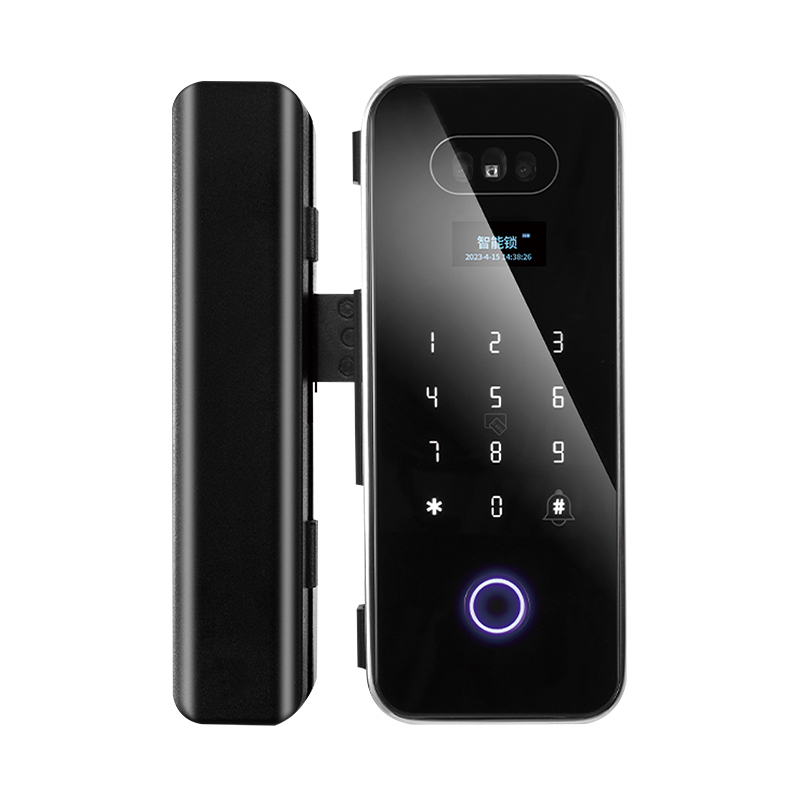
A smart lock for glass doors is an electronic access lock built specifically for glass door systems. Instead of depending entirely on mechanical keys, it lets users unlock and manage access through digital methods.
Glass doors don't behave quite like wooden, steel, or aluminum doors. A lot of them have no traditional lock cavity to work with, and some rely on frameless panels where drilling is limited, or simply not something installers want to risk. That's part of why glass door smart locks so often turn to clamp-style installation, specialized brackets, or lock structures built to work with glass in the first place.
They're commonly used on:
- Commercial glass doors
- Office glass doors
- Residential glass doors
- Sliding glass doors
- Swing glass doors
- Frameless glass doors
- Framed glass doors
- Hotel glass doors
- Retail glass entrances
- Patio and garden glass doors
The goal is simple: provide secure access without damaging the clean design of the glass entrance.
Key Features of Smart Locks for Glass Doors
Smart locks for glass doors tend to bring together digital access, safety-related functions, and a design that doesn't fight against installation requirements. What actually comes packed in varies by model, but a handful of features show up fairly consistently:
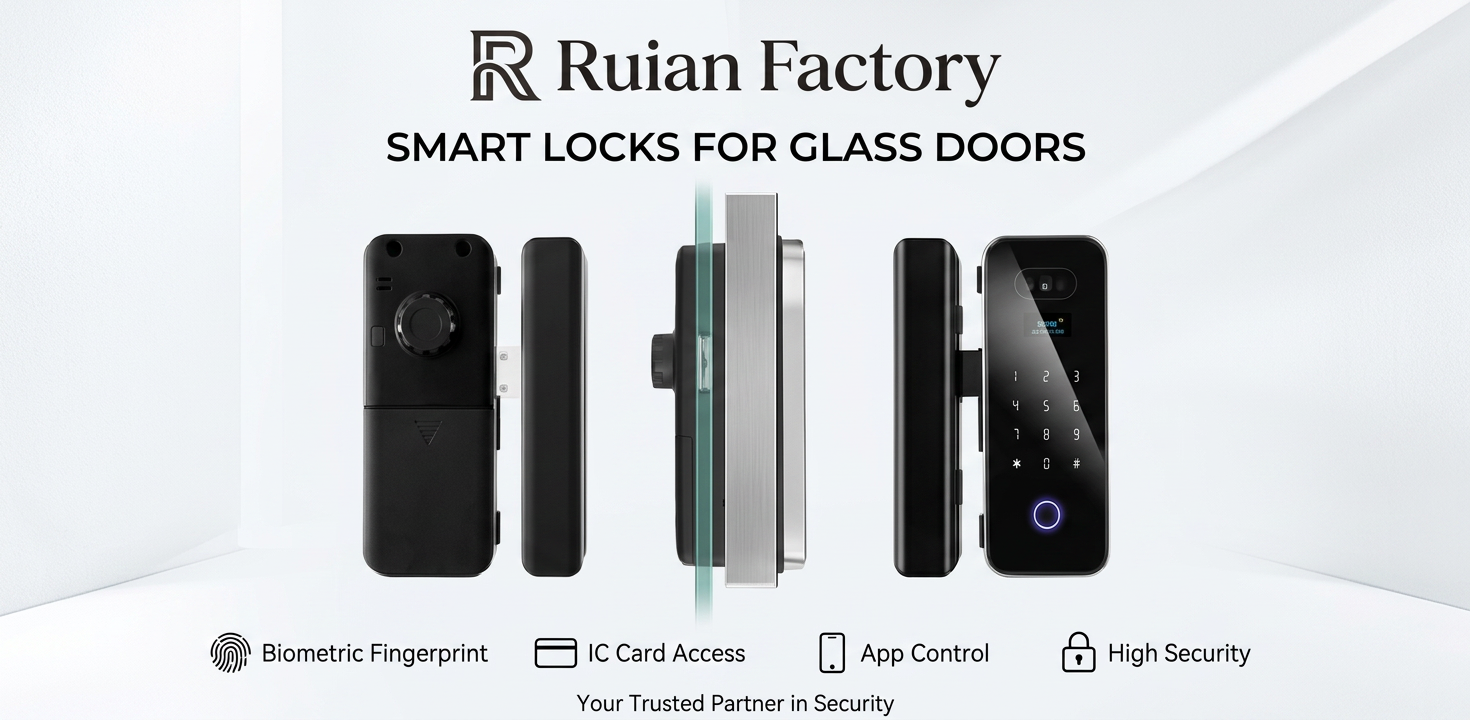
- Fingerprint recognition, mainly for quick personal access
- Password entry, useful for keyless routine use
- RFID card access, which suits offices, hotels, apartments, and other managed spaces
- A mechanical key kept in reserve for emergencies
- Remote control, letting someone unlock from a short distance without fumbling for anything
- Mobile app access, covering user settings and broader access management
- Tamper alerts that flag unusual or abnormal operation attempts
- Access logs, handy when someone needs to check entry records after the fact
- Encryption built in to protect digital access information
- A low battery reminder, though this depends on how the specific model is designed
Where these features earn their keep most is in spots where a single entrance sees traffic from plenty of different people—offices, retail stores, hotel areas, and apartment facilities all fall squarely into that category.
Why Glass Door Compatibility Matters
Glass doors require more careful lock selection than ordinary doors. A lock that works well on a wooden or metal door may not be suitable for glass, even if the functions look similar.
Key Compatibility Factors
| Glass door type |
Sliding, swing, framed, or frameless |
Determines lock structure and installation method |
| Glass thickness |
Actual glass panel thickness |
Ensures stable clamping or proper fitting |
| Frame structure |
Aluminum frame, metal frame, or frameless design |
Affects bracket and lock body selection |
| Installation method |
Clamp installation, drilling, or bracket fixing |
Reduces risk of glass damage |
| Opening direction |
Left/right, inward/outward, sliding direction |
Ensures correct locking alignment |
| Appearance matching |
Finish, panel size, and handle design |
Keeps the glass entrance visually clean |
For glass doors, measurement should happen before choosing the lock. Even a small mismatch can affect installation stability or final appearance.
Indoor and Outdoor Performance
Glass installations end up in some pretty different settings—indoors, storefronts, patios, near garden areas, or right at building entrances—and where a piece sits actually shapes what the lock selection process should look like.
Indoors, the priorities tend to lean toward appearance, access methods, and how well user management works day to day. Step outside, or even into a semi-outdoor spot, and protection against moisture, dust, rain splash, and shifting temperatures starts mattering just as much, sometimes more.
A lock suited for glass installations generally needs a few things accounted for:
- Stainless steel or another corrosion-resistant material
- A keypad and fingerprint module that's properly shielded
- Internal design built to resist moisture
- A battery compartment that stays stable under varying conditions
- Structure suited to exposed or semi-exposed placements
- A surface finish that holds up against daily wear
For anything facing the outdoors directly, it's worth checking canopy coverage, which direction rain tends to hit from, how much sun exposure the spot gets, and what the local climate looks like—all before installation actually happens, not after.
Applications
Smart locks made for glass systems show up across residential, commercial, hospitality, and public-facing settings alike, and the reason comes down to something fairly simple—they manage to combine real access control with a look that doesn't clash with cleaner architectural styling.
Where these locks typically show up:
- Residential settings, covering home entrances, patios, gardens, and terraces
- Office environments, particularly meeting rooms, private offices, and reception areas
- Commercial spaces like shops, service counters, and building entrances
- Hotel settings, from lobbies to office areas and other controlled zones
- Apartment complexes, mainly around shared entrances and facility access
- Retail spaces, both front-facing entrances and staff-only areas
- Sliding systems used on patios, balconies, and commercial interiors
- Swing panels found in offices, hotels, and residential spaces
- Frameless setups where visual simplicity really matters
- Framed systems built with aluminum or metal structures
Picking the right lock really comes down to more than how it looks sitting on the glass. Function and construction need weighing just as heavily, since a lock that photographs well won't do much good if it doesn't actually suit how the door is built or how people use it day to day.
Why Customization Matters for Glass Door Smart Locks
Customization matters here because glass systems rarely follow one single pattern—door types differ, so do user habits, and installation conditions can shift quite a bit from one setup to the next. A lock that works well on a frameless swing panel might not translate at all to a sliding entrance. And where a residential patio setup might get by fine with simple fingerprint access, an office system often needs something more layered, like RFID card management paired with access logs.
Working out the structure, access methods, material finish, accessories, and smart functions ahead of time tends to pay off later, since the resulting setup ends up supporting secure access, a smoother installation process, and something that actually holds up over years of use. Customization, in this context, isn't really about looks alone—it comes down just as much to compatibility, reliability, and how manageable things stay day to day.
Matching the lock to glass type, thickness, opening direction, installation method, access functions, material quality, power system, and overall appearance tends to make the biggest difference in how well things work out. Across residential, office, commercial, hotel, apartment, retail, patio, sliding, and swing glass systems, stainless steel construction offers a combination that's hard to beat—durability, resistance to corrosion, and a finish clean enough not to distract from the glass itself. Ruian's glass door lock lineup leans into practical functions, dependable installation compatibility, and design that fits naturally into modern spaces built around secure daily access.


 English
 русский
  Español
  عربى
عربى