
 русский
  Español
  عربى
عربى Industry News

GET A QUOTE
How Waterproof Fingerprint Locks Resist Rain and Rust
Outdoor door locks face conditions that indoor hardware never encounters. Rain collects in seams, humidity pushes moisture into electronic components, and metal surfaces in coastal or industrial environments corrode faster than expected. For property managers and security buyers who have already replaced a smart lock that failed within a season or two, the pattern is familiar. A standard fingerprint lock was never designed for sustained outdoor exposure — and the failure modes tend to be slow, invisible, and expensive. Understanding how a Waterproof Fingerprint Lock addresses these specific environmental stresses is where a more informed purchasing decision begins.
Why Outdoor Environments Damage Standard Fingerprint Locks
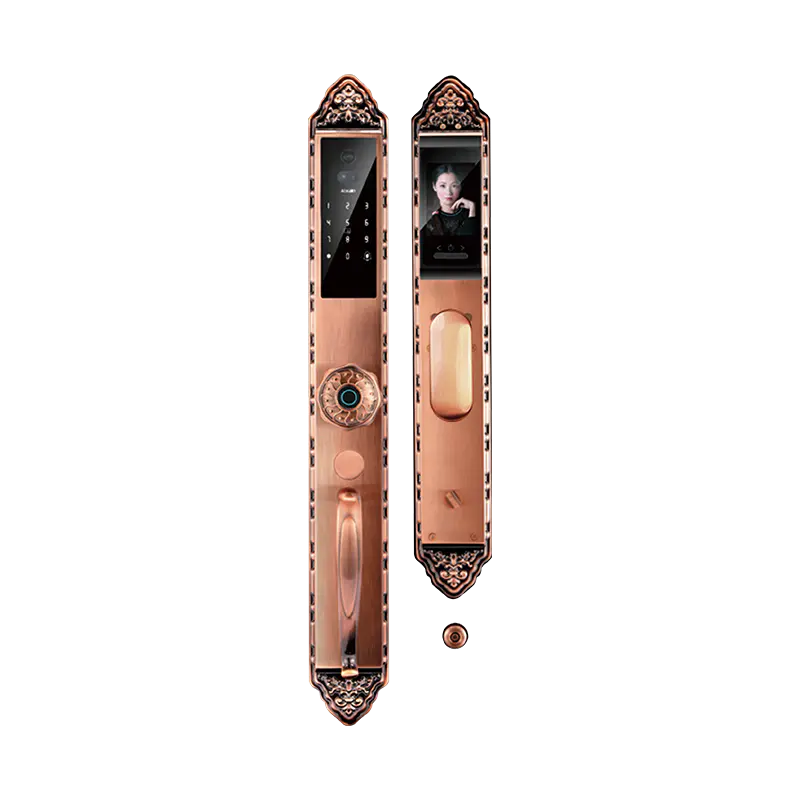
Rain and Water Infiltration Are the Most Direct Threat
Water does not need a large gap to cause damage. Even a small unsealed opening around a keypad, sensor lens, or cable entry point allows moisture to reach the circuit board during a rainstorm. Once water contacts the electronics, the damage is rarely immediate — it tends to show up weeks later as intermittent failures, sensor misreads, or a complete shutdown after the next heavy rain.
The problem compounds with freeze-thaw cycles in colder climates. Water that enters a lock body and then freezes expands, widening the original gap and making the next infiltration easier.
Humidity Creates a Different Kind of Damage
Standing water is visible. Humidity damage is not. In regions with sustained high humidity — coastal areas, tropical climates, poorly ventilated building entrances — condensation forms on internal metal surfaces and circuit contacts. Over weeks and months, this creates oxidation on the sensor contacts and corrosion on the battery terminals.
The result is reduced fingerprint recognition accuracy and, eventually, a lock that reads correctly only under dry conditions. By the time the failure is obvious, the internal damage has already progressed significantly.
How Does Rust Form on a Fingerprint Lock?
Rust forms wherever unprotected ferrous metal is exposed to oxygen and moisture simultaneously. On a standard lock body, that includes the outer housing, screw heads, hinge points, and any internal steel components in contact with the circuit board housing. Salt air accelerates this process considerably, which is why locks installed near the ocean or in industrial environments with airborne chemicals tend to corrode faster than those in dry inland locations.
Rust is not only a cosmetic issue. Corroded mechanical components increase the friction in moving parts, corroded battery contacts interrupt the power supply, and rust particles that shed from the housing can enter the sensor area and affect reading performance.
What Separates a Waterproof Fingerprint Lock From a Standard Model
Sealed Housing Is the Foundation of Weather Resistance
The housing design is where weather resistance either exists or does not. A Waterproof Fingerprint Lock uses gasket sealing at every junction point — between the outer panel and the door surface, around the sensor module, at cable entry points, and at the battery compartment cover. These gaskets compress when the lock is installed, closing the gaps that water and humidity would otherwise use to enter.
The difference between a sealed and unsealed design is not always visible from the outside. It shows up in the IP rating, which indicates what level of water and dust protection the product has been tested to provide.
IP Ratings Explained for Outdoor Lock Buyers
IP ratings follow a two-digit format. The first digit refers to solid particle protection (dust), and the second digit refers to liquid ingress protection. For outdoor fingerprint locks, the relevant ratings typically fall in a range that covers rain splash, sustained water exposure, and in some cases brief submersion.
A general reference for common IP ratings used in smart lock applications:
| IP Rating | Dust Protection | Water Protection | Typical Use Case |
|---|---|---|---|
| IP44 | Protected against objects over 1mm | Splashing water from any direction | Covered outdoor areas |
| IP55 | Dust protected (limited ingress) | Low-pressure water jets | Semi-exposed outdoor doors |
| IP65 | Fully dust-tight | Water jets from any direction | Fully exposed outdoor doors |
| IP66 | Fully dust-tight | Powerful water jets | Harsh outdoor environments |
| IP67 | Fully dust-tight | Temporary immersion up to 1 meter | Flood-prone or industrial use |
For residential outdoor doors in rainy climates, IP65 is a practical threshold. For commercial buildings, coastal properties, or industrial facilities, IP66 or higher provides a more reliable margin.
Material Choice Drives Long-Term Rust Resistance
Housing material is as important as the sealing design. Zinc alloy is widely used in fingerprint locks because it casts well into complex shapes, holds a surface finish, and resists corrosion meaningfully when properly coated. Stainless steel offers stronger corrosion resistance in salt-spray environments and is harder to deform under physical impact.
Both materials outperform standard steel housings in outdoor conditions, but the coating applied over the base material also matters. An anti-rust surface treatment — whether anodizing, powder coating, or a specialized weather-resistant finish — extends the effective service life of the housing by limiting direct contact between the base metal and the atmosphere.
How Is the Fingerprint Sensor Protected Specifically?
The sensor lens is a particular vulnerability. It needs to be exposed to read fingerprints accurately, but that exposure also makes it a direct contact point for rain, humidity, and dust. Waterproof Fingerprint Locks address this through a recessed sensor design that creates a physical overhang above the reading surface, combined with a hydrophobic coating on the lens that causes water droplets to bead and run off rather than settling on the surface.
Some designs also include a drainage channel around the sensor housing that directs water away from the lens and toward the exterior of the door, reducing the amount of standing moisture near the reading surface.
Comparing Waterproof vs. Non-Waterproof Fingerprint Lock Performance
The performance difference between the two categories becomes clearest in specific environmental conditions:
| Condition | Standard Fingerprint Lock | Waterproof Fingerprint Lock |
|---|---|---|
| Heavy rain exposure | Potential water ingress, circuit risk | Sealed housing, water directed away |
| High humidity environment | Condensation on contacts, sensor drift | Gasket sealing limits moisture entry |
| Coastal / salt air | Accelerated corrosion on housing | Anti-rust coating and resistant alloy |
| Dusty or industrial setting | Particle ingress affects mechanics | Dust-tight rated housing |
| Freeze-thaw cycles | Water infiltration expands, widens gaps | Sealed entry points reduce infiltration |
The gap in reliability is not just about extreme weather events. It accumulates over regular daily exposure across seasons.
Key Features to Evaluate When Selecting an Outdoor Waterproof Fingerprint Lock
What Should the Housing Specification Include?
When reviewing product specifications for outdoor installation, look for the following:
- IP rating of IP65 or above for fully exposed doors
- Housing material listed as zinc alloy or stainless steel with surface treatment
- Gasket sealing mentioned explicitly at the sensor, keypad, and cable entry points
- Battery compartment rated separately for water protection if it is accessible from outside
- Anti-rust coating or treatment specified on the product data sheet
If a product description uses general terms like "weatherproof" or "water-resistant" without an IP rating, the level of protection is not independently verified.
Installation Conditions Affect Long-Term Performance
Even a well-rated Waterproof Fingerprint Lock will underperform if the installation creates new exposure points. A few installation factors that affect weather resistance:
- Mounting screws should be sealed with weatherproof filler to prevent water tracking down into the door frame
- Cable entries from the lock into the door should be sealed after installation
- The door itself should be positioned so rain does not channel directly onto the lock face; a small overhang above the door significantly reduces direct exposure
- Battery compartments should be checked and re-sealed periodically in high-humidity environments
The lock's rating reflects how it performs under controlled test conditions. Real-world installation introduces variables that can either protect or undermine that rating.
Does Smart Connectivity Change the Waterproofing Requirements?
Fingerprint locks with wireless connectivity — Bluetooth pairing, app control, or network integration — have additional electronic components that also need environmental protection. The antenna, connectivity module, and any indicator LEDs are all potential ingress points if not sealed within the housing.
For smart outdoor fingerprint locks, the IP rating should apply to the fully assembled unit including all connectivity hardware, not just the mechanical lock body. Verifying this in the product specification is worth the extra step before purchasing for outdoor installation.
Taking the Right Steps Before Replacing an Existing Outdoor Lock
If an existing outdoor lock is showing signs of moisture damage or corrosion, a few checks help clarify whether repair or replacement is the appropriate response:
- Inspect the sensor lens for fogging, discoloration, or visible water marks inside the cover
- Check the battery compartment for corrosion on the terminals
- Test fingerprint recognition in wet conditions versus dry conditions to isolate sensor drift
- Look for rust or surface pitting on the housing exterior, particularly around screw heads
- Check whether the existing product carries an IP rating — if it does not, a true waterproof design may be a different product category entirely
These checks help separate minor maintenance issues from structural design limitations that will continue to cause problems regardless of how the lock is serviced.
Finding the Right Waterproof Fingerprint Lock for Your Application
Outdoor security hardware is not a category where a general-purpose product reliably covers every environment. A lock installed on a sheltered residential front door, a fully exposed commercial entrance, and a coastal industrial gate are all facing meaningfully different conditions — and the product specification needs to match that context. For buyers sourcing Waterproof Fingerprint Locks for property development, commercial installation, or security system upgrades, working with a manufacturer that offers documented IP-rated designs and material specifications makes the evaluation process more straightforward. Yongkang Ruian Lock Industry Co, Ltd. produces fingerprint lock products designed for outdoor and demanding environment applications, with a product range that covers different protection levels and housing configurations to suit varied installation requirements. Contacting them directly to discuss your specific application is a practical way to determine which product configuration fits the environmental conditions and security requirements you are working with.
Recommended Products

Ready to Begin?
Product Categories
Contact Information
 Email: [email protected]
 Phone: +86-13575699186
 Address: No.135, Wanyu Road, Zhiying Industrial Zone, Yongkang City, Zhejiang Province, China.
QR Code
Copyright © Yongkang Ruian Lock Industry Co, Ltd. All rights reserved.
