
 русский
  Español
  عربى
عربى 
A smart lock installed in a tropical or coastal setting faces conditions that differ from those found in a dry indoor space. Warm air can carry a large amount of moisture, while daily changes in temperature may leave condensation around the door and lock assembly.
The problem is not limited to direct rain. Moisture can remain on an exterior panel after a humid period, enter through small openings, or collect around areas where different parts meet. A door exposed to sea air also receives airborne salt deposits that can remain on the surface when they are not removed.
Indoor and outdoor sides can experience different conditions at the same time. The exterior may be exposed to humid air and salt, while the interior side remains in a comparatively enclosed space. Moisture can also move through the door structure and reach areas that are not directly exposed to rain.
Several environmental factors can work together:
- High humidity keeps surfaces damp for longer periods.
- Condensation can appear when warm moist air meets a cooler surface.
- Salt deposits can remain on exposed metal.
- Repeated door operation creates movement around joints and contact areas.
- Cleaning and handling can gradually affect surface protection.
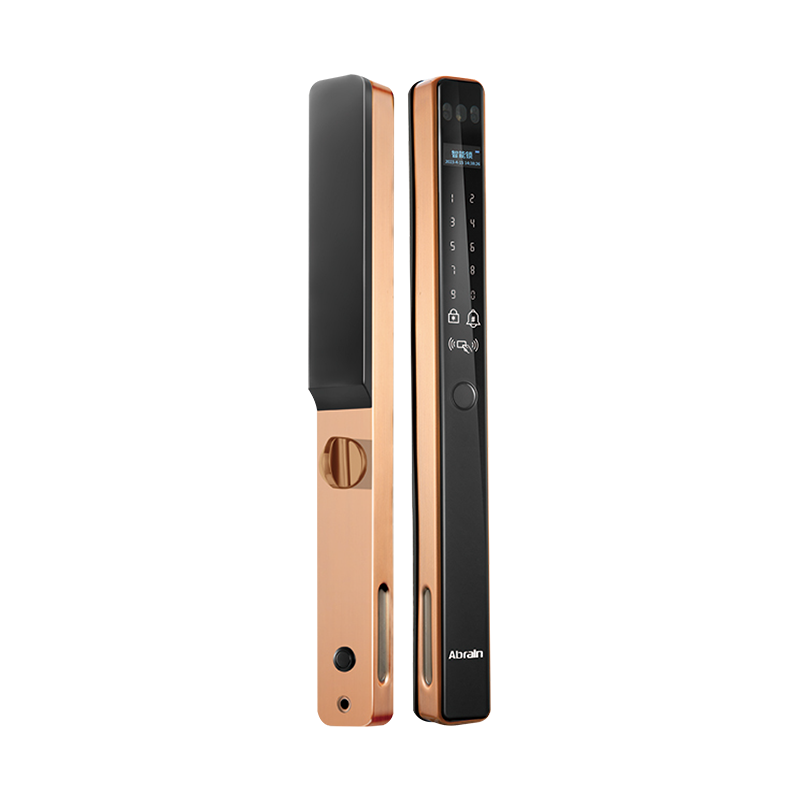
A Stainless Steel Smart Lock needs to deal with this combination rather than with water exposure alone. The condition of the housing, internal components, connection areas, and sealing surfaces all influence how moisture affects the assembly.
How Does Moisture Enter an Ordinary Smart Lock?
Water does not need to enter through a large visible opening to create a problem. A narrow gap around a panel, button, sensor area, connector, or mounting point can provide a path for moisture.
An ordinary smart lock may remain functional after occasional exposure to moisture while gradually developing problems under repeated humid conditions. Moisture that enters during one period can also remain inside areas with limited air movement.
The external panel is an obvious point of exposure, but it is not the only one. The following locations deserve attention:
- Operating areas — Buttons and touch surfaces are repeatedly exposed to hands, cleaning, and outdoor air.
- Panel joints — Small gaps between connected parts can collect moisture.
- Mounting areas — Contact between the lock and door can create less visible spaces.
- Cable and connection paths — Moisture may travel along or around connection points.
- Mechanical openings — Moving components need clearance, which can also create potential entry paths.
Humidity creates a different challenge from direct splashing. A surface can appear dry while moisture remains within a narrow gap. Repeated exposure may gradually affect electrical contacts, springs, moving components, or other internal areas.
The distinction matters when investigating a failure. A lock that stops responding after a wet period may not have suffered from a single water incident. The underlying issue can involve repeated moisture exposure over a longer operating period.
What Happens When Salt Air Reaches the Lock Surface?
Coastal air introduces another factor. Salt carried through the air can settle on exposed surfaces, particularly around outdoor doors and entry points. Once moisture is present, the deposited material can remain active on the surface for longer than ordinary dust.
Salt residue may appear as a light film or stain after the surface dries. Repeated wetting and drying can leave deposits around edges, joints, screws, and other areas where moisture collects.
Corrosion can begin as a surface change rather than an obvious structural problem. A small discolored area may appear around a fastener or connection point. Later, roughness or staining can become more noticeable.
Material choice has a role here, although it is not the only factor. A metal surface can have good resistance to a humid environment and still experience problems when salt, moisture, surface damage, and poor cleaning conditions occur together.
Regular observation can focus on:
- Discoloration around exposed metal.
- Residue near joints and edges.
- Rough areas that were previously smooth.
- Changes around fasteners or moving sections.
- Deposits that return after cleaning.
Salt exposure also affects areas that may receive little attention during routine cleaning. The underside of a panel or a sheltered edge can retain moisture and residue even when the visible front surface looks clean.
Why Can Humidity Cause Electronic and Mechanical Failures?
Moisture affects electronic and mechanical parts in different ways. Electronic components depend on stable connections, while mechanical sections need surfaces to move without excessive friction or contamination.
Inside an ordinary smart lock, repeated humidity can leave moisture around electrical connection points. Condensation can be particularly troublesome because it may form when temperatures change, even when the lock has not been directly exposed to rain.
A gradual problem may show up through changes in operation rather than through obvious visible damage. A button may respond inconsistently. A recognition area may become unreliable. An electronic function may stop working temporarily and return after the surrounding conditions become drier.
Mechanical symptoms can follow a different pattern. Moisture and surface contamination may affect moving parts, while corrosion can make movement less smooth. A latch or internal mechanism that once operated normally may begin to feel different during use.
| Environmental Condition | Possible Surface Change | Possible Operating Effect |
|---|---|---|
| Persistent humidity | Moisture or residue around joints | Irregular electronic response |
| Condensation | Damp areas inside enclosed spaces | Temporary or repeated malfunction |
| Salt deposits | Staining or surface roughness | Increased friction around exposed parts |
| Moisture with surface damage | Local corrosion | Changes in mechanical movement |
Not every operating problem comes from humidity, of course. Power conditions, installation issues, component wear, and other factors can produce similar symptoms. Environmental clues become more useful when they appear together with visible moisture or corrosion marks.
How Does a Double-Sided Waterproof Structure Change Protection?
Water resistance cannot be considered only from the side facing outdoors. A door has two surfaces, and moisture can reach the lock from either direction through different paths.
A double-sided waterproof design treats both sides of the assembly as areas that need protection. The external panel must deal with rain, humidity, and salt deposits, while the internal side also needs protection against moisture moving through the door structure or forming through condensation.
For a Stainless Steel Smart Lock, the approach can involve several structural areas:
- Sealing around the outer and inner panels.
- Limiting gaps at connection points.
- Protecting operating areas from direct moisture entry.
- Separating internal electrical sections from exposed areas.
- Reducing paths through which water can travel along the assembly.
The idea is not to create an absolutely isolated enclosure under every condition. Real doors are opened, closed, cleaned, exposed to changing temperatures, and installed in different environments. Practical waterproofing aims to reduce the opportunities for moisture to reach sensitive areas.
A double-sided structure also changes how installation needs to be considered. A well-protected exterior can still face problems if the inner connection area allows moisture to move into the lock body. Protection needs to work as part of the complete assembly rather than as a feature attached to one visible panel.
The same principle applies to coastal environments. Keeping salt and moisture away from internal components requires attention to both exposed surfaces and less visible connection areas.
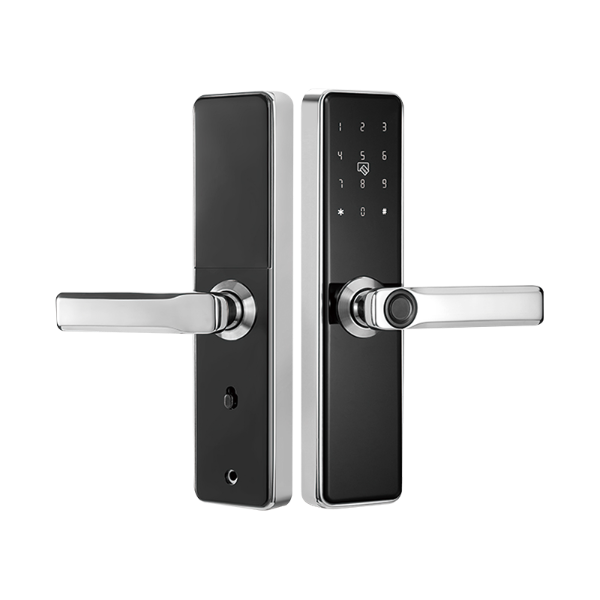
Why Does 304 Stainless Steel Matter in Coastal Conditions?
Material selection becomes more noticeable when a lock remains exposed to humid air and salt residue for long periods. 304 stainless steel is commonly used in environments where resistance to moisture and ordinary atmospheric exposure matters, although the material does not make a surface immune to corrosion.
The condition of the surface still matters. A clean, intact surface behaves differently from one covered with salt deposits or damaged by scratches. Small areas around fasteners, joints, and contact points may also respond differently from a broad, exposed panel.
Coastal exposure can be affected by several conditions at once:
- Salt residue remains on the surface after moisture evaporates.
- Scratches can expose areas that are more vulnerable to environmental exposure.
- Poor drainage may allow moisture to stay around edges or joints.
- Dirt can hold moisture against the metal surface.
- Cleaning practices can either remove residue or create additional surface damage.
A 304 Stainless Steel Smart Lock still needs suitable structural protection. Material resistance and waterproof construction solve different parts of the problem. One concerns how the surface responds to the surrounding environment; the other concerns how moisture reaches the internal assembly.
The distinction is useful when comparing different lock designs. A corrosion-resistant outer material cannot compensate for a poorly protected internal connection, while a carefully sealed structure does not remove the need for suitable surface material.
Which Structural Details Help Reduce Water Entry?
Water protection depends on several small details rather than a single outer layer. The connection between the lock panel and the door, for example, can become an entry path when the contact surface is uneven or the sealing area is poorly protected.
Operating areas deserve attention as well. Buttons, fingerprint areas, key openings, and similar sections are touched frequently and may be exposed directly to rain, condensation, or cleaning moisture. Their surrounding structure needs to limit the movement of water toward the inside.
The inner side of the lock should not be treated as a dry zone simply because it faces the room. Moisture can travel through the door or appear as condensation when indoor and outdoor conditions change.
A practical waterproof structure can address several locations:
- Panel connection — The contact between the lock and door needs to limit open paths around the assembly.
- Operating surface — Frequently touched areas require protection without interfering with normal operation.
- Internal connection points — Electrical and mechanical sections need separation from areas where moisture may collect.
- Edges and joints — Water can remain around recessed or sheltered areas longer than on an exposed flat surface.
- Drainage direction — Where moisture does reach an exposed area, the structure should avoid encouraging it toward sensitive internal sections.
Good waterproofing is less about adding a single barrier and more about controlling the routes available to water. A small opening may have little effect in a dry indoor room and become far more relevant when the same lock is exposed to persistent humidity.
How Should a Smart Lock Be Checked in Humid and Coastal Areas?
Routine inspection can reveal environmental damage before a small surface change becomes an operating concern. The exterior is the natural place to begin, but checking only the visible front panel leaves several areas unexamined.
Look around the edges, mounting points, operating surfaces, and inner panel. Salt residue may be easier to spot after the surface has dried. Darkened areas, unusual roughness, or deposits around joints can also indicate that moisture has remained in a particular location.
Operation provides another useful clue. A change in button response, recognition behavior, latch movement, or unusual friction should be considered alongside the physical condition of the lock.
A simple inspection routine can include:
- Wipe away suitable surface residue and check whether discoloration remains.
- Examine exposed metal around joints and mounting areas.
- Check the inner and outer sides rather than inspecting only the outdoor panel.
- Observe whether mechanical movement has become less smooth.
- Look for recurring moisture around the same location.
- Record visible changes so they can be compared during later maintenance.
Cleaning needs some care. Abrasive tools can leave scratches on stainless steel, while unsuitable cleaning substances may affect the surface finish. Salt residue should not simply be rubbed aggressively across the metal.
When an electronic problem appears together with visible moisture or corrosion, the two conditions should be considered together. A change in operation does not prove that water caused the failure, but environmental evidence can provide a useful direction for further inspection.
What Should Be Considered When Choosing a Lock for Tropical Use?
A lock intended for a tropical or coastal location needs to be considered as a complete assembly. Material, sealing, installation position, exposure level, and maintenance habits all influence how the lock behaves over time.
A sheltered entrance and a door directly exposed to sea air do not face identical conditions. A covered balcony, outdoor gate, hotel entrance, and residential door may also have different patterns of moisture exposure. The surrounding architecture can change how much rain reaches the lock and how quickly damp surfaces dry.
The choice of a Stainless Steel Smart Lock can involve several practical questions:
- Is the outer and inner structure protected against moisture?
- Which parts are directly exposed to outdoor air?
- Can salt residue collect around joints or edges?
- Are internal electrical areas separated from potential moisture paths?
- Is the surface easy to inspect and clean?
- Does the installation method leave exposed gaps around the lock?
- Can the maintenance routine be carried out without damaging the surface?
304 stainless steel addresses the material side of the problem, while double-sided waterproof construction addresses moisture movement from both sides of the door. Neither aspect should be considered in isolation.
Tropical use also places greater importance on small environmental details that may be ignored indoors. A lock can remain visually clean while condensation forms inside a connection area. A surface can look dry while salt residue remains around a joint. Repeated exposure can also produce gradual changes rather than one obvious failure.
For a Stainless Steel Smart Lock installed in a humid coastal setting, the practical focus is keeping moisture and salt away from sensitive areas, maintaining the condition of exposed surfaces, and checking both sides of the assembly during routine use. A design that considers these points can address the environmental pressures created by tropical humidity and coastal air without relying on material choice alone.

 Email:
  Phone: +86-13575699186
  Address: No.135, Wanyu Road, Zhiying Industrial Zone, Yongkang City, Zhejiang Province, China.