
 русский
  Español
  عربى
عربى Industry News

GET A QUOTE
Which Type of Double-sided Fingerprint Lock Is good Used?
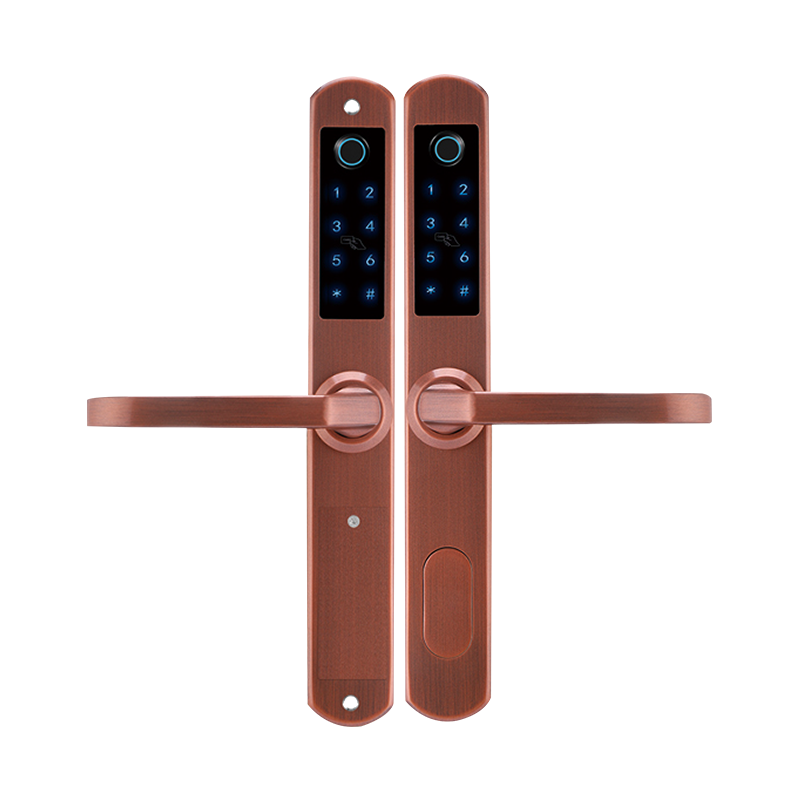
The selection of a double-sided fingerprint lock—a device that requires biometric verification from both the interior and exterior to operate—presents a distinct set of considerations beyond those for standard smart locks. These locks are typically deployed in environments where controlling and monitoring access from both sides of a door is a functional requirement. The question of which type is good used does not have a singular answer, as it is contingent upon the specific security, operational, and environmental context of the installation.
Power and Connectivity Architecture
The reliability and functionality of a double-sided fingerprint lock are fundamentally tied to how it is powered and how it communicates, with each configuration presenting different advantages and constraints.
- Battery-Powered with Wireless Connectivity: This common configuration uses batteries, often lithium packs, to power the lock and employs wireless protocols like Wi-Fi, Zigbee, or Z-Wave for connectivity. This type is good used in locations where professional wiring is impractical or too costly, such as in residential settings, renovated offices, or on internal doors. The primary consideration is the management of battery life for two independent readers, which consumes more power than a single-sided lock. These models are suitable for environments with moderate traffic where regular battery maintenance is feasible. Their reliance on wireless signals can also be a limitation in areas with poor network coverage or in buildings with dense construction materials that interfere with signal strength.
- Hardwired with Continuous Power: Hardwired locks are connected directly to a building's electrical system, sometimes with a battery backup for power failure scenarios. This type is good used in high-traffic commercial, industrial, or institutional settings where reliability is a priority and the inconvenience of battery changes is undesirable. The constant power supply ensures that both fingerprint readers and any additional features like status displays or audible feedback operate without interruption. The installation requires professional expertise to run low-voltage wiring through the door frame, making it a more integrated and permanent solution. This type is often found in server rooms, secured laboratory entrances, or financial institutions.
Mechanical Design and Fail-Safe Protocols
The physical mechanism of the lock and its behavior during emergencies or system failures are critical determinants of its appropriateness for a given space.
- Motorized Deadbolt versus Mortise Lock Mechanisms: Double-sided locks typically use a motorized deadbolt or are integrated into a mortise lock assembly. A motorized deadbolt is a simpler mechanism, good used for standard wooden or metal doors where primary security is the main concern. A mortise lock, which is embedded within the door, is a more robust solution. It is good used in high-security applications or on doors that experience frequent use, as the mortise design distributes force more evenly and is generally more resistant to physical attack. The choice hinges on the required level of physical security and the door's construction.
- Fail-Safe and Fail-Secure Operation: This is a crucial distinction. A fail-safe lock (also called fail-open) unlocks when power is cut, which is good used in environments where life safety is the primary concern, such as on fire escape routes or main exits in public buildings. A fail-secure lock (fail-locked) remains locked when power is lost, which is good used to protect assets in areas like storage rooms, archives, or IT closets. For a double-sided lock, this decision dictates whether individuals can exit in a power outage, a factor that must align with local fire codes and safety regulations. Some advanced models offer configurable fail-safe/fail-secure modes, providing flexibility for complex security plans.
- Emergency Override Mechanisms: Even the reliable systems require backup. The good-used locks incorporate redundant, mechanical override options. This typically includes a physical key override, which is essential for situations where the electronic system malfunctions or the user's fingerprint is not recognized due to injury or sensor issues. The type of key system (a standard pin tumbler vs. a high-security keyway) should match the overall security level required. For institutional use, a master key system may be necessary.
Integration and System Compatibility
The value of a double-sided fingerprint lock is often amplified by its ability to function as part of a larger, coordinated security ecosystem.
Standalone versus Networked Operation: A standalone lock operates independently, storing its own user database and audit trail. This type is good used for securing a single, specific point of entry without the need for centralized management, such as a home office, a private storage room, or a small business with only one secured door. A networked lock, which integrates with a central access control system, is good used in multi-door commercial, government, or educational facilities. It allows for real-time user permission updates, centralized monitoring of entry and exit events, and streamlined management of a large user base.
Recommended Products

Ready to Begin?
Product Categories
Contact Information
 Email: [email protected]
 Phone: +86-13575699186
 Address: No.135, Wanyu Road, Zhiying Industrial Zone, Yongkang City, Zhejiang Province, China.
QR Code
Copyright © Yongkang Ruian Lock Industry Co, Ltd. All rights reserved.
