русский
  Español
  عربى
عربى Industry News
HOME / NEWS / Industry News / Beyond the Surface: What Materials Are Used in Today's Waterproof Fingerprint Locks?

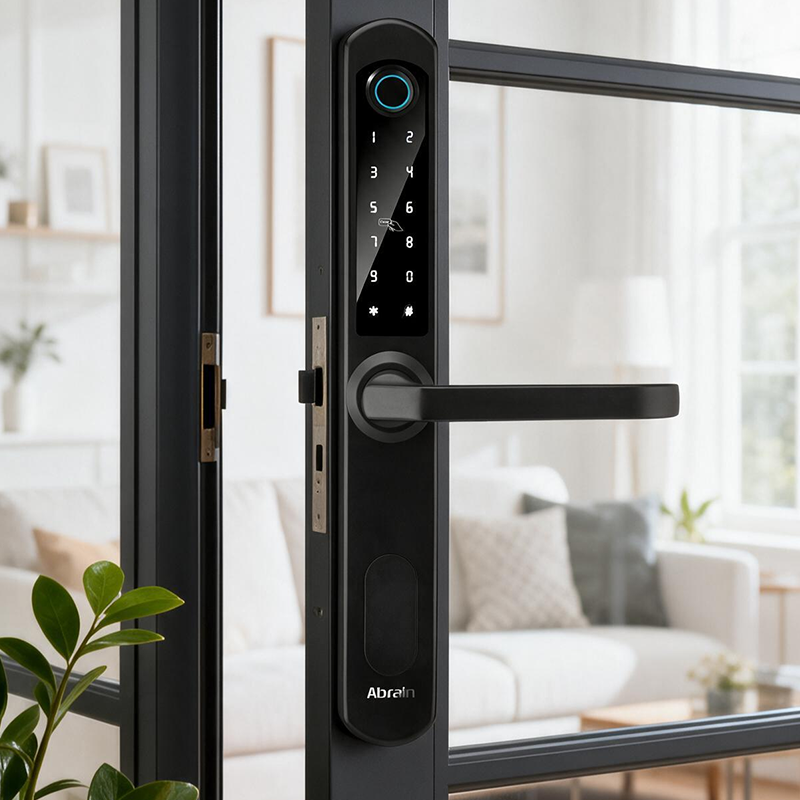
The integration of biometric technology with physical security has produced the waterproof fingerprint lock, a device now commonly found on exterior doors, pool gates, and in coastal environments. These locks must simultaneously fulfill multiple requirements: they must accurately read fingerprints through moisture, resist corrosion from constant exposure to water, withstand temperature fluctuations, and maintain mechanical integrity over years of use. The material selection for these devices is therefore a complex balancing act between electronic functionality, environmental durability, and structural strength.
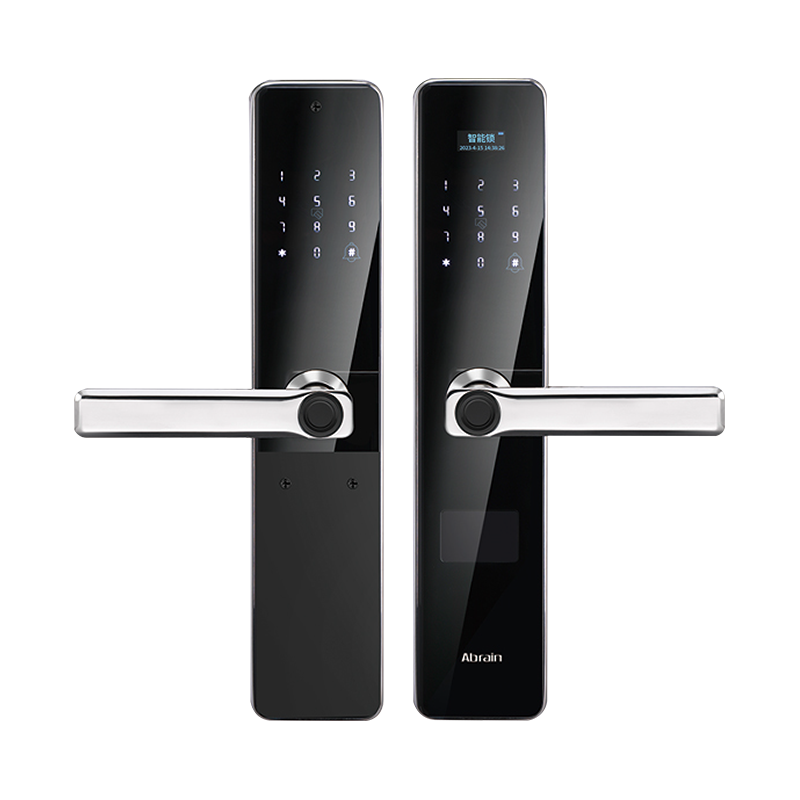
The housing of a waterproof fingerprint lock serves as the primary barrier against moisture, ultraviolet radiation, and physical impact. Material choices here significantly influence both the lock's durability and its aesthetic appearance.
Zinc Alloy Die-Casting: This is perhaps the common material found in mid-range to premium waterproof locks.
Zinc alloys, often referred to as "zamak" (zinc, aluminum, magnesium, and copper), can be die-cast into complex shapes with precise dimensions, accommodating the internal cavities needed for electronics and batteries.
The material offers good strength and impact resistance for a door hardware application.
It accepts plating and finishing well; zinc alloy housings receive an electroplated layer, often of copper, nickel, and chromium, which provides the primary waterproofing and corrosion resistance. The chromium layer also provides the shiny, durable finish consumers expect.
Without this plating, zinc would corrode relatively quickly outdoors. The quality of the plating process is therefore critical to long-term performance.
Stainless Steel: Used primarily for high-end locks or for specific components like trim plates and handles.
Grades such as 304 and 316 (marine grade) are specified for their inherent corrosion resistance. Grade 316 contains molybdenum, which offers enhanced resistance to chlorides, making it suitable for coastal installations or pool areas.
Stainless steel provides mechanical strength and a premium feel.
It is more expensive and more difficult to machine than zinc alloy, which is why it is often used selectively rather than for entire housings.
Some locks use stainless steel covers over a zinc alloy chassis, combining corrosion resistance with manufacturing economy.
Aluminum Alloys: Found in some modern, design-focused locks, particularly those with an architectural aesthetic.
Aluminum is lightweight, which can be advantageous for installation on lighter doors.
It naturally forms a protective oxide layer, but this is often enhanced through anodizing, an electrochemical process that thickens the natural oxide layer. Anodized finishes can be dyed in various colors, offering design flexibility.
While corrosion-resistant, aluminum is softer than steel and more susceptible to wear and denting in high-traffic applications unless it is a high-strength, heat-treated alloy.
Engineering-Grade Polymers: Used in entry-level locks or for specific non-structural covers and internal components.
Materials like ABS (acrylonitrile butadiene styrene) and polycarbonate can be molded into complex shapes at lower cost than metal.
For waterproofing, plastic housings often rely on overmolded rubber gaskets or sonic welding to create sealed seams.
UV stabilizers must be added to prevent degradation and discoloration from sunlight exposure. Unprotected plastics can become brittle and fade when installed in direct sun.
While adequate for basic protection, plastic housings generally do not offer the same level of security against physical attack as metal housings.
The sensor is the technologically sensitive component, and its construction materials directly affect reading accuracy under wet or humid conditions.
Sensor Surface Material: The surface against which the finger is placed must protect the underlying electronics while allowing accurate reading.
Ceramic-coated sensors: Many high-quality waterproof locks use a sensor with a thin ceramic coating. Ceramic is hard, scratch-resistant, and inert to corrosion. It provides a durable surface that withstands repeated contact with wet or dirty fingers without degrading.
Glass-covered sensors: Tempered or chemically strengthened glass is another common cover material. It provides a smooth surface that is easy to clean and offers good optical clarity for certain types of sensors. The glass must be sufficiently thick and strong to resist cracking from impact.
Coated metal sensors: Some sensors use a metal ring or cover with a thin protective coating. The sensing area itself may be a small aperture covered with a transparent material. The surrounding metal must be corrosion-resistant, often using stainless steel or coated zinc alloy.
Sensor Type and Material Compatibility: The underlying technology influences material choices.
Capacitive sensors: These are the common in current locks. They use an array of semiconductor capacitors to detect the ridges and valleys of a fingerprint. The protective coating over the silicon chip must be thin enough to allow the electric field to penetrate but durable enough to withstand environmental exposure. Materials like silicon nitride or specialized polymers are used in the sensor packaging.
Optical sensors: Less common in modern outdoor locks but still present in some models. They use a CMOS or CCD image sensor with an LED light source. The platen (the surface where the finger is placed) must be optically clear, typically glass, and often includes a coated prism. Optical systems can be more susceptible to fouling by dirt and water droplets on the platen surface.
The mechanical and electronic components require protection from moisture ingress, which is achieved through a system of gaskets, seals, and potting compounds.
Silicone Gaskets and O-Rings: These are the primary method of sealing joints between housing components.
Silicone rubber is the material of choice because it remains flexible over a wide temperature range, from below freezing to high summer heat. It compresses to fill gaps and maintains its sealing force over years.
Gaskets are custom-molded to fit the specific grooves in the housing, creating a labyrinth path that water cannot easily penetrate.
The door interface, where the lock mounts against the door surface, typically includes a thick foam or rubber gasket to prevent water from seeping behind the lock and into the door itself.
Potting Compounds: For sensitive electronic circuit boards, simple gaskets may not be sufficient.
Manufacturers often "pot" critical electronics, particularly the main control board, by encapsulating them in a solid or gel-like compound. Epoxy resins or polyurethane compounds are poured over the board, completely encasing components and sealing them from moisture.
Potting also provides vibration resistance and protects components from physical shock.
This approach is common for the external keypad and sensor circuitry, where the risk of water exposure is higher.
Membrane Keypads: If the lock includes a numerical keypad, the buttons themselves must be waterproof.
Designs use a seamless silicone rubber membrane with conductive pads underneath. The membrane is a single, continuous piece covering all buttons, with no gaps between individual keys where water could enter.
The silicone is typically translucent to allow backlighting, with printed numerals on the surface. This material is durable, UV-resistant, and provides tactile feedback when pressed.
Inside the sealed housing, the mechanical components that actually lock and unlock the door face a less severe environment but must still resist corrosion from any incidental moisture that penetrates the seals.
Latch and Deadbolt Mechanisms: These are typically made from steel for strength.
To prevent rust, these steel components receive protective coatings. Zinc plating with a clear or yellow chromate conversion coating is common. Some high-end locks use stainless steel for the latch and bolt faces, which are exposed when the door is open.
The internal linkages, springs, and levers are often made from plated steel or brass, chosen for their mechanical properties and resistance to wear.
Motor and Gear Train: The electric motor that drives the locking mechanism is usually a small DC motor.
The motor housing is often metal (plated steel) or engineered plastic. The internal gears may be made from sintered metal, brass, or high-strength polymers like POM (polyoxymethylene), also known as acetal or Delrin, which offers low friction and dimensional stability.
Lubrication inside the mechanism uses greases that remain effective across temperature without becoming runny or stiff.
Battery Contacts: These are a common failure point in battery-powered devices.
Manufacturers use corrosion-resistant materials such as stainless steel or nickel-plated spring steel for battery contacts.
The design of the contact is also important; a wiping action as the battery is installed helps maintain a clean connection.

 Email: [email protected]
 Phone: +86-13575699186
 Address: No.135, Wanyu Road, Zhiying Industrial Zone, Yongkang City, Zhejiang Province, China.
QR Code
Copyright © Yongkang Ruian Lock Industry Co, Ltd. All rights reserved.