
 русский
  Español
  عربى
عربى Industry News

GET A QUOTE
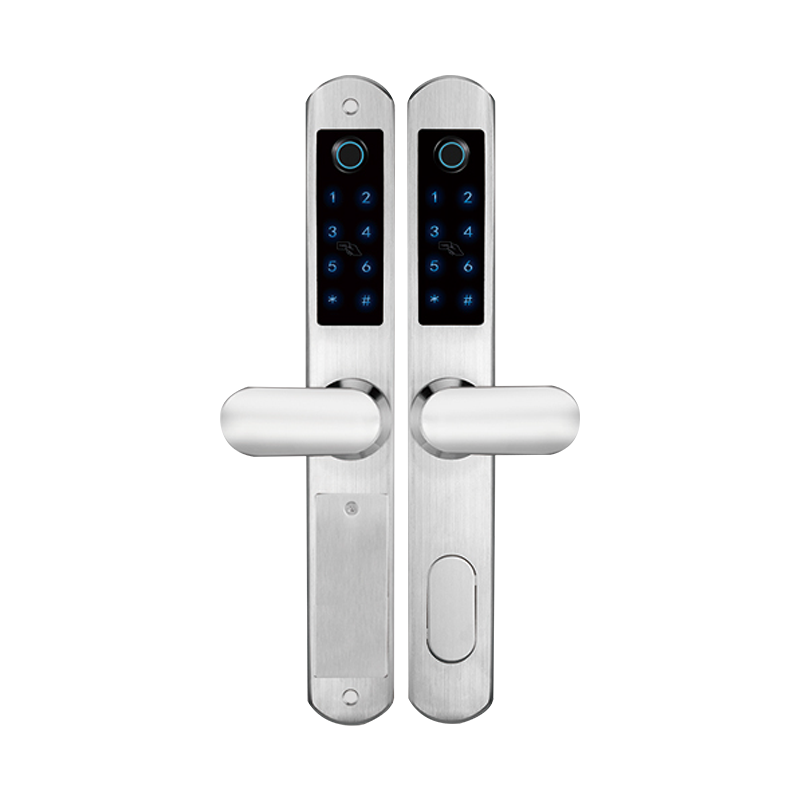
Double-Sided Fingerprint Locks: Function and Application
What is the primary function of a double-sided fingerprint lock, and in what scenarios is it used?
The primary function is to enforce biometric authentication for both entry and exit from a secured space. Unlike a standard lock where the interior side has a simple mechanical handle or turnpiece, this design requires a valid fingerprint to retract the bolt from either side. This serves two main purposes: it prevents unauthorized exit by individuals who have entered through other means (e.g., before the lock was engaged), and it creates an audit trail for both ingress and egress.
Common scenarios for its use involve controlled access to valuable or sensitive assets. This includes high-security storage cabinets in commercial or laboratory settings for controlled substances or valuable tools, gun safes to prevent unauthorized access, including by individuals who may know a mechanical combination, server room doors, and specialized pharmaceutical or evidence lockers. In residential settings, they might be used on a dedicated safe room or a high-value storage closet. Their use is dictated by a policy requiring positive identification for both entering and leaving a secured area.
How does the lock manage power and operation during a failure, such as a dead battery?
Power failure management is a critical design consideration for any electronic lock, and it is more complex for a double-sided version. Standard electronic locks often have an external emergency power port (e.g., for a 9V battery) to power the exterior module if the internal batteries die. For a double-sided lock, this port would need to be accessible from the outside to allow entry. However, if a user is trapped inside when the batteries fail, they cannot use an external port.
These locks incorporate one or more backup methods. The common is a dual-power system, where both the interior and exterior modules have their own independent battery compartments, preventing a single failure from disabling both sides. Another method is the inclusion of a mechanical override. This is often a concealed key lock on the interior plate, allowing a physical key to retract the bolt from the inside only in an emergency. Some designs may also feature a direct-wired power option to a low-voltage building system to avoid battery dependency altogether. The specific backup methods are a key differentiator between models and should be evaluated based on the risk profile of the installation.
What are the wiring and installation requirements compared to a single-sided lock?
Installation is more involved due to the need to connect the two sensor modules through the door. The lock requires a through-door wiring harness. This is a bundled cable that carries power, data, and motor control signals between the exterior and interior assemblies. The door must be drilled with a hole large enough to pass this harness from the edge to the interior mounting plate, in addition to the standard bore holes for the bolt and latch.
The installation process typically involves mounting the exterior assembly, feeding the wiring harness through the door, connecting it to the interior assembly, and then mounting the interior plate. This requires careful handling to avoid pinching the wires. The process is more time-consuming and requires more precision than installing a single-sided electronic lock, which often has all electronics housed in the exterior unit with only a mechanical connection to the interior handle. Professional installation is often recommended to ensure correct wiring, alignment, and door preparation.
Can access permissions be set differently for the interior and exterior scanners?
In standard double-sided fingerprint lock designs, the access permissions are unified. The fingerprint database stored in the lock's memory is shared. A user enrolled in the system can use their fingerprint to operate the bolt from either side; the lock does not distinguish between the interior and exterior scanner for authentication purposes. The audit log, however, will typically record which scanner was used.
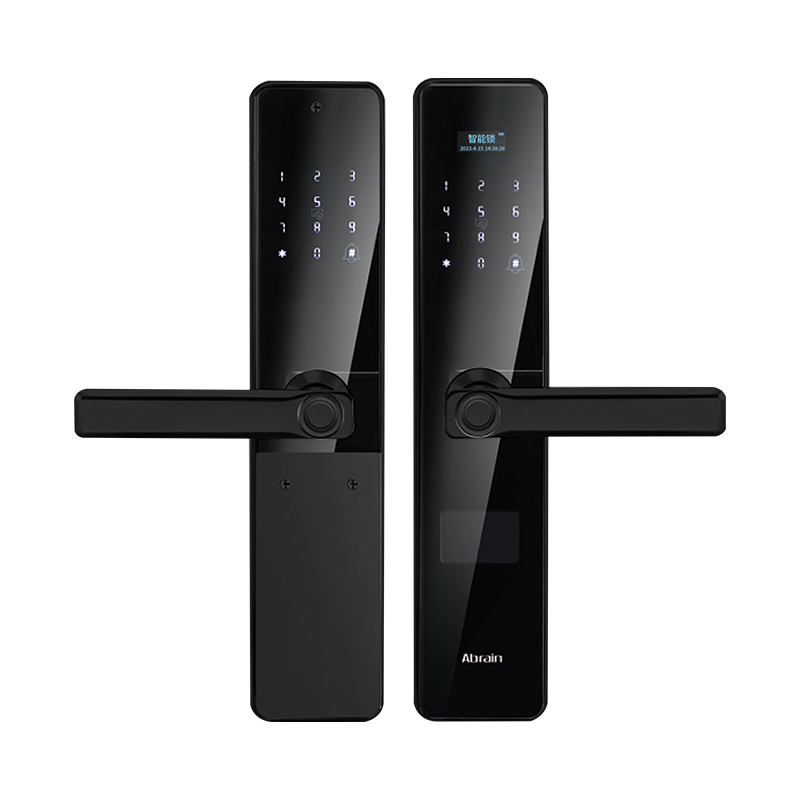
The ability to have separate permission sets—for example, allowing a custodian to enter from the outside but not exit from the inside, or vice versa—is a more advanced feature. This requires more sophisticated software and user management, often found in locks that are part of a networked access control system rather than standalone units. For typical off-the-shelf double-sided fingerprint locks, the function is symmetrical: authentication from either side results in the same action (bolt retraction), and the user database applies to both sides equally. If differentiated permissions are required, the specification process must explicitly seek out models with this capability or consider a small networked system.
Recommended Products

Ready to Begin?
Product Categories
Contact Information
 Email: [email protected]
 Phone: +86-13575699186
 Address: No.135, Wanyu Road, Zhiying Industrial Zone, Yongkang City, Zhejiang Province, China.
QR Code
Copyright © Yongkang Ruian Lock Industry Co, Ltd. All rights reserved.
