
 русский
  Español
  عربى
عربى 
Anyone who has spent time on the installation side of this industry knows a simple truth that rarely makes it into product literature: a lock body is only half the story. The other half is the door it's going into, and that door is never quite the same twice. Wood behaves one way. Steel behaves another. Composite panels sit somewhere in between, often unpredictably so. A mounting approach that feels effortless on one surface can turn into a frustrating half hour of improvisation on another, and that gap between "should fit" and "actually fits" is where a lot of installer complaints originate.
For a Smart Lock Factory, this isn't a peripheral concern tucked away in the assembly manual. It's a design constraint that shapes decisions from the earliest engineering stage, well before a lock ever reaches a catalog page. A product line meant to serve a wholesale market has to assume the buyer's customer base is installing on solid wood entry doors, steel security doors, aluminum-framed glass units, and composite doors built from layered cores that behave like none of the above. Designing a lock body and mounting system that copes reasonably well across that spread is a genuinely harder engineering problem than it looks from the outside.
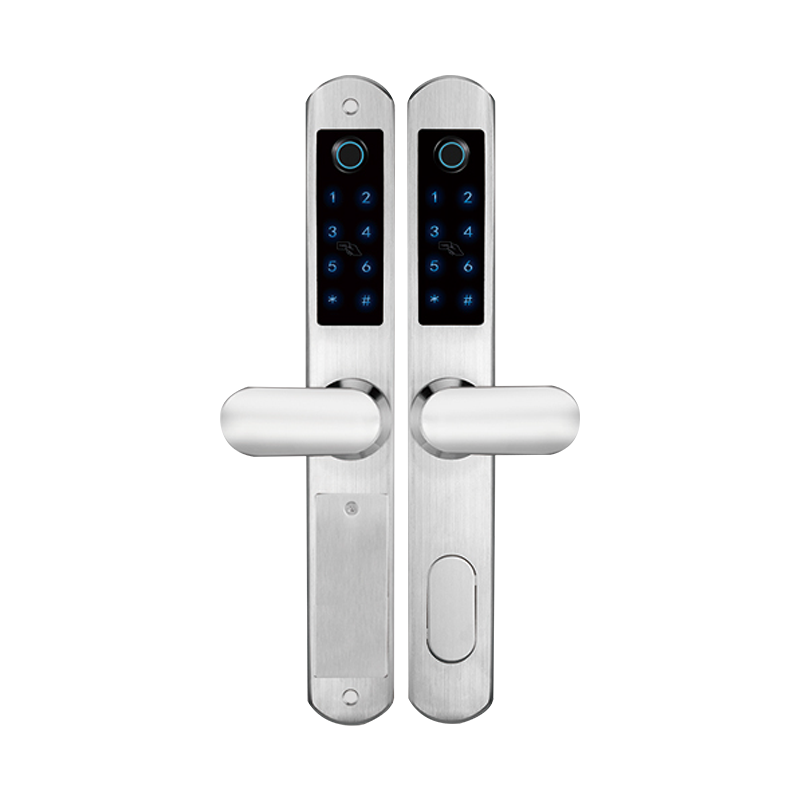
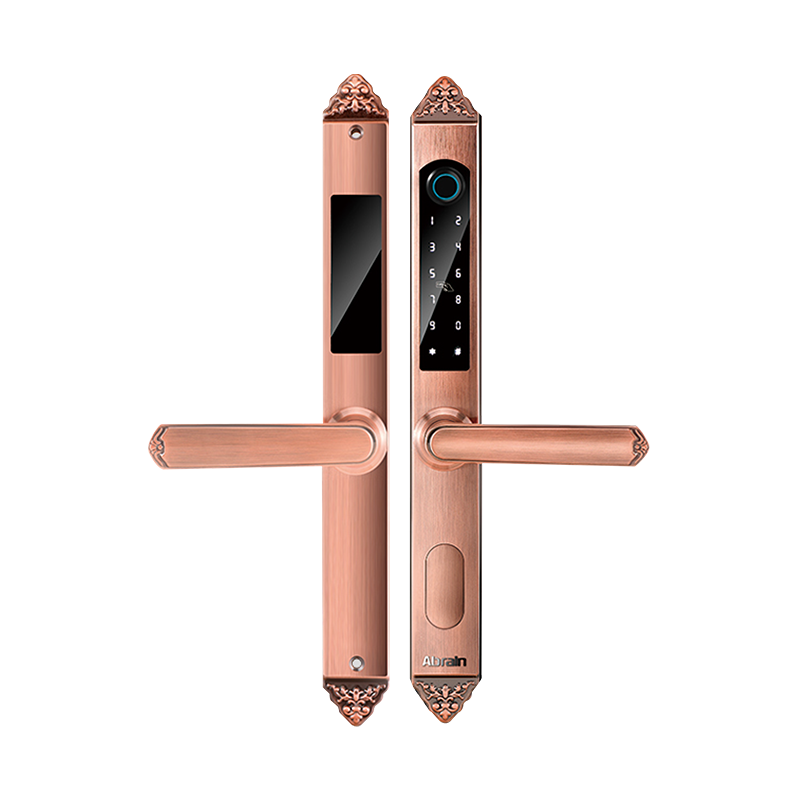
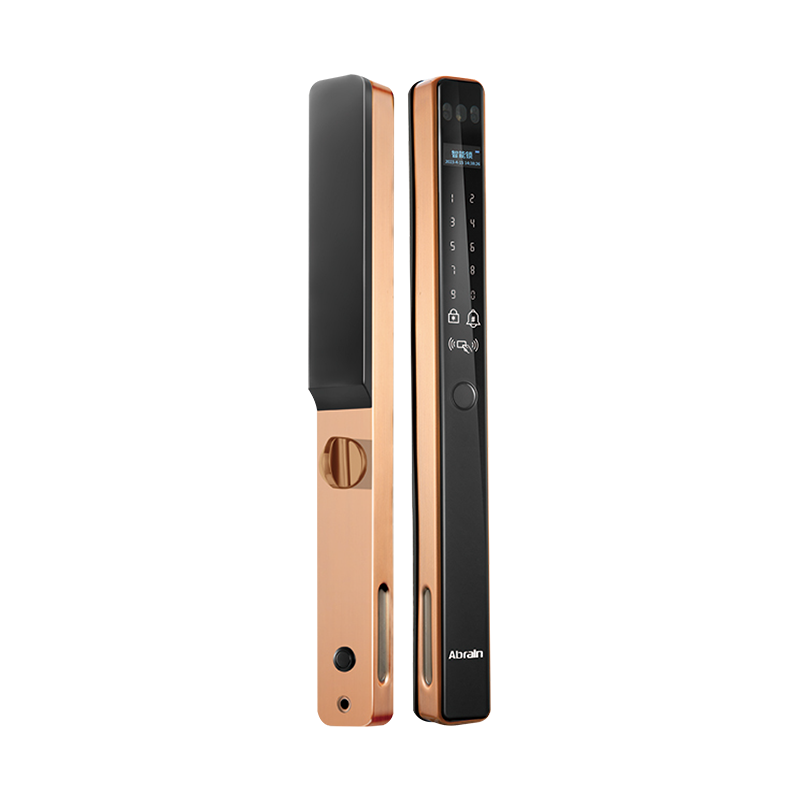
Two product categories make this especially clear. A Double Sided Fingerprint Lock, with sensor and processing hardware sitting on both faces of the door, depends on internal depth and structural consistency in ways a simpler lock doesn't. A Stainless Steel Smart Lock, chosen largely for its finish and wear resistance, still has to answer the same underlying question every lock faces: how does this body actually seat against the material it's being fastened to? Material variation runs underneath almost every design and sourcing decision in this category, even when nobody in the conversation is using that language directly.
Why Does Door Core Structure Matter More Than People Assume?
The word "door" hides a lot of variation. What's underneath the surface finish, the core structure, determines nearly everything about how a lock physically integrates with it, and that structure differs more than most buyers expect when they're comparing products purely on features.
Solid wood cores tend to offer fairly consistent density throughout, which gives installers a reasonably predictable drilling and fastening experience. That said, wood isn't static. Grain direction, moisture content at the time of installation, and long-term seasonal movement all introduce small variables that a purely metal or composite core wouldn't face in the same way. Steel doors flip that equation. Many carry a hollow or internally braced structure, which changes how fasteners grip and how vibration moves through the panel every time the lock engages. Composite doors, often built from layered materials sandwiched together, respond differently depending on which layer a screw or bolt actually lands in.
| Door Core Type | Installation Behavior |
|---|---|
| Solid wood | Predictable drilling, but subject to seasonal movement |
| Steel, hollow or reinforced | Fastener grip depends heavily on where internal bracing sits |
| Composite, layered | Behavior shifts depending on which internal layer is engaged |
| Glass with metal framing | Structural load carried almost entirely by the frame |
None of this ranks one core type as objectively harder to work with. It simply means each one poses a different question to whoever is designing the mounting hardware, and a lock engineered around a single assumption tends to run into trouble the moment it meets a door built on a different logic.
How Do Manufacturers Actually Design for Multiple Door Types Without Building a Dozen Products?
Scaling a separate lock body for every conceivable door material isn't realistic, and no manufacturer serious about wholesale volume tries to solve the problem that way. Instead, the flexibility tends to live in the mounting layer, the mounting plate, fastener kit, and spacer components that sit between the lock body and the door surface itself.
A mounting plate engineered with enough tolerance can absorb minor surface irregularities and thickness differences without forcing a redesign of the lock body every time a new material comes into play. Screw lengths, spacer thickness, and adapter brackets often get bundled into installation kits that a technician can select from depending on what's actually in front of them on site, rather than assuming a single fixed configuration applies universally.
- The mounting interface is engineered with tolerance for minor surface and thickness variation.
- Fastener kits are built with interchangeable components rather than one fixed configuration.
- Installation documentation typically walks through multiple material scenarios, not just one.
- Where internal wiring is involved, routing plans account for varying door depths.
- Prototype testing usually runs across a representative spread of door types before finalization.
This approach costs more engineering time upfront than designing narrowly for a single material, but it pays back across a wholesale catalog. A lock that installs cleanly across wood, steel, and composite doors reaches a meaningfully wider customer base than one built around a single assumption, and that adaptability tends to become a real differentiator once buyers start comparing suppliers rather than just comparing feature sheets.
What's Genuinely Different Between Installing on Wood Versus Metal?
Wood and metal sit near opposite ends of the installation spectrum, and the reasons behind that gap explain a lot about why mounting hardware gets designed the way it does.
Wood is forgiving in the moment. Drilling into it allows for small on-site corrections that most installers can make without much trouble. But that forgiveness comes with a longer-term tradeoff: wood shifts with humidity and temperature over time, so a lock that seated perfectly on installation day can feel subtly looser or tighter months later once seasonal conditions change. That's part of why mounting hardware for wood doors has to be evaluated not just on initial fit, but on how well it holds up across a full seasonal cycle.
Metal doors demand the opposite discipline. Drilling into steel takes more upfront precision, and there's far less room to improvise mid-installation the way there is with wood. Steel doors are also frequently hollow or internally reinforced, which means the mounting hardware has to be designed with an awareness of exactly where that internal structure sits, since fastening into open hollow space behaves very differently than fastening into a reinforced section.
| Factor | Wood Door | Metal Door |
|---|---|---|
| On-site adjustment | Reasonably forgiving | Limited once drilling begins |
| Long-term stability | Shifts with humidity and temperature | Generally stable over time |
| Internal structure | Fairly consistent density | Often hollow or selectively reinforced |
| Fastener behavior | Predictable grip | Depends heavily on bracing location |
A Smart Lock Factory supplying both markets has to build separate installation logic for each scenario rather than treating wood and metal as interchangeable variations on the same theme. What reads as a minor adjustment on one material can be the difference between a secure installation and a loose one on the other.
Why Does a Double Sided Fingerprint Lock Carry Extra Installation Weight?
Locks with biometric sensors on both faces of the door carry a heavier installation burden than simpler keypad models, and door core structure plays directly into why.
A Double Sided Fingerprint Lock needs internal wiring and sensor housing to line up correctly across the full depth of the door, which turns the door's internal structure into an active participant in the installation rather than a passive backdrop. On solid wood, this alignment is usually manageable, since internal depth tends to stay fairly consistent from edge to edge. On a reinforced steel door, that same alignment gets trickier if the internal bracing doesn't happen to sit where the sensor housing needs to go.
Composite doors introduce their own quirks here too. Because the internal structure is built from layered materials, depth consistency can vary more than buyers expect, even within doors that look identical from the outside. A sensor housing engineered around a single depth assumption may not seat properly once it meets a composite door with uneven internal layering.
- Sensor alignment across both faces depends on consistent internal depth wherever the design allows.
- Wiring routes need enough clearance to avoid interference with internal bracing or layering.
- Reinforced steel doors sometimes require adjusted housing placement around bracing locations.
- Composite doors may need extra fitting verification due to inconsistent internal layers.
- Manufacturers often offer multiple housing depth options to cover this range of scenarios.
This is a large part of why double sided fingerprint models tend to ship with noticeably more detailed installation guidance than simpler lock types. The biometric hardware isn't sitting on the surface as a cosmetic feature. It has to physically integrate with whatever the door is actually built from, and that integration is where material variation shows up most directly.
How Does a Stainless Steel Smart Lock Handle the Mounting Question?
A Stainless Steel Smart Lock typically earns its place in a product line through finish and wear resistance, particularly for buyers prioritizing longevity and appearance together. But the stainless steel exterior doesn't change the underlying reality that the lock still has to mount onto whatever door material sits beneath it, and that relationship deserves the same scrutiny as the visible finish gets.
On wood, a stainless steel lock body needs mounting hardware that anticipates gradual seasonal movement, so the lock stays firmly seated even as the surrounding wood shifts slightly over time. On metal, the mounting pattern has to work with existing internal reinforcement rather than fighting against it, since forcing a fastening layout that ignores structural bracing tends to produce a less secure, longer-term fit.
| Mounting Scenario | Key Consideration |
|---|---|
| Wood door | Withstand seasonal movement without loosening |
| Metal door | Align fasteners with internal reinforcement |
| Composite door | Account for uneven internal layering |
| Glass with metal framing | Rely on frame integrity rather than the panel |
There's a visual dimension worth mentioning too. A polished stainless steel finish tends to make any unevenness in the mount more visible than it would be on a textured or coated lock body. A slightly imperfect seating that might go unnoticed elsewhere becomes far more apparent against a clean stainless surface, which gives manufacturers even more reason to get the mounting geometry right from the earliest design stage rather than treating it as an afterthought once the finish work is done.
Does Door Thickness Complicate Things Even Within a Single Material?
Material type only tells part of the story. Thickness interacts with material in ways that can either smooth out an installation or complicate it further, and this interaction gets overlooked more often than it should.
A thin wood door and a thick wood door create genuinely different installation conditions, even though the material itself is identical on paper. A lock engineered around a fixed internal depth assumption might fit one comfortably while leaving awkward gaps, or requiring extra spacers, on the other. The same pattern shows up across metal and composite categories, where thickness can vary considerably even within a single material grouping.
- Thinner doors sometimes restrict how much internal hardware can be housed comfortably.
- Thicker doors may call for extended internal components or longer wiring runs.
- Adjustable mounting kits help bridge gaps across a reasonable thickness range.
- Design testing usually spans a spread of thicknesses rather than assuming one baseline.
- Buyers benefit from checking thickness compatibility alongside material type before placing orders.
This is why installation documentation from a reasonably careful manufacturer addresses thickness ranges explicitly, rather than assuming every door within a material category shares identical proportions. A Smart Lock Factory that accounts for this variation at the design stage saves installers from awkward surprises once the hardware actually reaches a real door in the field.
What Should Buyers Sourcing for Mixed Door Environments Actually Ask?
Wholesale buyers rarely serve a customer base installing on one uniform door type. A distributor supplying residential installers, renovation contractors, or property management clients is almost certainly dealing with a mix of wood, metal, composite, and occasionally glass-framed doors across their overall order book. That variety should shape sourcing decisions from the outset, not get discovered after the fact through installer complaints.
Rather than evaluating a lock purely on its feature list or exterior finish, buyers get more useful information by asking specifically how a given model performs across different door materials and thickness ranges. A lock that installs beautifully on wood but struggles on steel narrows its usable market considerably compared to one engineered with broader compatibility from the start.
| Sourcing Question | Why It Matters |
|---|---|
| Does the mounting hardware adjust across door types? | Reduces field installation problems across a mixed customer base |
| What thickness range does the kit realistically support? | Avoids awkward fitting gaps on unusually thin or thick doors |
| How was the design tested across different materials? | Signals whether real-world variation was factored into the engineering |
| Are installation guides tailored to specific door types? | Cuts down on confusion and installer error on site |
Buyers who raise these questions before placing an order tend to avoid a fairly common pattern in this industry, where a lock performs impressively in a showroom demonstration but runs into friction the moment it meets a real door with real structural quirks. A manufacturer willing to walk through these compatibility details candidly, rather than steering the conversation back toward a general feature list, is usually signaling a more considered approach to design overall, one that tends to translate into far fewer installation headaches once the product actually moves through a wholesale distribution network and lands on doors it was never specifically demonstrated on.


 Email:
  Phone: +86-13575699186
  Address: No.135, Wanyu Road, Zhiying Industrial Zone, Yongkang City, Zhejiang Province, China.