
 русский
  Español
  عربى
عربى 
Step into a residential corridor in certain overseas markets and something on the door will look unfamiliar to anyone trained on a single-lock design brief. Two separate locking mechanisms, mounted at different heights, each operating on its own logic. Not a lock paired with a simple deadbolt as a backup measure, but two full locking systems that a household treats as equally essential. For a procurement team used to specifying one lock per door, this raises a question worth sitting with rather than dismissing as a local quirk.
The pattern isn't isolated to a handful of buildings. It shows up consistently enough across certain regions that it has started to influence sourcing conversations, product specifications, and installation planning. A Smart Lock Factory exporting into these markets can't treat the habit as background noise. It sits squarely in the middle of how a lock gets sized, positioned, and eventually sold, and ignoring it tends to surface as a problem only after products have already shipped.
What Explains the Preference for Two Locks Instead of One?
The habit has roots that go beyond simple caution. In several regions, security has long been understood as a layered concept rather than a single decision point. A household relying on one lock is, in effect, betting that one mechanism will never fail, never get bypassed, and never get left unlocked by accident. Two locks distribute that risk across two independent points, so a lapse in one doesn't automatically compromise the entire entry.
There's also a functional division at work. One lock commonly sits at a height convenient for everyday use, while a second sits lower, functioning almost like a dedicated night latch. This isn't a cosmetic arrangement. It spreads mechanical stress across two separate units and gives residents two distinct points of control rather than one shared mechanism carrying the full weight of the household's sense of security.
| Underlying Factor | Practical Implication |
|---|---|
| Security viewed as cumulative, not singular | Household expects layered protection by default |
| Long-standing domestic habit | Behavior persists independent of newer lock technology |
| Functional split between upper and lower zones | Two locks reduce dependence on a single mechanism |
| Preference for tactile, visible security measures | Locks that can be seen and physically checked carry weight |
None of this positions the habit as outdated. It reflects a coherent, internally consistent view of what a secure entry point should include, and that view carries real weight in how buyers in these markets evaluate new hardware.
How Does This Habit Shape the Way Buyers Evaluate New Hardware?
A single lock loaded with advanced functionality doesn't automatically read as more secure to a buyer accustomed to two independent mechanisms. What earns confidence in these markets is often less about how many features live inside one unit and more about how many separate barriers stand between the outside and the inside of a home.
This distinction carries direct weight for any Smart Lock for Home Door positioning strategy. A product built on the premise that one sophisticated lock replaces the need for a second unit can come across as underbuilt, regardless of how capable its internal technology actually is. The gap isn't a matter of buyer skepticism toward the hardware. It's a mismatch between the product's underlying assumption and the household's established definition of a properly secured door.
Procurement teams sourcing for these regions tend to prioritize a few specific things once they understand this dynamic. Compatibility with an existing second lock becomes a genuine evaluation criterion rather than a footnote. Spacing and placement flexibility carry more weight than they would in a single-lock market. And messaging built around "complete, standalone protection" often lands less effectively than messaging that positions the product as one dependable layer within a household's broader approach.
What Adjustments Are Manufacturers Making at the Design Stage?
Once a manufacturer accounts for dual-lock expectations, the shift usually starts with spacing and vertical placement. A lock engineered without any reference to a second unit nearby risks landing in a position that conflicts with where a household's existing mechanical lock typically sits on the door.
A Smart Lock Factory supplying these markets increasingly treats the second lock's likely position as a known variable from the earliest planning stage, rather than a complication discovered mid-installation. This changes how internal components get arranged, since bolt mechanisms, strike plates, and wiring paths all need enough clearance to avoid physical conflict with a separate locking unit positioned elsewhere on the same door.
- Vertical placement gets planned with the second lock's typical position already factored in.
- Internal layout avoids the zones where a secondary mechanical bolt commonly sits.
- Mounting hardware sometimes includes adjustable spacing to accommodate an existing lock.
- Design reviews increasingly test fit scenarios involving two locks on the same door, not one.
- Component depth gets reconsidered where a door's internal structure needs to support both units.
This kind of planning doesn't emerge from guesswork. It comes from paying close attention to how doors function in daily use across these regions, rather than assuming every door globally follows a single, uniform logic.
Where Does a Lever Handle Smart Lock Fit Into a Two-Lock Door?
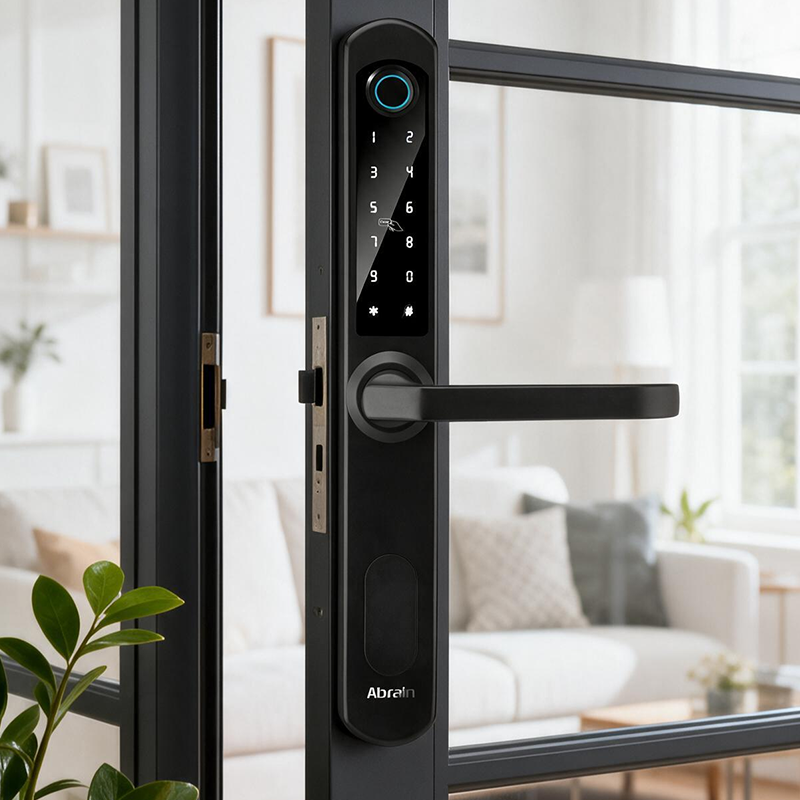
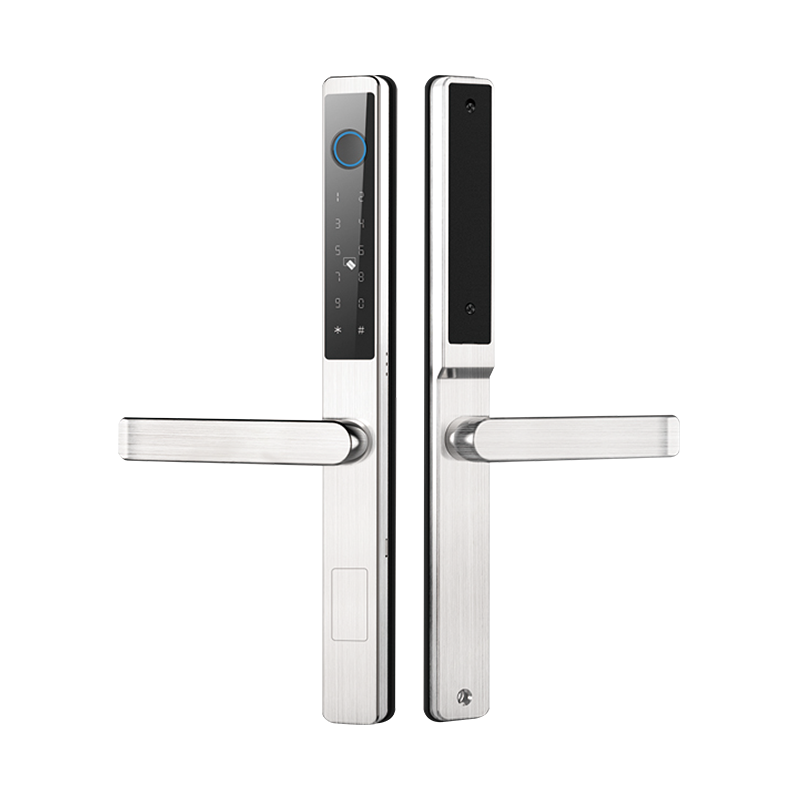
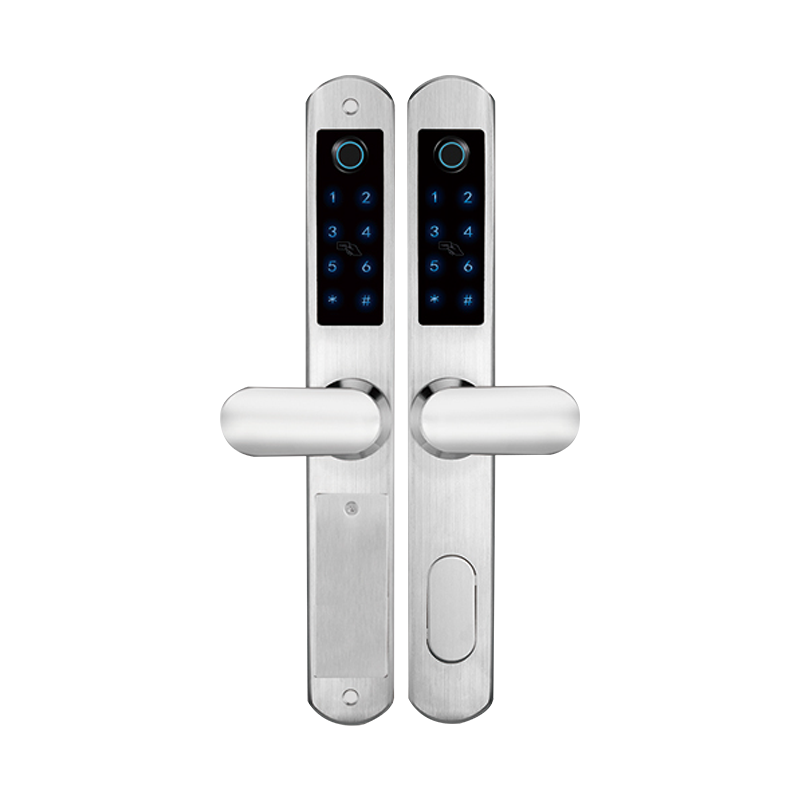
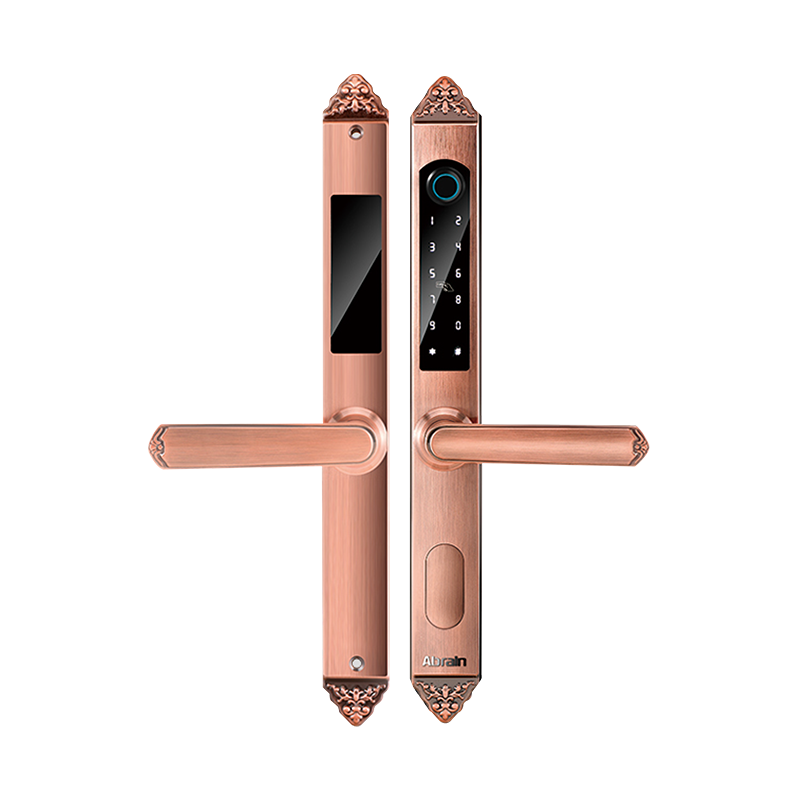
Lever handles introduce a distinct set of spatial considerations once a second lock enters the picture. Compared with a compact cylinder unit, a Lever Handle Smart Lock occupies a larger visible footprint, and its handle mechanism extends outward from the door surface in a way that has to coexist comfortably with a separate lock positioned elsewhere.
Placement becomes the deciding factor. If the lever handle sits too close to where a second lock's components need to go, either the handle's swing radius gets restricted, or the second lock ends up cramped into a tighter space than it was designed for. Manufacturers working on lever handle products for these markets tend to build in additional vertical clearance from the outset, ensuring the handle assembly can operate freely without crowding whatever mechanism sits below or above it.
| Design Consideration | Relevance to a Two-Lock Door |
|---|---|
| Handle swing radius | Needs clear separation from the second lock's operating zone |
| Vertical footprint of the assembly | Leaves usable space for an independent mechanism nearby |
| Visual proportion across the door surface | Two locks need to appear deliberate rather than crowded together |
| Everyday reach and usability | Placement directly affects how comfortably a household uses both locks |
None of this adds meaningful complexity to how a lever handle lock gets manufactured. It simply moves the placement conversation earlier in the process, treating the second lock as a defined constraint rather than an unexpected discovery during installation.
How Does Sharing a Door With a Second Lock Change Product Positioning?
Coexisting with another lock on the same door affects more than physical spacing. It reshapes how a Smart Lock for Home Door gets tested, documented, and presented to buyers. A product designed to function entirely on its own has no reason to account for anything beyond itself. A product designed to sit alongside a second, often mechanical, lock has to be evaluated as part of a pair, even when the two units come from entirely different manufacturers.
This surfaces in a few concrete ways. Installation documentation increasingly addresses how to plan around an existing second lock, rather than defaulting to language written for a blank, single-lock door. Product imagery in some markets includes both locks in frame, since that reflects how the hardware will actually appear once installed, rather than presenting the smart lock in an idealized, isolated view. Even the framing of product descriptions shifts, positioning the lock as a dependable component within a household's layered approach to security rather than an all-in-one replacement for everything already in place.
- Installation material accounts for doors that already carry a second lock.
- Product visuals occasionally reflect a two-lock configuration rather than a single-lock scenario.
- Descriptive language leans toward "a dependable layer" rather than a standalone security claim.
- Support documentation addresses placement questions specific to shared-door setups.
- Fit testing sometimes considers how the lock performs alongside a separate mechanical unit.
This shift in framing tends to be subtle rather than dramatic, but it reflects a real change in how the product gets positioned once dual-lock habits enter the conversation seriously.
Do Installation Guides Need to Be Rewritten for These Markets?
Standard installation documentation tends to assume a fairly conventional layout. One lock, one clear mounting zone, straightforward instructions with no competing hardware to account for. Markets with dual-lock habits complicate that assumption in ways that ripple through the entire documentation process.
A guide built around a single-lock scenario often skips vertical spacing altogether, since there's nothing else on the door competing for that same area. A guide written with dual-lock awareness has to address that spacing directly, offering clear guidance on how to position a new lock relative to an existing one, how to prevent interference between the two mechanisms, and how to handle doors where the second lock's position genuinely cannot move.
| Documentation Element | Single-Lock Assumption | Dual-Lock Awareness |
|---|---|---|
| Vertical placement guidance | Often left unaddressed | Explicitly detailed |
| Compatibility with existing hardware | Rarely mentioned | Directly discussed |
| Installer troubleshooting notes | Limited to one lock | Includes spacing conflicts with a second unit |
| Visual diagrams | Depict a single lock in isolation | May depict both locks together on the door |
Getting this right carries more weight than it might initially appear. An installer working from unclear guidance on a two-lock door is far more likely to run into placement conflicts on site, and that friction reflects on the product even when the lock itself performs well in isolation.
What Should Procurement Teams Ask Before Sourcing for These Markets?
Buyers sourcing hardware for dual-lock markets benefit from asking direct, specific questions rather than assuming every manufacturer has already accounted for this dynamic. Not every factory designs with two-lock door layouts in mind, and a product that performs well in single-lock markets can still run into real friction once it reaches a household expecting two independent locking points.
- Does the factory have documented experience designing for two-lock door configurations?
- Are installation guides written with dual-lock placement in mind, or do they assume an empty door?
- Can the lock body or lever handle assembly be repositioned if a second lock already exists on-site?
- Does the factory offer clear guidance on spacing before a buyer commits to a bulk order?
- Is there flexibility in mounting hardware to accommodate doors with pre-existing cutouts?
Procurement teams who raise these questions before finalizing an order tend to avoid a fairly predictable complication later on, where a product performs reliably on its own but creates installation friction the moment it meets a door already carrying a second lock. A manufacturer able to answer these questions with specific detail has usually spent real time studying how doors function within these particular markets, rather than assuming every region mirrors the single-lock logic the product was originally built around.

 Email:
  Phone: +86-13575699186
  Address: No.135, Wanyu Road, Zhiying Industrial Zone, Yongkang City, Zhejiang Province, China.