
 русский
  Español
  عربى
عربى 
Push a file, device installs it, done. That's how firmware updates sound in theory. Anyone who has actually run a distribution network selling smart locks at volume knows the reality looks nothing like that. An update behaving perfectly on a handful of bench units in a factory lab is a completely different animal from that same update reaching thousands of locks already mounted on doors, spread across regions, installed by different crews, running on different networks, sometimes years after the original shipment left the warehouse.
This is the operational layer of the business that rarely makes it into a product brochure, yet it quietly decides whether a distributor keeps ordering from the same supplier next season. A Smart Lock Factory can engineer a genuinely solid lock, but if the update pipeline breaks down somewhere between the production line and the customer's front door, none of that engineering effort translates into a good experience. The lock starts to feel unreliable, and reliability happens to be the one attribute nobody in this category is willing to gamble on.
Update management doesn't look identical across every product line either. A Double Sided Fingerprint Lock carries its own set of considerations tied to biometric processing on both faces of the door. A Stainless Steel Smart Lock brings a different installation context and a different set of durability expectations into the picture. Handling updates well across a wholesale network means respecting these differences instead of running every product through the same generic checklist.
Why Does Firmware Management Get So Much Harder Once Volume Enters the Picture?
A single unit updating on a test bench is simple. Multiply that by a distribution network, and the picture shifts entirely. Units end up scattered across regions with wildly different network reliability, different installation dates stretching back over multiple purchasing cycles, and different usage habits depending entirely on the household or business behind the door.
Volume also amplifies the cost of any misstep. A quirk showing up on one test unit is a minor finding, caught early, fixed quietly. That same quirk surfacing across a batch already installed across dozens of properties, with no simple way to physically retrieve every affected unit, turns into something considerably harder to contain and considerably more expensive to walk back.
| Scaling Factor | Why It Adds Complexity |
|---|---|
| Geographic spread | Network reliability differs sharply between regions |
| Staggered installation dates | Older and newer stock may sit on different firmware baselines |
| Inconsistent user habits | Some accept updates promptly, others ignore prompts entirely |
| Product line variety | Each lock type carries its own update risk profile |
| Multiple distribution layers | More parties standing between the factory and the actual door |
None of this argues for slowing updates down or avoiding them out of caution. It argues for treating the rollout itself as a process that needs deliberate planning, not just good code sitting behind it. A factory that manages firmware as an ongoing operational responsibility, long after the shipment has technically closed, tends to sidestep the kind of scattered, hard-to-trace fallout that shows up when updates get treated as a one-time release rather than a continuing commitment to the product already in the field.
Who Is Actually Accountable for Getting an Update From Factory to Door?
Accountability for firmware doesn't sit with one party. It passes through several hands before it ever reaches a functioning lock on a real door. The factory develops and validates the release. A distributor receives stock and routes information further downstream. An installer, where one is involved, handles physical setup. An end user is ultimately the person who taps a notification and decides whether to accept the update at all.
Each of these parties sees a different slice of the picture. A factory can track adoption rates across a fleet of connected units if its reporting infrastructure is built properly, but it has no way to reach into someone's home and force an update through. A distributor typically knows which regions received which shipments but rarely knows, unit by unit, who has actually updated and who hasn't. An installer often has no meaningful ongoing relationship with the product once the initial setup wraps up.
- The factory develops, validates, and releases the update on its own schedule.
- Distributors receive advance notice and relay relevant context to their own regional networks.
- Installers, where involved, may assist with initial configuration but rarely stay involved in ongoing maintenance.
- End users make the final call on whether and when to accept a pending update.
- Support desks absorb the fallout whenever a link in this chain doesn't communicate clearly.
That layered accountability is exactly why communication between these parties carries so much weight. A Smart Lock Factory that keeps its distributors briefed ahead of a release, what it addresses, what to expect, what questions might come up, gives everyone further down that chain a real chance to handle inquiries before they escalate into formal complaints. Silence near the top of that chain almost always turns into confusion by the time it reaches the bottom.
Do Different Lock Types Really Need Different Update Approaches?
Not every update carries equal weight, and the underlying technology inside a given lock changes what that update actually touches. That difference shapes how carefully a rollout needs to be staged before it reaches a wider base.
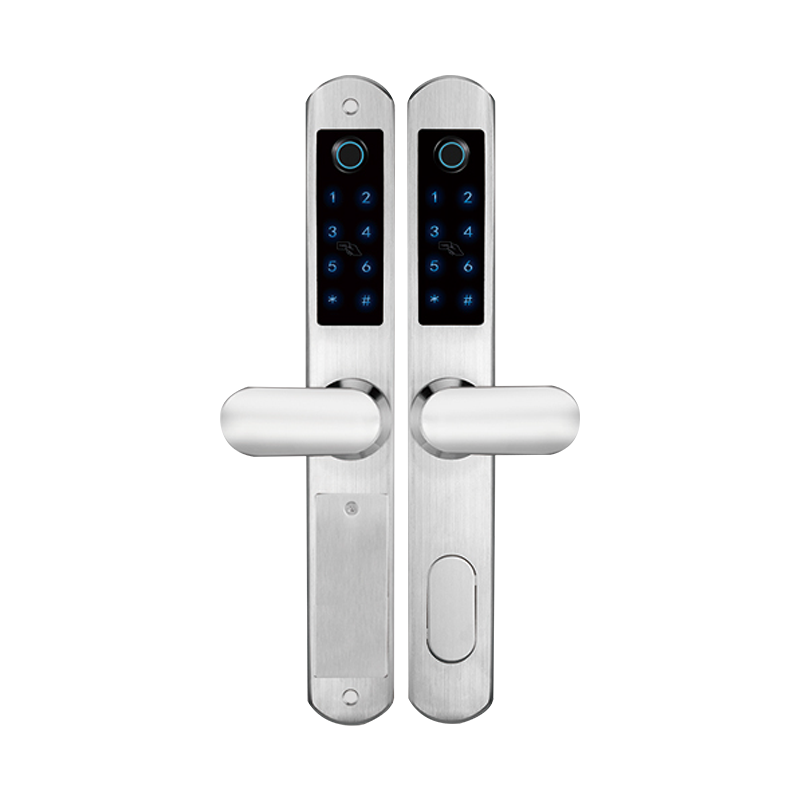
A Double Sided Fingerprint Lock depends on biometric processing running on both sides of the door, so any release touching recognition accuracy or response timing needs a noticeably tighter testing pass before it goes anywhere near live inventory. A flawed release here isn't a small annoyance. A registered fingerprint that suddenly reads inconsistently erodes user confidence almost instantly, because fingerprint access is one of those features people expect to work every single time without a second thought.
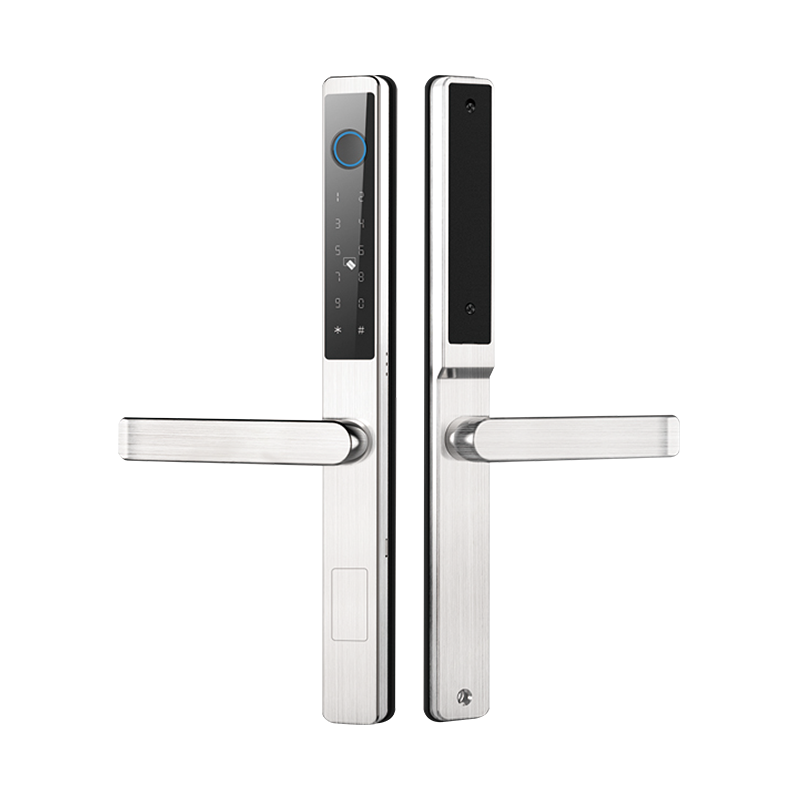
A Stainless Steel Smart Lock, by contrast, often draws attention for its build quality and finish rather than for onboard processing complexity, but that doesn't reduce the stakes around its firmware. Updates on this side of the product line tend to concentrate more on connectivity stability or power handling, areas where a rushed release can just as easily leave a lock unresponsive or draining its battery faster than the household expects.
| Lock Type | Primary Update Sensitivity |
|---|---|
| Double Sided Fingerprint Lock | Recognition accuracy and processing consistency |
| Stainless Steel Smart Lock | Connectivity stability and power management |
| Standard keypad variants | Input recognition and response consistency |
| App-paired models | Reliable sync between the lock and its mobile application |
Recognizing these distinctions matters because a single generic testing checklist applied across every product line will inevitably miss something specific to one category while over-testing another. Tailoring the validation process to each lock type tends to surface problems a uniform approach would let slip straight through to the field.
What Separates a Smooth Rollout From One That Causes Trouble?
A rollout that goes cleanly rarely happens by luck. It's typically the outcome of a staged process built specifically to surface problems early, rather than a factory discovering them only after thousands of units have already installed a flawed version.
Staged releases usually start narrow. A limited group, sometimes internal test hardware, sometimes a small set of cooperative early adopters within a distribution partner's network, receives the update first. That stage gets watched closely for anything unusual before the release expands any further.
Once that initial window looks stable, the rollout typically widens in steps rather than opening to the entire installed base at once. This incremental approach means that if a problem does slip through, it touches a manageable fraction of the network rather than the whole distribution footprint simultaneously.
- Internal validation confirms expected behavior under controlled testing conditions.
- A small external group receives the update first, monitored closely for anomalies.
- The release widens to a broader segment once that initial stage holds steady.
- Full distribution follows only once confidence has built across each preceding step.
- Monitoring continues even after full rollout, watching for issues that surface with a delay.
This staged pacing takes longer than pushing a release to every unit in one motion, but the tradeoff generally pays for itself. A problem caught within a small test group is a manageable fix. That same problem discovered only after reaching an entire distribution network turns into a far larger cleanup, one that costs more in distributor trust than a slightly slower rollout schedule ever would.
How Should Information Travel When an Update Doesn't Go as Planned?
Even a carefully staged rollout occasionally runs into something unexpected. What separates a manageable hiccup from a genuine reputational problem usually comes down to how quickly and clearly information moves once something starts drifting off course.
A factory that spots an issue mid-rollout needs the ability to halt further distribution of that specific release before it reaches a wider audience. That pause needs to reach distributors immediately, particularly those holding larger regional stock who would otherwise assume the release is proceeding normally and continue guiding their own customers accordingly.
| Situation | Communication Priority |
|---|---|
| Issue found during early-stage rollout | Halt further release, notify affected partners without delay |
| Broader issue after full distribution | Offer clear interim guidance while a fix is prepared |
| Minor, non-critical cosmetic bug | Schedule a routine fix without triggering unnecessary alarm |
| Issue touching access reliability or security | Treat as the highest priority for immediate communication |
Distributors left without clear guidance end up fielding confused questions from their own customer base with no real answers to offer, which reflects poorly on the whole chain regardless of where the original issue actually started. A factory that keeps an open, responsive line to its distribution partners during these moments tends to come out the other side with the relationship intact, because the partnership gets defined by how the problem was handled rather than by the problem itself.
Why Does Update Timing Carry Extra Weight in a Wholesale Context?
Timing plays out differently across a wholesale network than it does for a single retail transaction. A distributor managing inventory across several warehouses, or supplying installer networks across multiple regions, needs a reasonable degree of predictability around when a release is coming and how much advance notice they'll get beforehand.
Unpredictable timing creates friction that has nothing to do with the update's actual quality. A distributor running a seasonal promotion around a particular batch doesn't want an unrelated firmware release rolling out mid-campaign with unclear side effects on the customer experience. Installers juggling several jobs across a busy stretch benefit from knowing in advance whether a fresh release is about to change any part of the setup sequence they're used to walking a customer through.
- Advance notice gives distributors room to prepare their own customer-facing messaging.
- Predictable scheduling keeps releases from colliding with promotional windows.
- Installers benefit from knowing about changes before they're standing in front of a customer.
- Consistent timing signals that the factory runs a mature, well-organized process.
- Poorly communicated timing erodes trust even when the update itself performs fine.
A factory that treats release timing as something worth planning deliberately, rather than shipping whenever development happens to wrap up, tends to build a noticeably smoother working relationship with its wholesale partners. That predictability often ends up mattering to a distributor just as much as the physical build quality of the product itself.
How Does Ongoing Update Support Shape a Product's Reputation Years Later?
Reputation in this category doesn't get built entirely on how a lock performs during its first week installed. It accumulates gradually, across months and years, based on how well the product continues functioning as the surrounding technology environment shifts and as minor issues inevitably surface once widespread use begins.
A Stainless Steel Smart Lock that looks solid on the day it's installed but stops receiving meaningful firmware attention shortly after will eventually feel dated to the person relying on it daily, no matter how well the physical hardware itself has held up. The same pattern applies to a Double Sided Fingerprint Lock, where continued refinement of recognition performance often makes a real difference in satisfaction long after the initial purchase decision has already been made and forgotten.
| Support Pattern | Effect on Long-Term Reputation |
|---|---|
| Regular, properly tested releases | Reinforces confidence in continued reliability |
| Transparent communication during problems | Preserves trust even when something breaks |
| Dropping update support too early | Leaves customers stuck with aging, unsupported hardware |
| Consistent, predictable scheduling | Signals a mature and dependable manufacturing operation |
Distributors evaluating a supplier relationship over the long haul tend to weigh this pattern heavily, often more heavily than the specifics of any single product launch. A Smart Lock Factory known for managing its firmware pipeline carefully across an entire distribution network earns a different, sturdier kind of trust than one that treats updates as an afterthought, and that trust tends to show up directly in which suppliers keep landing the next round of wholesale orders as the relationship matures.



 Email:
  Phone: +86-13575699186
  Address: No.135, Wanyu Road, Zhiying Industrial Zone, Yongkang City, Zhejiang Province, China.