
 русский
  Español
  عربى
عربى Industry News

GET A QUOTE
How Codes Affect Smart Lock for Wooden Door Installation
A smart lock rarely functions as an isolated component. Once it's mounted, it becomes part of a larger assembly, door, frame, strike plate, handle, and the access path around it, and that assembly has to keep working as a unit. Move the same wooden door into a different region, and the rules governing that assembly can shift enough to change how the lock gets selected and fitted in the first place.
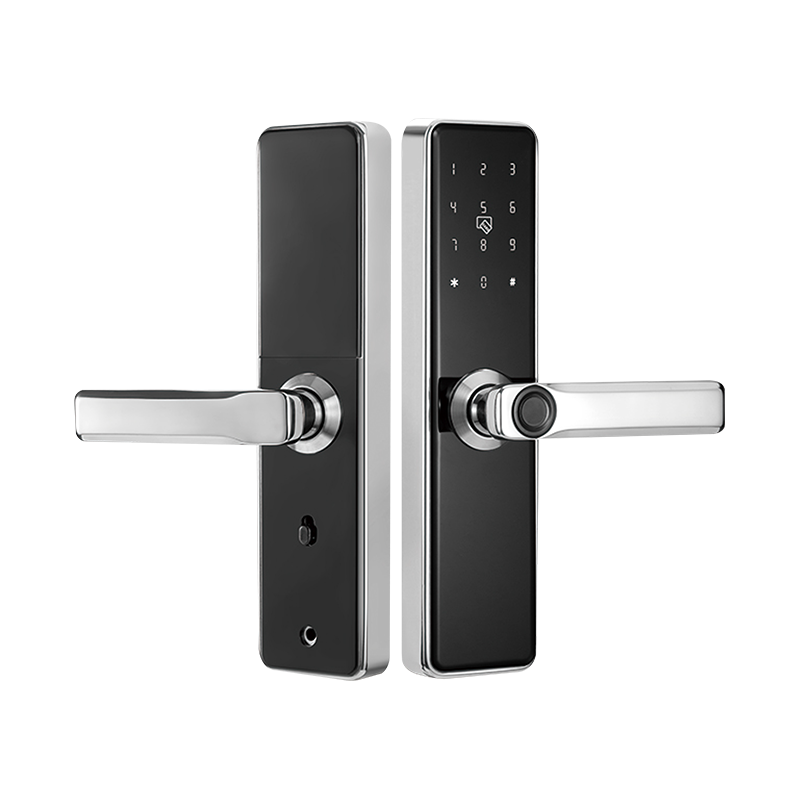
This isn't a minor detail for anyone sourcing hardware at scale. A configuration that performs well on one wooden door line can require a completely different installation approach once it crosses into a market with different code requirements around fire egress, accessibility, or hardware placement.
Selecting a Smart Lock for Wooden Door shouldn't start with the lock itself. It starts with the door system as a whole, and with whatever regulatory framework governs the building where that door will sit.
Why Do Building Codes Even Enter Into a Lock Decision?
Building codes exist to govern how a space gets used and occupied, not to specify hardware brands or lock types directly. They vary by jurisdiction, by building classification, and often by occupancy type within the same jurisdiction. A single-family residence sits under different requirements than a multi-tenant office floor or a short-term rental unit.
Most codes never mention smart locks by name. They address the door opening as a system, egress width, fire rating, hardware operability, that kind of thing. A smart lock only becomes relevant to that framework once it's installed and starts functioning as part of the opening.
That distinction gets lost easily during procurement. A buyer comparing unlock methods and finish options is thinking about the product. The installer, meanwhile, is dealing with clearance tolerances, handle swing radius, egress hardware, and how the lock sits against the frame.
Wood doesn't simplify this. Wooden doors range from lightweight interior partitions to structural entrance assemblies where fire rating and controlled access carry real regulatory weight. A configuration suitable for one wooden door type may be entirely wrong for another, even within the same building.
Fit, in other words, isn't just physical. It's whether the finished assembly still satisfies the code requirements attached to that specific opening.
How Does Local Code Affect Door Preparation Itself?
Door preparation is one of the areas that shifts most between markets, and it's easy to underestimate. Lock and handle placement need to align with the door's internal structure, not just its external dimensions. Drilling or cutting into a wooden door without accounting for that internal layout invites problems that don't always show up immediately.
Internal reinforcement around the hardware zone varies by door type. Edge clearance near the frame varies too. These structural details determine where an electronic lock can actually sit without compromising the door's integrity or its normal swing.
This is why a Smart Wooden Door Lock needs to be evaluated against door construction, not treated as a standalone component. The installer has to confirm hardware placement won't interfere with structural strength or day-to-day operation before any permanent modification happens.
Local requirements around accessibility and shared-use spaces add another layer. Handle height and operating force may be regulated. Certain doors need to swing freely in a specified direction. Others can't have hardware protruding into a shared corridor.
None of this gets resolved after the fact easily. It has to shape the installation plan before the lock reaches the door, regardless of how well-suited the product looks on its own.
What's the Handle's Role in All This?
The handle tends to get treated as a secondary detail, but on a wooden door it's in near-constant use and directly tied to lock function. It's not a cosmetic add-on. It's a mechanical interface that gets cycled multiple times daily.
A Lever Handle Smart Lock merges access control with that handle function, which can streamline the door's overall look, but it also ties handle positioning and swing directly to how the frame and door interact. Get that relationship wrong, and the simplification becomes a liability.
Regional accessibility codes often dictate specifics here, operating force thresholds, reach requirements, ease-of-use standards for shared or public-facing entrances. These aren't universal. What satisfies one market's accessibility code may fall short in another.
Clearance is the practical concern during installation. The handle shouldn't collide with the frame, an adjacent wall, or other hardware, and it needs to move without placing load on the lock mechanism itself.
Door swing direction matters just as much. A handle-and-lock configuration built around one swing direction may need real adjustment for a different door orientation, and that's something to confirm before any permanent cuts are made.
For distributors and project buyers, this means a Lever Handle Smart Lock can't be assessed from a spec sheet or product photo alone. The surrounding door geometry is just as much a factor in suitability as the lock itself.
How Do Fire and Egress Codes Change the Picture?
Fire safety requirements carry some of the heaviest regulatory weight on door hardware, and the core concern isn't keeping a door secured. It's making sure the door still supports safe egress when it matters.
Requirements shift based on the door's role within the building. A private residence entrance sits under different rules than a door serving a high-occupancy space. A door along a designated escape route carries different requirements than an internal room door with no egress function.
Smart locks add a layer of complexity here, since electronic access control can't be allowed to obstruct egress when it's needed. The lock, handle, closer, and frame need to be evaluated together as a functioning system, not as separate components that happen to share a doorway.
That doesn't mean every Smart Lock for Wooden Door unit installs the same way across projects. The right approach depends entirely on occupancy classification and the specific code framework governing that opening.
Manufacturers can support this with clear installation documentation, but documentation only goes so far. Installers still need to verify actual project conditions rather than assuming one installation method transfers cleanly across markets.
This matters most on commercial projects, where a single building might contain several distinct wooden door types, each serving a different function. Treating every opening as interchangeable is where avoidable installation conflicts tend to originate.
Why Does Accessibility Shape Where a Lock Gets Placed?
Accessibility compliance has become a standard consideration in door hardware across many building categories, and it directly affects lock placement, not just handle design.
Usability here depends on more than the lock mechanism. Handle height, the force required to operate the door, and the clearance around the entrance all factor into whether an installation actually meets accessibility intent, not just the letter of a spec.
For a Smart Wooden Door Lock, that means installation position has to account for the actual population using that door. A configuration that works well in an open floor plan may be poorly suited to a space with tighter physical constraints.
Commercial buildings illustrate this clearly. Employees use the same entrance repeatedly and adapt to it. Visitors approach with no prior familiarity with the building. The hardware needs to accommodate both without requiring instruction.
Residential settings carry their own variables, different user heights, different daily habits, proximity to steps or narrow approaches that affect how someone physically reaches the door.
Some jurisdictions define these accessibility parameters explicitly for certain building categories. Reviewing that framework before finalizing a lock configuration avoids a costly redesign after installation is already complete.
Does Building Type Change Requirements for an Otherwise Identical Lock?
It does, and this catches procurement teams off guard more often than it should.
A private residence typically has a stable, limited user group. An office building brings in employees, visitors, service personnel, and facility staff. A rental property adds turnover into the mix, since occupants change and access management needs to accommodate that.
These differences shape how a Smart Lock for Wooden Door actually gets installed and operated, even when the physical door itself looks nearly identical across settings. A residential wooden door tends to prioritize daily convenience. A commercial one needs to support controlled entry while staying practical for continuous foot traffic.
The same logic applies to Lever Handle Smart Lock products. The handle mechanism might suit a wide range of applications on paper, but the surrounding regulatory and usage context determines where it should sit and how the door needs to function once installed.
Developers and contractors managing multi-door projects run into this constantly. A single lock model rarely suits every opening in a mixed-use building. Reviewing each door according to its function tends to cut down on rework later in the project.
Suppliers serving multiple regions face a parallel version of this problem. A configuration that performs well in one market shouldn't be assumed to translate directly into another without reviewing the local application first.
What Should Get Checked Before Installation Even Starts?
A practical review starts with the door itself, material, internal construction, swing direction, frame condition, existing hardware position, handle type. Skipping this step is how mismatched installations happen.
The surrounding space matters just as much. Reviewing how people actually approach and move through that entrance helps confirm the lock won't interfere with other hardware or create an unnecessary obstruction.
Local code requirements need review at the building-type level next, separated clearly from design preferences or buyer requests. That separation makes the resulting installation decision easier to document and defend if questions come up later.
Product documentation deserves the same scrutiny. Clear installation drawings and door compatibility notes help installers understand intended configurations and adjustment tolerances. When actual door conditions diverge from what's documented, that's a signal to stop and verify rather than proceed on assumption.
For manufacturers, this is where product support earns its value without turning into marketing copy. Installation drawings, compatibility data, and responsive technical support genuinely reduce friction during procurement and installation.
Distributors sit in a similar position, functioning as the connective layer between manufacturer and installer. Familiarity with common regional door types and code frameworks lets them make recommendations that hold up once a project actually breaks ground.
None of this is about forcing one Smart Wooden Door Lock configuration to fit every wooden door. It's about making the relationship between product, door, building, and local code explicit before installation begins, not after.
How Should Suppliers Structure Product Lines Around Regional Variation?
Regional variation is a real design constraint for any manufacturer selling into more than one market, and it needs to be treated as a design input, not an afterthought handled through documentation alone.
Product architecture can absorb some of this variation directly. Adjustable components, modular installation kits, and a range of handle configurations give buyers more flexibility to match a product to local door conditions without requiring a fully custom SKU.
Documentation carries real weight here too. A manufacturer serving international buyers needs to explain how a given configuration relates to different door conditions, without overstating compliance claims that vary by jurisdiction.
This matters more for a Smart Lock for Wooden Door than for many other hardware categories, since wooden door construction, common entrance formats, and installation conventions differ meaningfully from one region to another.
Field feedback from installers and distributors is a genuinely useful input here. Recurring installation friction in a specific market often surfaces patterns that don't show up during initial product development, and that feedback loop can shape future design and documentation decisions.
For buyers, this points to a broader evaluation standard. Supplier selection should weigh more than unit price or finish options. The ability to speak clearly about door compatibility, provide usable technical documentation, and flag installation constraints upfront tends to matter more over the life of a project than it does during initial sourcing.
A Lever Handle Smart Lock can look entirely straightforward as a standalone product. Once it's placed on a specific wooden door inside a specific building, the surrounding code requirements become part of the actual decision, not a footnote to it.
Regional building codes aren't an obstacle layered on top of product installation. They define the operating framework a door has to satisfy, and factoring that framework in at the design and sourcing stage is what lets a Smart Wooden Door Lock get selected with a genuine understanding of how it will actually be used.
Recommended Products

Ready to Begin?
Product Categories
Contact Information
 Email: [email protected]
 Phone: +86-13575699186
 Address: No.135, Wanyu Road, Zhiying Industrial Zone, Yongkang City, Zhejiang Province, China.
QR Code
Copyright © Yongkang Ruian Lock Industry Co, Ltd. All rights reserved.
