
 русский
  Español
  عربى
عربى 
Procurement teams reviewing recent order histories keep noticing the same detail. Lever handle requests are climbing steadily across home door smart lock categories, and they're no longer confined to accessibility-focused product lines. This pattern shows up in bulk orders from distributors, in specification sheets from property developers, and in repeat purchases from buyers who previously stuck with knob-style hardware for years. A Smart Lock Factory paying attention to these order patterns is adjusting catalog priorities accordingly, and the reasoning behind that shift deserves a closer look than a passing mention in a sales report.
This isn't a marketing-driven trend dressed up as consumer demand. It's showing up in the operational side of sourcing, where buyers who care primarily about reliability and fit are choosing lever handles for reasons that go beyond appearance. Anyone responsible for stocking a Smart Lock for Home Door range benefits from understanding what's actually driving this shift, since it affects tooling decisions, supplier evaluation, and how a catalog gets structured going forward.
What Does the Order Data Actually Show?
Buyers placing home door lock orders used to treat lever handles as a specific request tied to particular building codes or accessibility requirements. Cylinder and knob-based designs carried the bulk of general residential orders, largely because that's what installers and end users expected as standard.
That expectation has been shifting for a while now, and the shift shows up clearly once order histories get compared side by side. Distributors report that lever handle requests increasingly arrive as the default configuration buyers ask about first, with knob-style options treated as the alternative rather than the baseline. Property developers sourcing hardware for multi-unit residential projects show a similar pattern, often standardizing on lever handles across entire developments rather than mixing styles by unit type.
| Order Characteristic | Previous Pattern | Pattern Now Emerging |
|---|---|---|
| Default style inquiry | Knob or cylinder assumed | Lever handle raised as the first option |
| Accessibility code compliance | Cited as the main driver | One factor among several, not the leading one |
| Developer specification sheets | Mixed styles across unit types | Lever handles standardized across full projects |
| Repeat distributor orders | Style choice stayed consistent | Existing product lines being swapped to lever configurations |
None of this means other handle styles are being phased out entirely. It does mean lever handles have moved from a specialty line item to a baseline expectation in a meaningful share of home door orders, and that repositioning changes how a factory has to plan inventory and production scheduling.
Why Are Buyers Prioritizing Grip and Motion Over Familiarity?
Ease of operation carries more weight in these purchasing decisions than buyers tend to state outright in a specification request. A knob requires a rotational grip, quick for most users but genuinely difficult for anyone dealing with reduced hand strength, arthritis, or simply full hands at the moment of entry. A lever only requires a downward push, a motion that demands far less precision and far less grip force to complete.
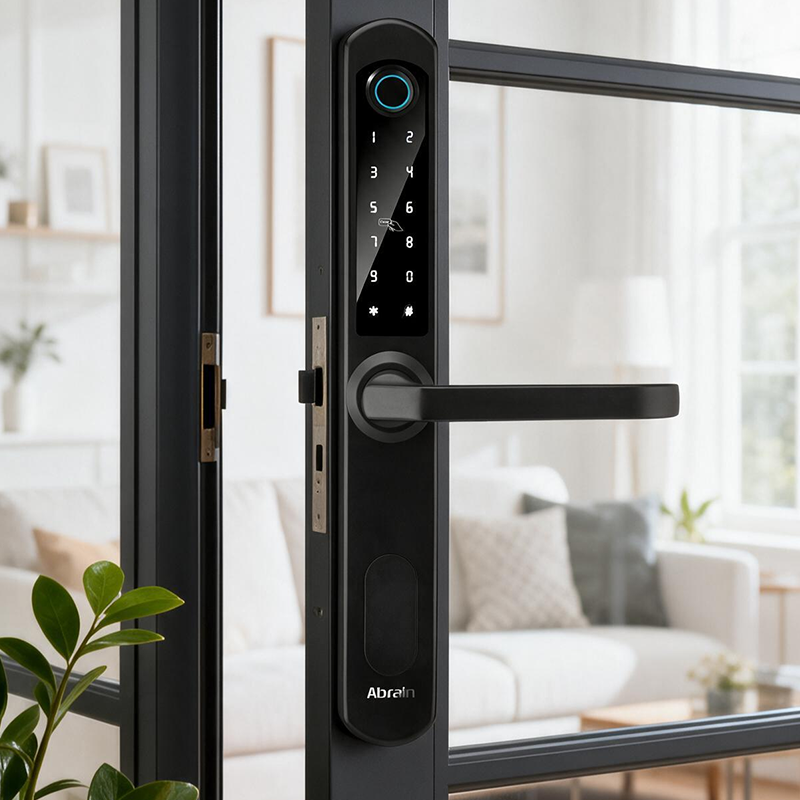
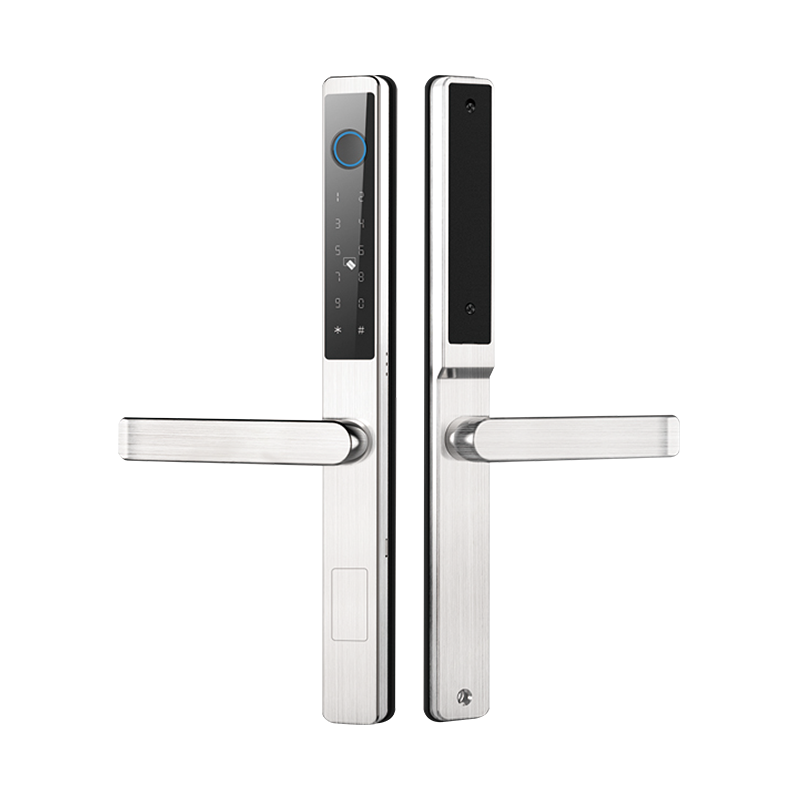
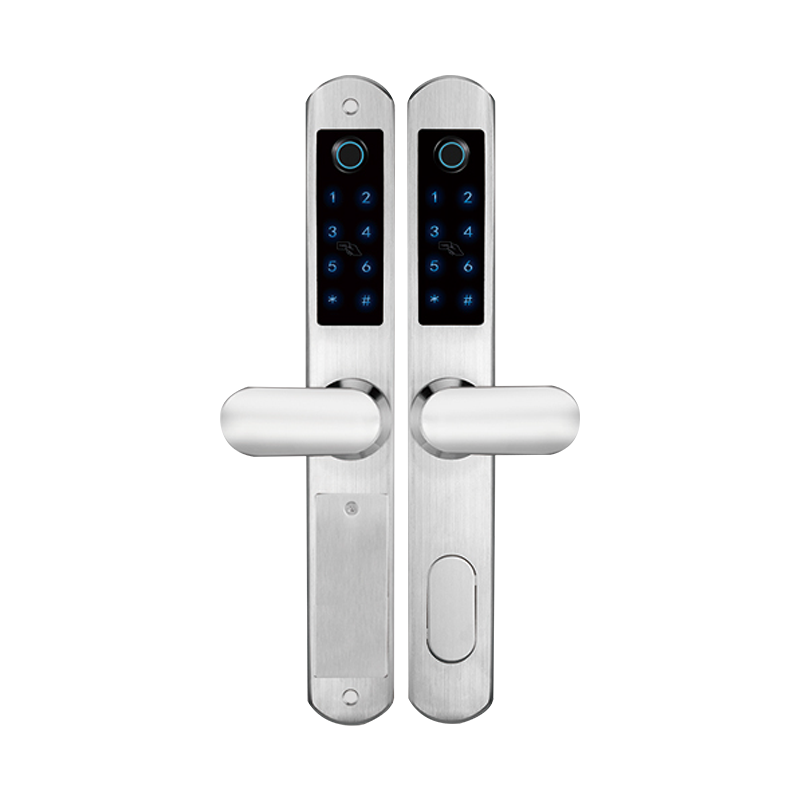
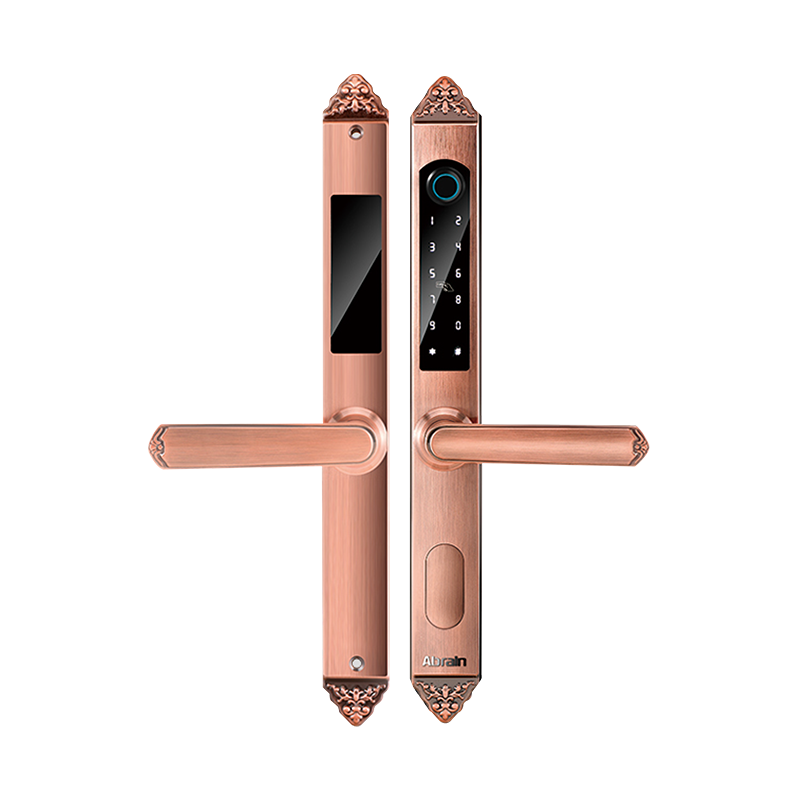
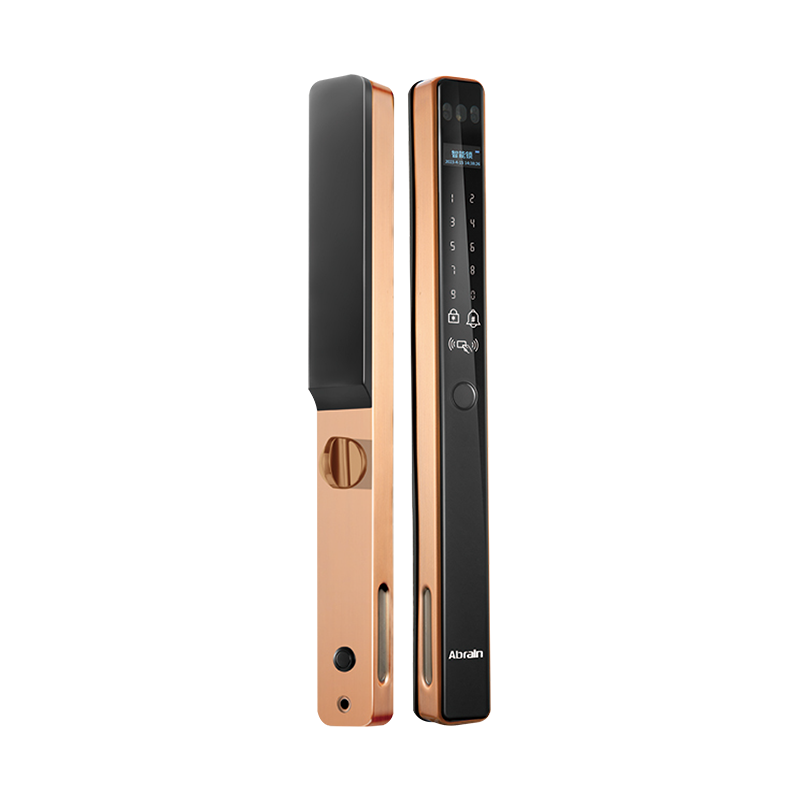
This distinction matters more across a full property lifecycle than it might seem on a single-use basis. A resident carrying bags, managing a stroller, or wearing gloves in colder conditions benefits from a mechanism that asks less of their hands. A Lever Handle Smart Lock accommodates that reality without requiring any compromise on the smart functionality layered onto it, since fingerprint recognition, keypad entry, or app-based unlocking all operate independently of the final mechanical motion needed to physically swing the door open.
- A downward push motion requires less fine motor coordination than a rotational grip.
- Reduced hand strength scenarios are increasingly common across a property's resident base over time.
- Lever handles lower physical strain during frequent daily use, particularly in high-traffic units.
- The mechanism performs more reliably when hands are full, wet, or gloved.
- Once a property switches to lever handles, tenant feedback rarely calls for a reversal.
Property managers and developers factor this into planning decisions more than casual buyers might, since a mechanism that reduces friction for a wider range of residents translates directly into fewer maintenance calls and fewer complaints over a building's operating life.
Is This Purely an Aesthetic Trend, or Is Something More Practical Driving It?
Visual preference plays a genuine role, and it would be inaccurate to suggest otherwise. Lever handles tend to present a cleaner profile against modern door surfaces, aligning well with architectural trends favoring simpler lines and fewer visually heavy fixtures. Developers marketing newer residential projects often specify lever handles partly because they photograph better and align with a more contemporary presentation.
That said, the visual argument alone doesn't account for the consistency of this shift across such a wide buyer base. Procurement conversations tend to raise both style and function in the same breath, rarely isolating one as the deciding factor. It reads less like an aesthetic trend and more like a converging judgment: lever handles fit the visual language buyers want, and they also solve a functional concern that knob-style hardware never fully addressed.
| Buyer Consideration | How It Surfaces in Sourcing Conversations |
|---|---|
| Alignment with contemporary architectural design | Requests reference simplified, streamlined hardware profiles |
| Reduced physical strain during daily use | Raised alongside style preferences, not as a separate category |
| Perceived build quality | Lever handles associated with more considered hardware design |
| Property-wide consistency | Developers standardizing handle style across full unit ranges |
This dual reasoning explains why the shift has held steady rather than fading after a single design cycle. A trend built purely on appearance tends to lose momentum once the next visual style gains traction. A trend built on appearance and daily function together tends to hold its ground across multiple sourcing cycles.
How Does Lever Handle Demand Intersect With Long-Term Accessibility Planning?
Developers and property managers increasingly plan for residents aging in place, accounting for reduced mobility over time rather than treating accessibility as a separate renovation project down the line. Door hardware sits at the center of that planning, since it's a fixture every resident interacts with multiple times daily without exception.
A Lever Handle Smart Lock supports this planning directly. Lower grip strength requirements combined with smart unlocking features that reduce dependence on precise key handling address two separate mobility considerations within a single fixture. Procurement teams working on long-term housing developments raise this combination proactively, often specifying lever handles well before any resident in the building shows signs of reduced mobility.
- Lower grip strength requirements support long-term usability as a resident population ages.
- Smart unlocking features reduce dependence on precise key manipulation.
- Lever handles integrate naturally alongside other accessibility-focused building features.
- Developers frequently specify this combination well ahead of any immediate need.
- The decision reflects planning for a property's future occupancy, not just its current tenant base.
This forward-looking consideration explains part of why lever handle requests show up even in developments where current residents show no mobility concerns whatsoever. It reflects long-term planning discipline rather than a reactive response to an existing problem.
What Does This Shift Require From a Smart Lock Factory's Production Approach?
A sustained shift in buyer preference eventually reaches production planning, and lever handle demand has already reached that stage for many suppliers. A Smart Lock Factory responding seriously to this trend has to go beyond simply adding a lever option alongside existing knob and cylinder lines as a secondary catalog item. It requires reassessing tooling investment, mold allocation, and how much of the standard product range gets structured around lever-based mechanisms from the design stage onward.
This isn't a straightforward substitution. Lever mechanisms follow a different internal motion path than knobs, and that difference affects how smart features get integrated. Sensors, batteries, and wiring all need to fit within a housing shape that supports smooth lever operation without compromising the mechanical feel buyers are specifically choosing this style for in the first place.
| Production Factor | Why It Requires Adjustment |
|---|---|
| Internal component arrangement | Lever mechanisms follow a distinct motion path compared to knobs |
| Tooling and mold investment | Sustained demand justifies shifting resources toward lever-based designs |
| Housing depth and internal shape | Must accommodate smart features without disrupting handle motion |
| Catalog structure and positioning | Lever options shift from secondary listings to core product lines |
Suppliers treating this shift seriously tend to restructure their catalog hierarchy rather than keeping lever handles as an optional add-on category. That structural adjustment reflects how seriously the underlying demand signal is being read at a planning level, rather than treated as a passing preference likely to reverse.
Do All Home Door Types Accommodate Lever Handles Without Complication?
Not universally, and this deserves direct acknowledgment rather than being smoothed over in a sales conversation. Lever handles generally require somewhat more horizontal clearance than compact knob designs, since the handle extends outward from the door surface in a way a rounded knob simply doesn't.
Most standard residential doors accommodate this without issue. Narrower door frames, certain older architectural layouts, or doors positioned close to adjacent walls or fixtures occasionally require additional planning to fit a lever handle comfortably. This doesn't eliminate the option for these door types, but it does mean sourcing teams benefit from clarifying clearance requirements before committing to a bulk order, particularly when supplying hardware across a mixed portfolio of older and newer properties.
- Standard door widths generally accommodate lever handles without any structural modification.
- Narrower frames or tight wall clearances may call for adjusted handle positioning.
- Door swing direction can influence how much clearance a lever handle realistically needs.
- Installation documentation increasingly addresses these clearance questions directly.
- A brief clearance review before ordering helps prevent fitting complications during installation.
Sourcing teams supplying a varied range of properties benefit from raising these clearance questions early in supplier discussions, particularly when older building stock is part of the portfolio alongside newer construction.
How Should Procurement Teams Approach Suppliers Given This Shift?
Procurement teams watching this trend have a real opportunity to get ahead of it through supplier selection rather than reacting once demand has already outpaced available inventory. Order patterns rarely shift this consistently without a genuine underlying driver, and the combination of comfort, long-term accessibility planning, and design alignment tends to hold steady rather than reverse within a typical sourcing cycle.
That said, moving into lever handle orders without evaluating supplier readiness can introduce avoidable friction. Not every factory has invested equally in adapting internal housing designs to support lever mechanisms properly, and a supplier relabeling an existing knob-based product with a lever attachment tends to produce a noticeably different result than one that redesigned the internal layout from the ground up.
- Has the supplier built lever handle options into its core catalog, or added them recently as a limited offering?
- Does the internal housing account for the specific motion path a lever mechanism requires?
- Is installation documentation clear about clearance requirements across different door types?
- Can existing product lines be adapted to a lever configuration without a full structural redesign?
- Does the supplier offer enough range in handle shape and grip feel to match different project specifications?
Raising these questions during supplier evaluation helps procurement teams distinguish manufacturers who've genuinely adapted their production approach from those offering a surface-level substitution, a difference that tends to surface in durability and resident feedback long before it appears in any spec sheet or sales pitch.

 Email:
  Phone: +86-13575699186
  Address: No.135, Wanyu Road, Zhiying Industrial Zone, Yongkang City, Zhejiang Province, China.