
 русский
  Español
  عربى
عربى Industry News

GET A QUOTE
How Smart Lock for Home Door Fits Different Homes
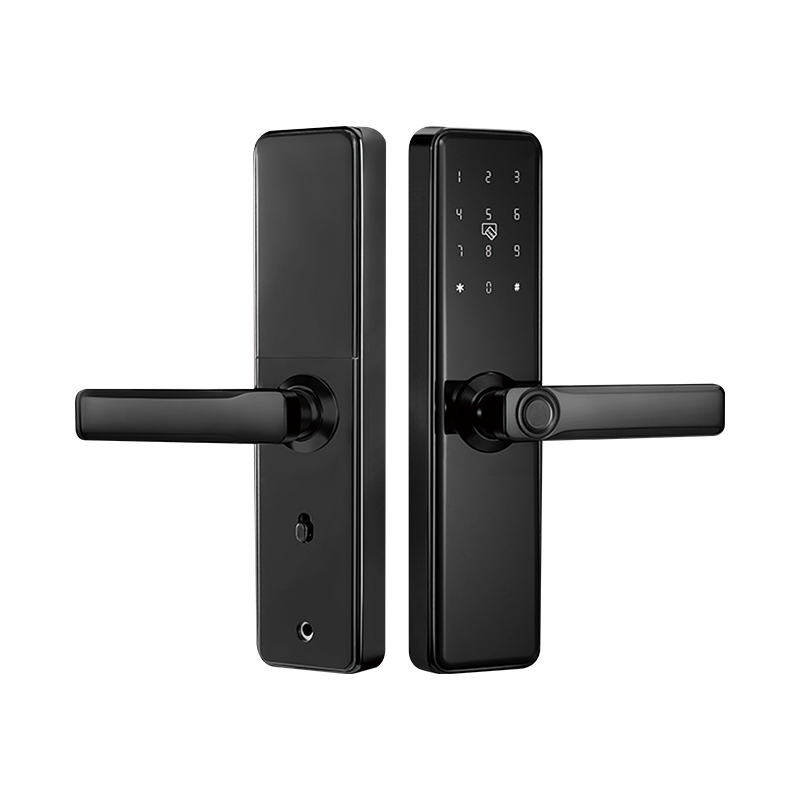
Selecting a security system is straightforward in theory and genuinely complicated in practice. The lock that works well on a single-entry city apartment creates problems when applied to a multi-door detached house. A system designed for rotating tenant access in a rental property is over-engineered for a family home and under-specified for an office building with twenty staff members coming and going at different hours. Smart Lock for Home Door applications, office buildings, wooden-door period properties, and rental units all sit under the same broad product category — but they involve different structural requirements, different user management needs, and different levels of access control complexity. Getting the match right from the outset avoids the frustrating and expensive process of replacing a system that technically functions but does not suit the property it was installed in.
Why House Type Drives Security System Architecture
Entry Point Count Changes Everything
The number of entry points a property has is the first variable that shapes which system architecture makes sense. An apartment with a single front door and no direct street access has fundamentally different security needs from a standalone house with a front door, a side gate, a garage entrance, and patio doors. Each additional entry point is an additional security decision — one that needs to be considered as part of a system rather than handled piecemeal.
Properties with a single controlled entry point benefit from a focused, high-quality lock solution on that entry. The entire security investment concentrates on one junction. Properties with multiple entry points need either consistent coverage across all of them — which raises cost and management complexity — or a prioritized approach that identifies which entries carry the highest risk and directs the system's capability accordingly.
User Traffic and Access Patterns
The frequency and variability of who enters and exits a property shapes the access control requirements more than the physical structure alone. A family home where the same three or four people enter using the same keys or codes every day has straightforward needs. A serviced apartment where different guests arrive and depart weekly, or an office where employee access needs to be granted, modified, or revoked as staffing changes, requires a system with more granular access management.
This distinction matters because it determines whether a simple keypad or fingerprint lock is sufficient, or whether the system needs to support multiple user profiles, temporary access codes, remote unlocking, and an audit log that records who entered and when. Matching the system's access management capability to the property's actual user patterns prevents both under-specification — where the system cannot handle the complexity of real use — and over-specification, where unnecessary features add cost without contributing to security.
Apartments and Urban Residences
The Single-Entry Advantage
Most apartments have one primary entry point — the front door — which is also typically within a building that already has lobby-level access control. This structure allows the apartment-level security system to focus exclusively on that single door, with the building's own systems providing a first layer of screening.
For this context, a Smart Lock for Home Door installation on the apartment entry provides practical daily convenience alongside the security benefit. Keyless entry removes the dependency on physical keys — which get lost, copied, or left behind — and allows the resident to grant temporary access to visitors, maintenance workers, or housekeepers without being present or handing over a physical key.
Features that matter most in apartment applications:
- Auto-locking after a set period, since apartment residents in multi-unit buildings often move in and out frequently
- Quiet operation — noise from a lock mechanism travels in shared building environments more than in detached properties
- Compatibility with the existing door hardware, since apartment doors typically cannot be replaced or significantly modified without landlord approval
- Compact form factor that does not obstruct shared corridor space
Rental Apartments and Access Management
For property owners managing rental apartments, whether short-term holiday lets or longer residential tenancies, the access management dimension becomes the central requirement. Physical key handover is a logistical friction point that remote access capability removes entirely.
A system that supports temporary PIN codes — time-limited access codes that expire automatically at checkout or tenancy end — removes the need to physically collect keys and eliminates the security risk of unreturned copies. For property managers handling multiple units, a platform that allows codes to be generated and revoked remotely across all properties from a single interface transforms access management from a recurring operational task into an automated background function.
Detached Houses and Multi-Entry Properties
Covering Multiple Entry Points Coherently
A detached house typically presents a more complex security challenge than an apartment: multiple doors, a garage entry, potential side access, and ground-floor windows that form part of the overall security envelope. An effective system for this property type needs to address the full perimeter rather than focusing exclusively on the front door.
The practical approach is layered: the primary entry points — front door and back door at minimum — receive active smart locking. Secondary points, including garages and side gates, may use simpler mechanical or electronic solutions that form part of the overall perimeter without requiring full smart lock capability at every point. The goal is coherent coverage rather than uniform specification across every access point regardless of risk level.
For families with children, elderly residents, or caregivers entering regularly, a system that allows multiple user credentials — different codes, fingerprints, or access cards for different household members — simplifies daily use while maintaining the ability to monitor who enters and when.
Wooden Door Compatibility Considerations
A significant proportion of detached houses, particularly older and heritage properties, have wooden doors that predate modern lock standards. Smart lock for wooden door installation on these properties requires careful compatibility assessment before purchase.
Wooden doors vary considerably in thickness, construction, and the existing hardware fitted into them. Key compatibility factors include:
- Door thickness: Smart locks have hardware components on both the interior and exterior sides of the door, connected by a spindle or mounting assembly. The door needs to fall within the lock's specified thickness range for the assembly to seat correctly.
- Existing deadbolt and latch configuration: Some smart locks replace only the cylinder or the internal turn mechanism, retrofitting onto existing hardware. Others require the full lock body to be replaced. The existing cutout dimensions in the door determine which approach is viable without additional woodwork.
- Door material density: Solid hardwood, engineered wood, hollow-core, and softwood doors all behave differently. Hollow-core wooden doors may require reinforcement around the lock mounting area to prevent the hardware from working loose under repeated use.
- Weather exposure: Wooden doors exposed to direct weather — particularly on north or east-facing elevations — experience more movement through moisture absorption and temperature change than sheltered doors. Lock mechanisms fitted to these doors need to accommodate that movement without jamming.
Pre-installation assessment by a qualified locksmith familiar with the specific lock model saves the frustration of discovering incompatibility after purchase.
Office Buildings and Commercial Spaces
Access Control Beyond Basic Locking
Office security requirements differ from residential ones in one fundamental respect: the system must manage a population of users rather than a household. An office with staff, contractors, cleaning crews, and visitors moving through the same space on different schedules and with different access rights needs a system built for user management, not just physical locking.
A smart lock for office door applications needs to support:
- Multiple user profiles with individually assigned credentials
- Credential types appropriate for different user groups — PIN codes for regular staff, temporary codes for contractors, visitor access managed through a reception or front-desk workflow
- Access schedules that restrict when specific credentials are valid — cleaning staff may have access only during evening hours, for example
- Audit logging that records entry events by credential, time, and door
- Administrative remote access to add, modify, or revoke credentials without being physically present at the building
These requirements are genuinely different from what a residential lock needs to do, and systems not designed for this level of user management struggle to deliver it reliably even when forced into that role.
Meeting Room and Internal Door Access
For larger commercial properties, the security requirement extends beyond the building perimeter to internal access control — meeting rooms, server rooms, executive areas, or storage containing sensitive materials. Internal doors in office environments are typically lighter than perimeter doors and may be wooden or composite construction.
Smart lock systems designed for internal commercial doors are often more compact than perimeter door installations and may use different credential types — NFC cards or mobile credentials that integrate with the wider building access control infrastructure — rather than standalone PIN keypads.
A Matching Framework by Property Type
| Property Type | Entry Points | Primary Need | Suitable System Features |
|---|---|---|---|
| Urban apartment | Single front door | Convenience and keyless access | Auto-locking, visitor codes, quiet operation |
| Short-term rental | Single or multiple | Remote access management | Temporary PINs, remote code generation, audit log |
| Detached family home | Multiple doors and access points | Perimeter coverage and household access | Multi-user credentials, layered coverage |
| Wooden door property | Variable, often single | Hardware compatibility | Retrofit compatibility, door-thickness range |
| Office or commercial space | Multiple, including internal | User management and audit | Multi-user profiles, schedules, remote admin |
| Mixed residential and commercial | Multiple, dual use | Separation of access populations | Zone-based access, separate credential groups |
| Managed apartment block | Multiple units | Portfolio access management | Centralised platform, per-unit code management |
How Does Door Material Affect System Choice?
Steel and Composite Doors
Steel and composite doors are the standard for modern residential construction because they provide dimensional stability, consistent hardware compatibility, and resistance to physical attack. Smart lock installation on these doors is typically straightforward — the door dimensions are predictable, the hardware cutouts are standardised, and the door does not move significantly with temperature or moisture change.
Most smart lock product lines are optimised for steel and composite door installation. Buyers specifying systems for new-build residential or commercial developments can generally select from the full range of available systems without significant compatibility constraints.
Aluminium and Glass Facade Doors
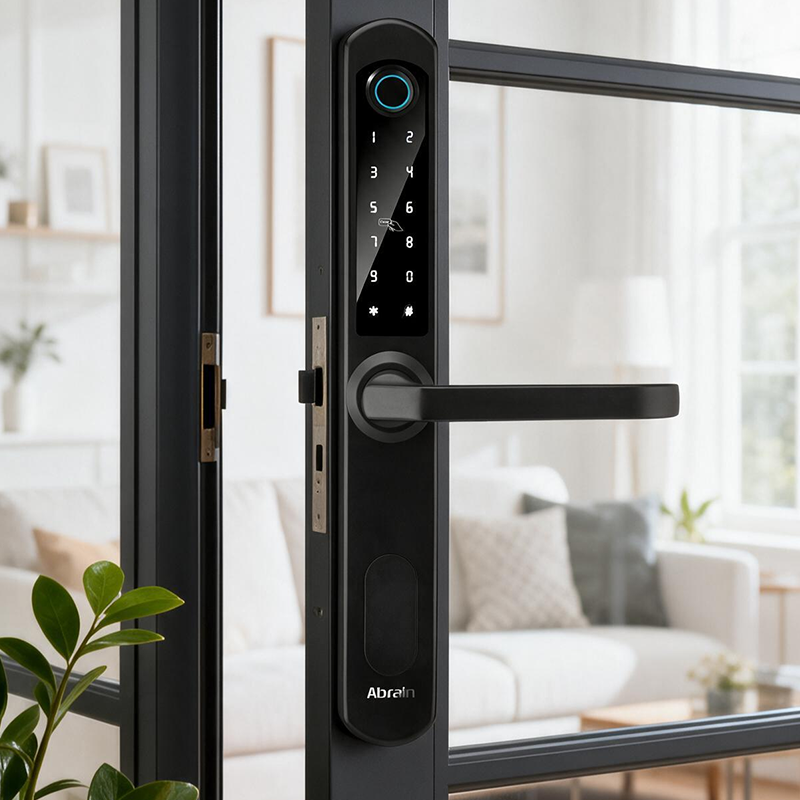
Commercial buildings often use aluminium-framed glass doors for entrance areas — aesthetically transparent, durable, and low-maintenance. Smart lock integration on these door types typically uses a different mounting approach than residential systems, often integrating with the existing aluminium frame profile rather than replacing a conventional lock body.
Access control for aluminium glass doors in commercial contexts frequently uses electromagnetic lock systems — where a magnetic plate holds the door closed and releases on credential presentation — rather than conventional deadbolt mechanisms. This approach is compatible with the door construction but requires a different product category than the Smart Lock for Home Door format.
Wholesale and Project Procurement Considerations
When a Single-Unit Approach Does Not Scale
For property developers, hotel groups, managed apartment operators, and corporate real estate teams equipping multiple buildings or units simultaneously, the individual retail purchase model is neither economically rational nor operationally manageable. Wholesale Smart Lock procurement for project-scale installations involves a different set of considerations from single-unit retail purchase.
Key factors in project-scale procurement:
- Consistency across units: A project where all units use the same lock model benefits from standardised maintenance, spare parts availability, and staff training. Mixed-model installations complicate all of these.
- Management platform compatibility: Where a centralised access management platform is used across the project, all lock models need to be compatible with that platform's integration requirements.
- Installation efficiency: Consistent product selection allows installation crews to develop and maintain the same technique across all units, which improves speed and reduces errors.
- Support and warranty terms: Project-scale procurement typically warrants negotiated support terms — response time guarantees, bulk replacement provisions, and technical assistance for installation — that standard retail warranty terms do not provide.
Evaluating a Smart Lock Factory for Supply Reliability
For buyers sourcing at project scale, the Smart Lock Factory's production consistency is as important as the product specification. A factory that delivers consistent dimensional tolerances, material quality, and firmware versions across a production run produces reliable installation results. One with quality variation between batches creates field problems that are difficult and expensive to diagnose and resolve across a large installed base.
Evaluation criteria for Wholesale Smart Lock supply relationships include the factory's quality management documentation, the testing regime applied to production output, lead time reliability across repeat orders, and the responsiveness of technical support when installation or integration questions arise.
Matching System to Property Before the Purchase Decision
Choosing a home security system by starting with the product and then fitting it to the property is the reverse of a productive process. The property type, its entry point configuration, the user population it serves, and the access management complexity it involves are the variables that should drive the system specification — not the available features of a product that caught a buyer's attention.
For residential owners, that means mapping entry points, identifying who needs access and on what schedule, and matching the system's access management capability to those needs before evaluating specific products. For commercial buyers and project procurement teams, it also means assessing management platform compatibility, installation consistency requirements, and the support structure that a wholesale supply relationship provides. Yongkang Ruian Lock Industry Co, Ltd. manufactures smart lock products across residential and commercial formats — including Smart Lock for Home Door, office door, and wooden door applications — and supplies Wholesale Smart Lock volumes to developers, property managers, and distribution partners. Direct contact to discuss product compatibility, project specifications, and supply terms is the practical starting point for buyers moving from specification to procurement.
Recommended Products

Ready to Begin?
Product Categories
Contact Information
 Email: [email protected]
 Phone: +86-13575699186
 Address: No.135, Wanyu Road, Zhiying Industrial Zone, Yongkang City, Zhejiang Province, China.
QR Code
Copyright © Yongkang Ruian Lock Industry Co, Ltd. All rights reserved.
