
 русский
  Español
  عربى
عربى Industry News

GET A QUOTE
What are the components of a waterproof fingerprint lock?
The lock is an assembly of electronic, mechanical, and sealing components.
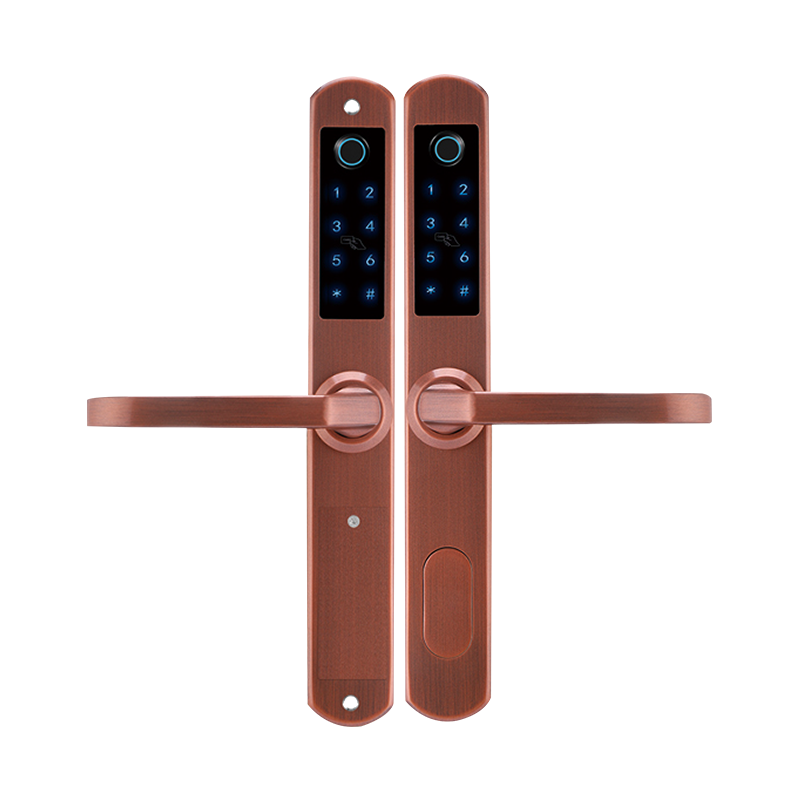
Fingerprint Sensor Module: This is the core input device, typically a capacitive or optical sensor. It captures an image of the fingerprint ridge pattern. The module includes a protective cover, often made from durable materials like tempered glass or ceramic, which is the surface the finger touches.
Processing Unit (MCU): A micro-controller unit (MCU) is the central processor. It stores enrolled fingerprint templates, runs the algorithm to compare a scanned print against the database, and makes the access decision.
Memory: A small amount of non-volatile memory (like flash memory) is used to store enrolled fingerprint data and system settings.
Power Supply: This consists of battery compartments, terminals, and power management circuitry. Alkaline batteries are common, with some models offering rechargeable battery options or low-power warning features.
Mechanical Locking Mechanism: This is the physical actuator that retracts or extends the deadbolt or latch. It is usually a motor (a small DC gear motor) or a solenoid that converts the electrical "open" signal into mechanical motion.
External Housing (Shell): The outer case, typically constructed from zinc alloy, stainless steel, or reinforced engineering plastic. It provides structural integrity and houses all internal components.
Environmental Sealing System: This is the critical system for waterproofing. It includes silicone or rubber gaskets at all case joints, a sealed membrane or cover over the fingerprint sensor, sealed buttons for manual keypad input (if present), and waterproof cable glands for any external wiring connections.
User Interface: This can include LED indicator lights, a buzzer for audio feedback, and sometimes a backup keypad for PIN entry or a physical key override.
Why do Waterproof Fingerprint Locks exist?
The development and use of these locks are driven by specific environmental and application challenges that standard electronic locks cannot reliably address.
Operation in Exterior and High-Humidity Environments
The primary reason is to provide secure, keyless access in locations directly exposed to weather. This includes residential and commercial exterior doors, gate entries, pool and spa areas, and marine applications (e.g., boat cabin doors). Humidity, rain, and condensation can damage unprotected electronics and sensors, causing failure. A waterproof lock is designed to resist this ingress.
Durability Against Environmental Contaminants
Beyond water, outdoor environments introduce dirt, dust, and pollutants. The same sealing that prevents water ingress also protects the sensitive internal electronics and the fingerprint sensor from particulate contamination, which could obscure the sensor or clog moving parts, ensuring reliable long-term operation with minimal maintenance.
Hygienic and Convenient Access for Wet Users
In settings like swimming pools, gym locker rooms, or beach houses, users' hands are often wet. A waterproof lock allows for fingerprint authentication immediately after exiting the water without the need to dry hands thoroughly , offering convenience that a non-waterproof sensor could not provide without risk of damage or malfunction.
Waterproof Fingerprint Lock Manufacturing Process
The manufacturing process emphasizes precise assembly and rigorous sealing validation to achieve the stated waterproof rating.
The process begins with the fabrication and preparation of components. The metal or plastic housing parts are die-cast or injection-molded. The internal printed circuit board (PCB) assembly, containing the MCU, memory, and sensor connection points, is populated using surface-mount technology (SMT). The fingerprint sensor module is separately assembled and tested.
The critical stage is sealed assembly. Silicone gaskets are precisely placed into the grooves of the housing. The PCB assembly is installed, and connections for the motor, battery terminals, and external interfaces are made. The fingerprint sensor is carefully integrated, with its own peripheral seal. The housing halves are then joined. This joining is often done using both mechanical fasteners (screws) and a form of bonding, such as ultrasonic welding or the application of a bead of silicone sealant along the seam before final clamping.
Following assembly, each unit undergoes environmental testing. This is a key part of the process. Locks are typically subjected to a spray test or immersion test to verify they meet an Ingress Protection (IP) rating, such as IP65 (dust-tight and protected against water jets) or IP67 (dust-tight and protected against temporary immersion). This testing confirms the integrity of the seals. Finally, units undergo functional calibration and testing. The fingerprint enrollment and matching algorithms are calibrated, the motor torque and bolt throw are tested, and the user interface functions are verified before packaging.
Recommended Products

Ready to Begin?
Product Categories
Contact Information
 Email: [email protected]
 Phone: +86-13575699186
 Address: No.135, Wanyu Road, Zhiying Industrial Zone, Yongkang City, Zhejiang Province, China.
QR Code
Copyright © Yongkang Ruian Lock Industry Co, Ltd. All rights reserved.
