
 русский
  Español
  عربى
عربى Industry News

GET A QUOTE
Why Does Climate Matter When Sourcing Smart Lock for Wooden Door
Anyone who has spent years sourcing hardware for international distribution knows a simple truth: a product that performs well in one climate zone doesn't automatically perform well in another. This isn't a marketing talking point. It's a procurement reality that shows up in return rates, warranty claims, and the kind of feedback that never makes it into a glossy catalog. Wood, as a raw material, carries this reality more visibly than almost anything else used in door hardware, and that's exactly why climate has quietly become one of the more serious variables in how a Smart Lock for Wooden Door gets designed, qualified, and eventually distributed.
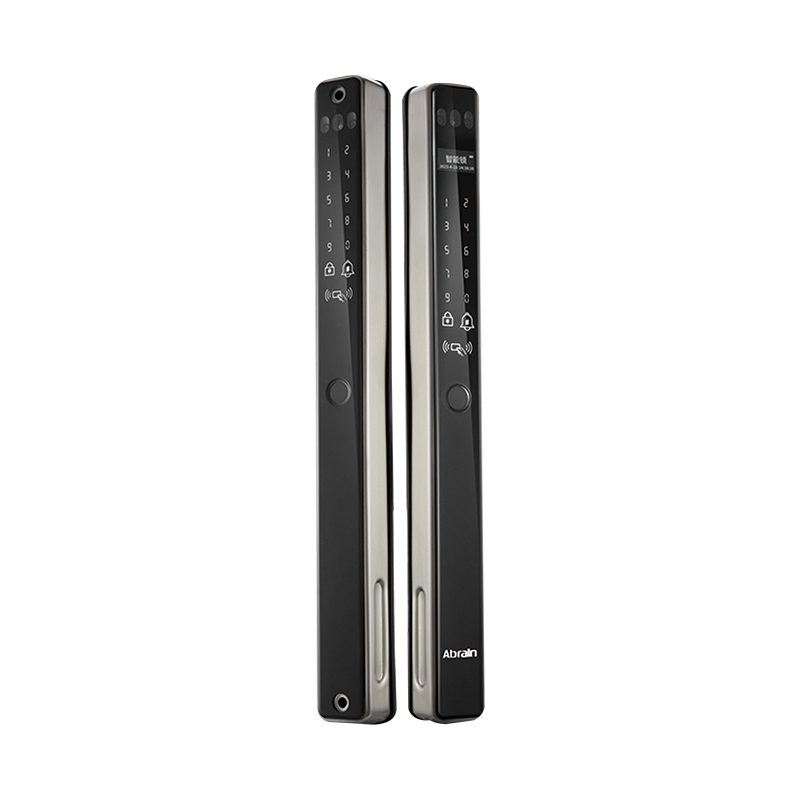
For buyers managing multi-region distribution, this isn't an abstract concern. It shapes supplier qualification criteria, influences which product lines get pushed into which markets, and often determines whether a partnership with a given factory lasts one order cycle or several years.
Why Should Climate Be Part of a Sourcing Conversation at All?
Procurement teams are trained to evaluate suppliers on consistency, lead time, and quality control processes. Climate rarely appears on that checklist explicitly, yet it influences every one of those factors indirectly. A hardware line that passes quality control in one facility, under one set of environmental assumptions, can still underperform once it reaches a market with a very different humidity profile or seasonal temperature range.
This matters because wood is not an inert substrate. It continues absorbing and releasing moisture long after manufacturing, and that ongoing exchange affects how precisely a lock seats within its bore over time. A buyer who overlooks this during supplier evaluation isn't making an obvious mistake. They're simply missing a variable that doesn't announce itself until months after installation, usually in the form of field complaints that are difficult to trace back to a root cause.
Sourcing teams who build climate awareness into their supplier questions tend to catch mismatches earlier, before they become costly at scale.
How Does Regional Humidity Influence Product Line Selection?
Buyers distributing into consistently humid regions have learned to ask sourcing questions that go beyond surface-level specifications. They want to understand how a supplier accounts for material swelling, how internal components are protected against sustained moisture exposure, and whether the manufacturing process includes any climate-specific validation before a batch ships.
This kind of due diligence has become more common as buyers recognize that a single product line rarely serves every regional market equally well. A supplier offering a Wholesale Smart Lock program that includes distinct configurations for humid versus temperate markets signals a level of operational maturity that many procurement teams now actively look for.
The distinction here isn't cosmetic. It reflects a supplier's internal process for managing variation across markets rather than treating every shipment as interchangeable regardless of destination. Buyers who understand this tend to structure their sourcing conversations around it directly, asking suppliers to walk through how product lines differ by climate zone rather than assuming a one-size answer will suffice.
What Should Buyers Understand About Dry-Climate Markets?
Dry and semi-arid markets present a different profile of risk, one that's easy to underestimate because the failure modes are less visible than swelling or moisture damage. Wood exposed to prolonged dryness tends to shrink slightly, and combined with wider day-to-night temperature swings common in these regions, this can gradually loosen fittings that were properly seated at the point of installation.
From a sourcing standpoint, this shifts the relevant questions. Rather than asking primarily about moisture resistance, buyers evaluating suppliers for dry-climate distribution benefit from asking about fastener retention over repeated thermal cycling and how finish durability holds up under extended dryness rather than extended humidity.
A short list tends to help procurement teams keep these considerations organized during supplier evaluation calls:
- How the supplier tests for performance under low-humidity, high-temperature-variation conditions.
- Whether fastener specifications differ for dry-climate product lines compared to humid-climate lines.
- What finish treatments are used to reduce cracking or surface degradation under prolonged dryness.
- How the supplier handles feedback loops from distributors operating in these regions.
None of this requires deep technical expertise from the buyer. It requires knowing which questions matter enough to ask before finalizing a supplier relationship.
Why Do Coastal and Mixed-Climate Markets Complicate Sourcing Further?
Coastal distribution introduces a layered challenge that doesn't map neatly onto either humid or dry categories. Salt-laden air interacts with metal components differently than plain humidity does, while the wood substrate itself often behaves similarly to tropical humid conditions. Buyers sourcing for coastal markets need suppliers who understand both dynamics simultaneously, rather than addressing one at the expense of the other.
Mixed-climate regions, where a rainy season is followed by an extended dry period, add another layer of complexity. A Smart Lock for Wooden Door destined for this kind of market needs to hold up under two very different seasonal stresses within the same installation lifecycle, which is a harder design problem than optimizing for a single consistent climate profile.
Procurement teams working across these regions often find it useful to categorize markets not just by geography, but by the combination of environmental stressors involved, since two coastal markets on opposite sides of the world can still present meaningfully different profiles depending on local rainfall patterns and average humidity.
| Market Category | Primary Stress Factors | What Buyers Typically Ask Suppliers |
|---|---|---|
| Humid, tropical | Sustained moisture exposure, swelling | Internal component protection, bore tolerance |
| Arid, dry | Shrinkage, thermal cycling | Fastener retention, finish durability |
| Coastal | Combined humidity and salt exposure | Corrosion resistance alongside moisture handling |
| Mixed seasonal | Alternating wet and dry stress | Year-round performance validation |
This kind of categorization gives procurement teams a shared vocabulary when comparing supplier capabilities, rather than relying on vague assurances that a product "works everywhere."
How Are Manufacturing Facilities Adapting Internally to Regional Demand?
Suppliers operating at scale have started restructuring parts of their production planning around this regional variation rather than treating it as a downstream marketing detail. A Smart Lock Factory serving multiple export markets typically maintains separate material sourcing decisions for different product lines, choosing components based on which climate profile a given line is intended for.
This also shows up in internal quality assurance protocols. Rather than applying a single testing standard across all output, facilities serving diverse markets often run separate validation processes calibrated to different environmental conditions before approving a batch for distribution to a specific region. This isn't about added complexity for its own sake. It's a direct response to the fact that a single quality benchmark doesn't hold equal meaning across climates that stress materials in fundamentally different ways.
Buyers evaluating a factory partnership often gain more useful insight by asking how internal quality assurance differs across product lines than by asking about quality assurance in generic terms. The answer to that question tends to reveal whether a supplier has genuinely built climate consideration into their process, or whether it's being addressed reactively after complaints surface.
What Role Does Distributor Feedback Play in Refining Product Lines Over Time?
Distributors operating in specific regions accumulate a kind of practical knowledge that rarely shows up in initial product specifications. They see which installations generate service calls, which climate conditions correlate with recurring issues, and which product adjustments actually resolve field complaints rather than just addressing symptoms temporarily.
Suppliers who maintain structured channels for this feedback tend to refine their product lines more effectively over successive production cycles. This creates a kind of feedback loop between the factory floor and the actual conditions a product will face once installed thousands of miles away from where it was manufactured.
Buyers benefit from understanding whether a potential supplier actively incorporates this kind of feedback, since it often distinguishes a supplier managing regional variation deliberately from one simply reacting to problems as they accumulate. Asking a supplier directly how distributor feedback has shaped recent adjustments to a product line tends to surface a more honest answer than asking generally about product quality.
How Should Procurement Teams Structure Sourcing Decisions Around Climate?
Building climate awareness into a sourcing process doesn't require overhauling standard procurement practices. It mainly requires adding a consistent set of questions to supplier evaluation conversations, rather than assuming climate compatibility will simply take care of itself.
Asking a supplier to explain how their product lines differ across climate categories gives a clearer signal than asking whether their hardware is generally durable. Requesting information about how quality assurance protocols vary by intended market reveals more than a general quality certification would on its own. And understanding whether distributor feedback actively shapes ongoing product refinement helps buyers gauge whether a supplier treats regional performance as an evolving process rather than a fixed specification decided once and left unchanged.
For buyers managing distribution across several regions simultaneously, this kind of structured questioning becomes particularly valuable, since a mismatch discovered early during supplier evaluation is far less costly than one discovered after a shipment has already reached distributors and their end customers. Treating climate as a legitimate procurement variable, alongside the more familiar considerations around cost, lead time, and general product quality, tends to produce sourcing relationships that hold up better over successive order cycles rather than requiring constant adjustment after the fact.
Recommended Products



Ready to Begin?
Product Categories
Contact Information
 Email: [email protected]
 Phone: +86-13575699186
 Address: No.135, Wanyu Road, Zhiying Industrial Zone, Yongkang City, Zhejiang Province, China.
QR Code
Copyright © Yongkang Ruian Lock Industry Co, Ltd. All rights reserved.
