
 русский
  Español
  عربى
عربى Industry News

GET A QUOTE
How Do Raw Materials Affect Smart Lock for Wooden Door
Durability rarely gets decided at the moment a lock ships. It gets decided earlier, usually in a materials meeting nobody outside the factory ever hears about, when someone signs off on a metal grade, a coating formula, or a batch of internal parts that will sit hidden inside a mechanism for years. None of these decisions show up on a spec sheet the way a finish color or a bore size does. Yet they're the reason one order performs reliably for years while a nearly identical one starts generating warranty claims within a season.
For buyers sourcing a Smart Lock for Wooden Door line, or running a Wholesale Smart Lock program across several territories, this distinction is worth more attention than it usually gets during supplier vetting. It moves the evaluation away from comparing spec sheets side by side and toward asking what actually predicts field performance once a product is out of the factory's hands.
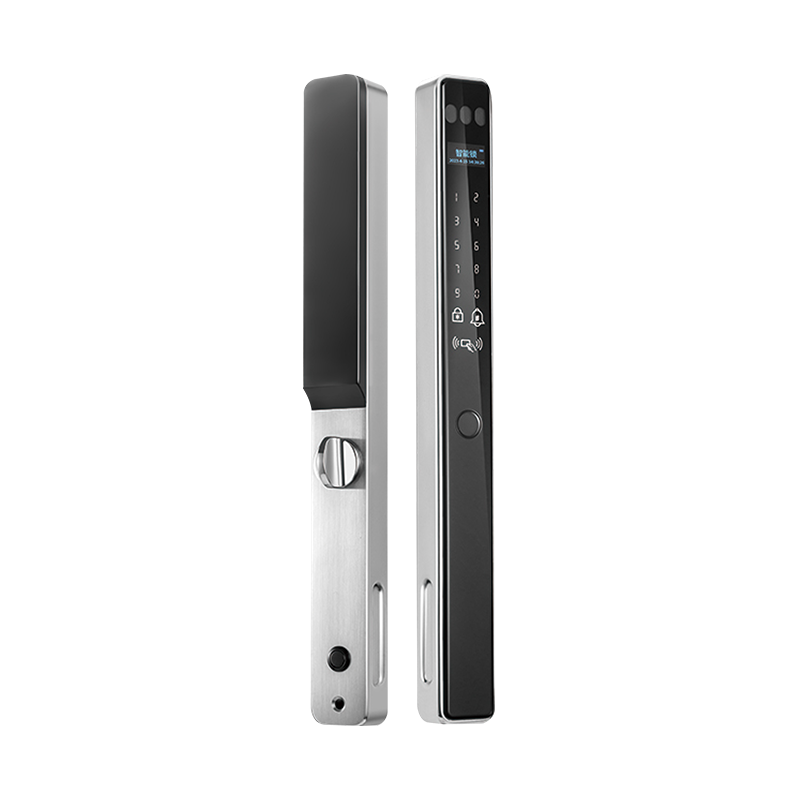
Why Does Material Choice Outweigh Design in a Durability Conversation?
Design gets evaluated in seconds. A buyer looks at a sample, checks the fit and finish, and forms a judgment almost immediately. Material composition doesn't offer that shortcut. Two units can pass the same visual inspection, share identical tooling, and still diverge sharply in performance after a few months of field use, purely because of what's underneath the surface.
This is why durability issues rarely surface during a pre-shipment inspection. A batch built with substandard materials typically clears initial QC without incident. The gap shows up later, through incremental degradation: a mechanism that starts binding, a coating that wears unevenly, fasteners that back out under repeated cycling. None of these appear on day one.
Buyers who base a sourcing decision on a single demonstration unit are essentially testing for the wrong variable. A demo confirms function. It says almost nothing about whether that function holds up through the kind of extended, repeated use a warehouse floor sample never experiences.
How Does the Host Door Material Change the Durability Equation?
A lock doesn't perform in isolation. Its long-term behavior is shaped by whatever it's mounted into, and that relationship is a bigger variable for wood than for most substrates. A Smart Lock for Wooden Door unit is in constant mechanical dialogue with the door itself, which is not the case for hardware seated in metal or composite frames.
Wood moves. Moisture and temperature cause it to expand and contract on an ongoing basis, and a mechanism seated inside that movement absorbs the effect indirectly. A bore that's a precise fit at installation can loosen as the wood dries out seasonally, or tighten slightly as humidity rises. Internal components need enough tolerance built into their material properties to accommodate this without binding or developing play.
This is part of why hardware engineered as a generic, one-size-fits-every-door-type product tends to underperform once it's actually installed into wood, compared to a line developed specifically with that substrate's behavior in mind. The interaction between lock and door isn't a footnote in the durability discussion. For wood applications, it's close to the center of it.
What Governs Metal Selection for These Mechanisms?
Metal components absorb the bulk of mechanical load in daily operation. Every actuation cycle, every latch engagement, transfers force through these parts, and the grade selected needs to hold up under that repetition without gradual deformation or fatigue.
A few practical trade-offs shape this decision on the supplier side. Corrosion resistance matters more for shipments destined toward humid or coastal markets than for temperate ones. Structural integrity has to hold across a high number of actuation cycles, not just an initial functional test. Weight is a factor too, since a heavier-gauge metal often improves durability but adds cost and can complicate assembly tolerances elsewhere in the mechanism.
This balancing act isn't standardized across the industry. A Smart Lock Factory servicing multiple export markets typically applies different weighting to these factors depending on destination, prioritizing corrosion resistance more heavily for one region while optimizing for cost efficiency in another. These decisions get made well upstream of production, but they carry directly into how long a given batch performs once it's in the field.
Why Do Fasteners Warrant More Scrutiny Than Buyers Usually Give Them?
Fasteners almost never come up in a quality discussion, mainly because they're small, hidden, and easy to assume are interchangeable across suppliers. That assumption is a mistake. These components hold the entire assembly together, and their material quality has an outsized effect on how the whole unit ages.
Substandard fasteners tend to loosen incrementally under cyclical stress, particularly where temperature or humidity fluctuates. Once a fastener loses even slight tension, it introduces play into the mechanism, and that play accelerates wear on adjacent components that weren't engineered to absorb the extra movement. It's a compounding problem rather than a static one.
A few points make this risk easier to evaluate during supplier review:
- Fasteners carry the same cyclical load as larger components, just at a scale that's easy to overlook.
- A loosened fastener typically triggers secondary wear elsewhere in the mechanism, not just at the point of failure.
- Fastener material needs to be matched to the destination climate, not treated as a universal spec.
- Post-installation replacement is far more disruptive than getting the fastener grade right during procurement.
This is one of the areas where cost-cutting produces returns that are disproportionate to the savings, since these components carry more structural responsibility than their footprint suggests.
How Do Coatings and Finishes Influence Field Reliability?
Finish quality tends to get judged on appearance during sample review, but its real function is protective. A coating shields the substrate from environmental exposure, and how well it does that job determines how long the unit resists corrosion, discoloration, or surface breakdown once it's installed.
Different climate profiles put different demands on a finish. Sustained humidity requires a coating that resists moisture ingress over an extended period, not just short-term exposure. Coastal air adds salt into the equation, which accelerates corrosion on components without adequate protective layering. Dry climates with wide diurnal temperature swings can cause certain finishes to crack or flake if the formulation wasn't built to tolerate that kind of thermal cycling.
For a Wholesale Smart Lock buyer managing distribution across regions, this is where a single finish specification tends to break down. A coating that performs well in one climate zone can degrade faster in another, and this mismatch often isn't visible until regional complaint data starts pointing to it.
| Climate Profile | Finish Vulnerability | Sourcing Consideration |
|---|---|---|
| Humid, tropical | Moisture ingress over time | Coating tested for sustained dampness exposure |
| Coastal | Salt-driven corrosion | Additional protective layering against airborne salt |
| Arid, wide temperature swing | Cracking or flaking under thermal cycling | Finish formulated for expansion and contraction |
| Temperate | Gradual surface wear under normal use | Standard coating generally adequate |
The takeaway from this comparison isn't that one finish is inherently better. It's that finish selection should be treated as a destination-specific decision rather than a fixed default applied across every market.
What Determines Reliability Inside the Mechanism, Where Nobody Looks?
Beyond the housing and the exterior coating, a lock contains internal parts that almost never come up in a buyer conversation but carry a disproportionate share of the durability risk. Springs, gears, and other small moving parts all need material properties suited to sustained repetitive motion, not just a single functional check at the end of the line.
These parts need to hold their performance across a high volume of actuation cycles. A spring that loses tension ahead of schedule, or a gear that wears faster than expected, creates a functional failure long before anything visible on the exterior signals a problem. From an end-user perspective, this is one of the more frustrating failure types, since the unit looks fully intact while quietly failing to operate correctly underneath.
For a Smart Lock for Wooden Door line specifically, ongoing substrate movement adds another layer of demand on these internal parts. They need enough tolerance to absorb minor alignment shifts without binding, which means material selection here has to account for the installation context, not just generic mechanical durability in isolation.
How Should a Smart Lock Factory Approach the Cost-Versus-Durability Trade-Off?
Every material decision carries some cost-versus-performance trade-off, and a facility operating at scale has to make these calls deliberately. Defaulting to the lowest-cost option across the board tends to push durability problems downstream, typically surfacing only after product has already reached distributors and end customers, which is the most expensive point in the supply chain for a defect to appear.
This isn't an argument against managing cost. It's about identifying which components can tolerate a lower-cost material without compromising the overall lifespan of the product, versus which components, fasteners, internal mechanical parts, protective coatings, tend to justify a higher spec because their failure creates outsized downstream consequences relative to their unit cost.
A factory that manages this trade-off with discipline usually maintains tiered material specifications across its product range, giving buyers the option to select a configuration that matches their target market and price point. That tiering is what allows a single production line to serve multiple market segments without forcing every SKU into one undifferentiated standard.
What Should a Wholesale Buyer Actually Ask Before Finalizing a Material Spec?
Buyers get more useful information by moving past general durability questions and asking about specific material decisions instead. Asking whether a product is "durable" invites a vague, reassuring answer. Asking what materials are specified for fasteners, internal moving parts, and protective coatings tends to produce a far more concrete basis for comparison.
It's also worth asking directly whether material specifications shift based on destination market. The answer reveals whether a supplier is actively factoring climate and end-use conditions into procurement decisions, or applying one specification universally regardless of where the product is headed.
Requesting evidence of cycle testing on internal components, rather than a single functional pass at the end of assembly, gives a clearer read on long-term reliability than initial performance data alone. Suppliers who've built durability planning into their process usually have specific answers ready for these questions, since that kind of planning doesn't get assembled on the spot.
For buyers managing a Wholesale Smart Lock program across several regional markets, this level of material-specific inquiry tends to pay off well beyond the initial order. It replaces a surface-level comparison of finished samples with a working understanding of what's actually going to determine field performance long after the shipment has cleared customs and reached its final destination.
Recommended Products

Ready to Begin?
Product Categories
Contact Information
 Email: [email protected]
 Phone: +86-13575699186
 Address: No.135, Wanyu Road, Zhiying Industrial Zone, Yongkang City, Zhejiang Province, China.
QR Code
Copyright © Yongkang Ruian Lock Industry Co, Ltd. All rights reserved.
