
 русский
  Español
  عربى
عربى Industry News

GET A QUOTE
Why Is Smart Lock for Home Door Better Than Old Locks?
Picture the scene: someone gets home, realizes the key is missing, and now stands on the porch waiting for another family member to show up. It happens constantly, and it says something about a bigger mismatch — between what a mechanical lock was designed to do and what households actually need from their front door now. Children come home from school unsupervised. Packages arrive while nobody's there. Older relatives fumble with stiff mechanisms they can barely turn anymore. And increasingly, people expect their home security to talk to everything else already running through their phone. A Smart Lock for Home Door closes that gap in a fairly direct way, and looking at where mechanical locks have started falling short makes it easier to tell whether an upgrade is worth the money or just another tech trend.
What Made Traditional Locks Adequate for So Long?
For most of their history, mechanical locks did one job and did it well: keep out anyone without the right key. That was enough for decades because household demands stayed simple — one key, one house, predictable comings and goings.
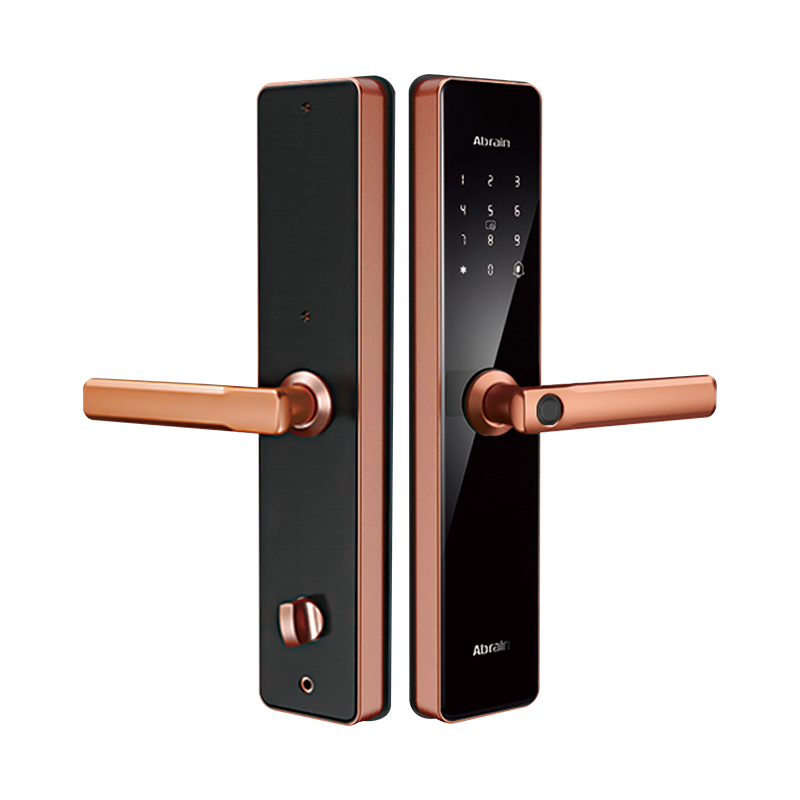
Here's the catch, though. The same simplicity that made these locks trustworthy is exactly what limits them now. A key opens the door or it doesn't. There's no way to know who used it, when, or whether the person holding it was even supposed to have it in the first place.
Why Are Traditional Locks Now Showing Their Limits?
Lost and Duplicated Keys Create Ongoing Risk
Every key floating around is a small security gap waiting to become a real one. People lose them, leave them in coat pockets, hand them to a contractor who never quite gets around to returning them. And copying a key takes minutes at most hardware counters — after that, nobody really knows how many duplicates exist or where they ended up.
Households Manage More People Than Keys Account For
Cleaners. Pet sitters. A relative staying over for a week. A repair tech who needs an hour alone in the kitchen. Traditional locks reduce all of this to one awkward choice: hand over a permanent key, or be home in person every single time. Neither holds up well once the list of occasional visitors starts growing.
There Is No Record of Who Entered or When
Something goes missing. A delivery driver insists they dropped off a package on time, but nobody can confirm it. Was the door actually locked last night? A mechanical lock gives you nothing here — no log, no alert, no way to check after the fact even if you wanted answers.
Lock Picking and Bumping Remain Practical Vulnerabilities
Pin-and-tumbler mechanisms have improved over the years, sure, but picking and bumping techniques are still well documented and don't require much in the way of tools. It's rarely a dramatic failure in everyday life, but the vulnerability hasn't gone away just because the lock looks newer.
How Have Household Needs Actually Changed?
Smart Home Integration Has Become an Expectation, Not a Luxury
Thermostats, cameras, lighting systems, voice assistants — these are standard fixtures in plenty of homes now. A lock that can't talk to any of it sits there disconnected, doing its one job while everything else in the house is already linked up.
Remote Access Has Shifted From Convenience to Necessity
People want to check whether they actually locked the door after rushing out that morning. They want to let a delivery in without being there. A family member forgot their key on the way to school — now what? None of this works with a mechanical lock, regardless of how solid it is.
Family Access Management Has Grown More Complex
Blended families. Shared custody schedules. A college student coming and going at odd hours. Multiple generations under one roof. Different people need different access at different times, and a single shared key simply can't express any of that nuance.
Delivery and Service Access Has Become a Daily Occurrence
Deliveries show up constantly now, and a lot of households want a way to grant brief, controlled access without standing guard or leaving the door wide open for hours. This scenario barely existed at any real scale when most lock designs were first put on the market.
What Does a Smart Lock Actually Solve?
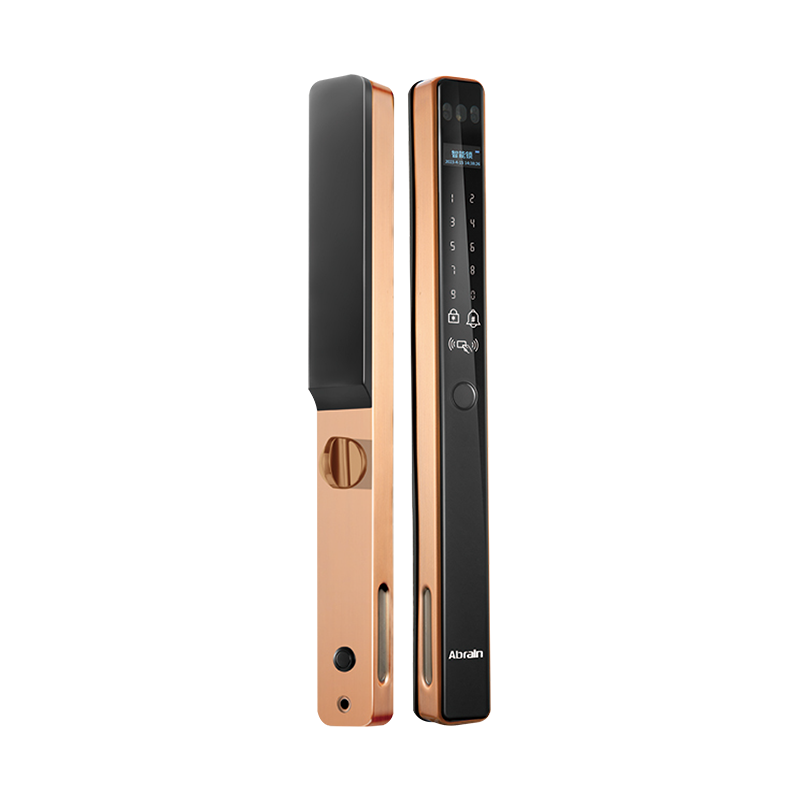
A Smart Lock for Home Door application swaps the mechanical key for electronic verification — fingerprints, numeric codes, an app on a phone, or a proximity card. The basic job stays the same as any lock: decide who gets in. What changes is how that decision gets made, and what gets recorded once it happens.
Fingerprint and Biometric Access Remove the Key Entirely
Nothing to lose, copy, or forget. Each person's fingerprint becomes the access method itself, which wipes out the lost-key and duplicate-key problem in one move. Kids, grandparents, anyone who struggles with fumbling for keys — none of them need to carry anything.
App Control Brings Remote Management Into Reach
Most smart locks connect to a phone app, letting someone lock or unlock the door from wherever they happen to be. That solves both the forgotten-key problem and the delivery-access problem in one stroke.
Temporary Passwords Solve the Service Access Problem
Instead of handing a permanent key to a cleaner or a visiting relative, generate a code that only works for a set window. Once that window closes, the code is dead. No key to chase down afterward, no lingering access nobody remembers granting.
Activity Logs Provide Information Traditional Locks Cannot
Most smart locks track every entry and exit. That's useful for ordinary peace of mind, and it becomes genuinely valuable the moment there's a dispute, a missing delivery, or a question about whether someone actually showed up when they said they would.
How Do Traditional Locks and Smart Locks Compare Directly?
| Factor | Traditional Lock | Smart Lock for Home Door |
|---|---|---|
| Access method | Physical key only | Fingerprint, code, app, or card |
| Risk from lost keys | High — requires rekeying | Low — access can be revoked instantly |
| Remote access capability | None | Available through app control |
| Temporary access for guests | Requires physical key handoff | Temporary codes with expiry |
| Entry activity records | None | Logged entry and exit history |
| Smart home integration | Not possible | Compatible with cameras, alarms, automation |
| Vulnerability to picking | Present in most mechanical designs | Reduced through electronic authentication |
| Suitability for multi-user households | Limited | Well suited to varied access needs |
| Installation complexity | Simple, well understood | Moderate — depends on door type and existing hardware |
The gap here isn't really about traditional locks being unsafe in some dramatic sense. It's that they weren't built with the flexibility today's access patterns actually demand.
Why Does Smart Home Integration Matter Beyond the Door Itself?
A smart lock that operates on its own, disconnected from everything else, only delivers half its value. The real upgrade shows up once it starts talking to other systems already in the house.
Door Lock and Camera Integration Creates Verified Access Records
Pair a lock with a doorbell camera, and every unlock event gets matched against a visual record of who was actually standing there. Knowing a code was entered is one thing; seeing who entered it closes the loop in a way logs alone can't.
Door Lock and Alarm Coordination Improves Response Time
Integrated setups can flag a forced entry, a door left unlocked too long, or access happening at an unusual hour. That moves security from a passive barrier into something that actually reacts when conditions look off.
Whole-Home Automation Extends the Lock's Function
Lights switching on when someone walks in after dark. A thermostat adjusting once the last person leaves. A notification the second the kids get home from school. Tied into automation, the lock stops being just a barrier and becomes a trigger for everything else.
Does the Application Context Change What Matters Most?
Home Use Prioritizes Family Access Flexibility
In a residential setting, the priority usually centers on a small, known group — parents, kids, the occasional visitor or service provider. Ease of use matters here more than almost anything else, since the people relying on the lock day to day aren't necessarily tech-savvy.
Office Use Shifts Priorities Toward Access Control and Audit Trails
A Smart Lock for Office Door application asks for something different. Workplaces deal with larger, shifting groups — staff, visitors, contractors rotating through — and care more about detailed logs, scheduled permissions tied to working hours, and ties into wider building security systems. Convenience matters less here than control and accountability.
Wooden Door Installation Requires Specific Compatibility Checks
A Smart Lock for Wooden Door application brings up practical questions that metal or composite doors don't always raise. Door thickness has to match the mounting spec. The existing bore or mortise has to line up with the new hardware. And the door itself needs enough structural integrity to support the added mechanical components, especially the motor in many electronic deadbolts. Older wooden doors sometimes need modification before installation can even start — worth checking before buying, not after.
What Should Buyers and Distributors Evaluate When Sourcing Smart Locks?
Dealers, property managers, and procurement teams looking past a single household purchase face a different set of questions entirely.
A few things worth checking before committing to a supplier:
- Manufacturing consistency — does the Smart Lock Factory hold steady quality across production batches, especially in the components that determine long-term reliability?
- Compatibility range — can the product line handle different door types — wooden, metal, composite — without requiring heavy customization on every install?
- Certification and compliance — does the manufacturer offer documentation relevant to the markets the product will actually be sold or installed in?
- Bulk supply reliability — for Wholesale Smart Lock orders, can lead times and quality stay consistent at the volumes a distribution or large installation project actually needs?
- After-sales support structure — what happens once products are out in the field — installation help, warranty claims, troubleshooting?
These questions carry more weight for property managers, integrators, and distributors who answer for product performance across many installations, not just one household.
Is Upgrading to a Smart Lock Actually Worth It?
Depends on what's already going on day to day. A single-occupant property with no service providers cycling through and no real need for remote access can probably stick with a mechanical lock a while longer.
But for households juggling multiple family members, regular deliveries, ongoing service access, or any interest in folding security into a wider smart home setup, the case gets a lot stronger. The convenience usually outweighs the short learning curve.
For businesses, distributors, and property managers thinking at scale, the math shifts toward operations — less time managing physical keys, better accountability, systems that plug cleanly into existing security infrastructure instead of sitting apart from it.
Moving Forward With Smart Home Security
Traditional locks were built for simpler household demands than most homes deal with today, and that gap between what mechanical locks offer and what modern access management requires isn't closing on its own. A Smart Lock for Home Door application tackles that gap head-on — removing the risks tied to physical keys, opening up remote and temporary access, and linking into the smart home systems many households already lean on without thinking twice. For dealers, property managers, and security integrators weighing supply options, the decision goes well past a feature list — it touches manufacturing reliability, installation compatibility across door types, and whether bulk orders hold up at scale without quality slipping. Yongkang Ruian Lock Industry Co., Ltd. builds smart lock solutions for home, office, and wooden door applications, supporting both single installations and Wholesale Smart Lock supply for distributors and integrators expanding their security offerings. If your business is weighing smart lock sourcing for a residential or commercial project, sharing your specific requirements is a straightforward way to start that conversation.
Recommended Products

Ready to Begin?
Product Categories
Contact Information
 Email: [email protected]
 Phone: +86-13575699186
 Address: No.135, Wanyu Road, Zhiying Industrial Zone, Yongkang City, Zhejiang Province, China.
QR Code
Copyright © Yongkang Ruian Lock Industry Co, Ltd. All rights reserved.
